
Key Takeaway
Most drips come from one worn part inside the faucet, usually a cartridge, washer or O-ring, and replacing it is the right call on a decent fixture under about ten years old. Replace the whole faucet when the body is corroded, when parts are no longer available, when it leaks from the base onto the counter, or when it has been repaired more than once. Hard water from the Floridan aquifer shortens cartridge life here, so scale is behind a large share of Polk County faucet problems. Call (863) 393-6473.
A dripping faucet is rarely the fixture giving up. It is usually one worn component inside it, and the component depends on where the water is appearing. Diagnosing that first tells you whether you are looking at a small part or a new fixture.
It also tells you how urgent it is. A drip from the spout wastes water. A leak from the base is doing damage to your cabinet while you decide.
Where Is the Water Coming From?
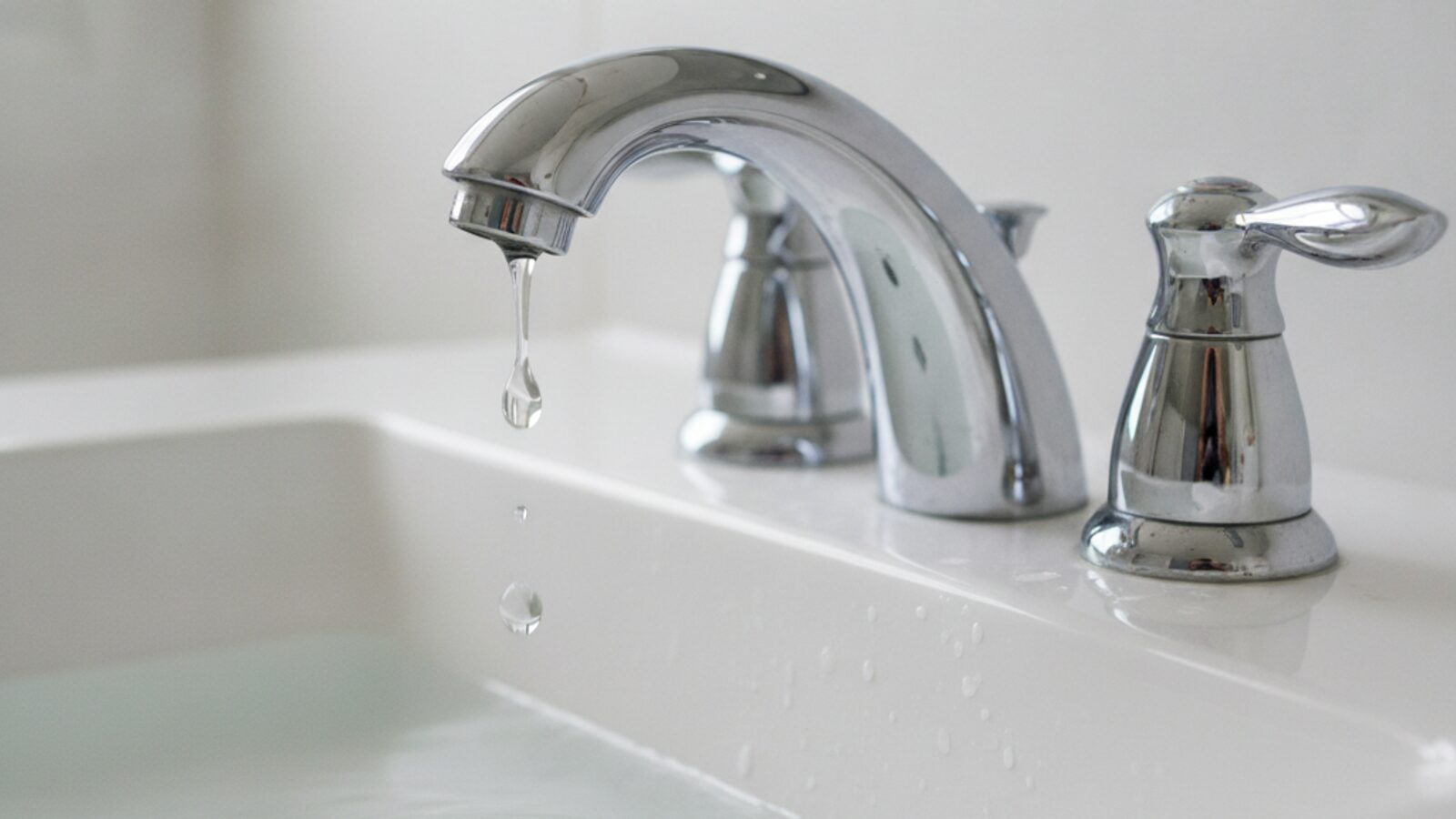
From the spout, when the faucet is off. The seal inside the valve has failed. On a cartridge faucet, that is the cartridge. On an older compression faucet, a rubber washer. This is the classic drip and the most repairable.
From the base of the spout, when running. O-rings around the spout have worn. Repairable, and worth doing before the water reaches the cabinet.
From under the sink. A supply connector, the shutoff valve, or the connection at the faucet tailpiece. Check before assuming the faucet is at fault, because a failing supply line is a different and more urgent problem.
From the handle. Usually the packing nut or the O-ring at the stem.
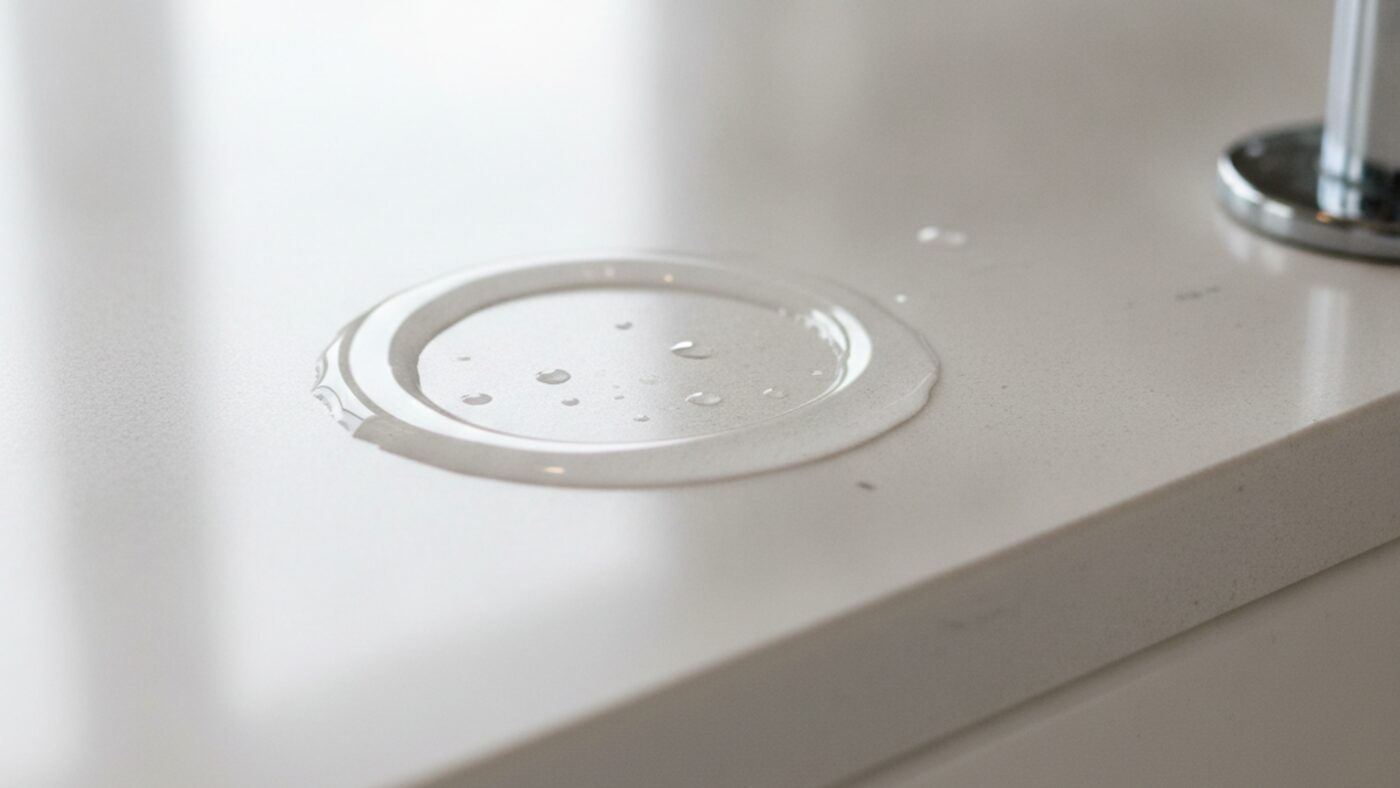
Pooling on the counter around the base. The mounting seal or gasket underneath. This one reaches the cabinet quickly.
Why Hard Water Shortens the Clock Here
Polk County water carries dissolved minerals from the Floridan aquifer, and those minerals deposit on every surface they pass. Inside a faucet, scale builds on the cartridge and on the seat it closes against, so the seal gradually stops being a seal.
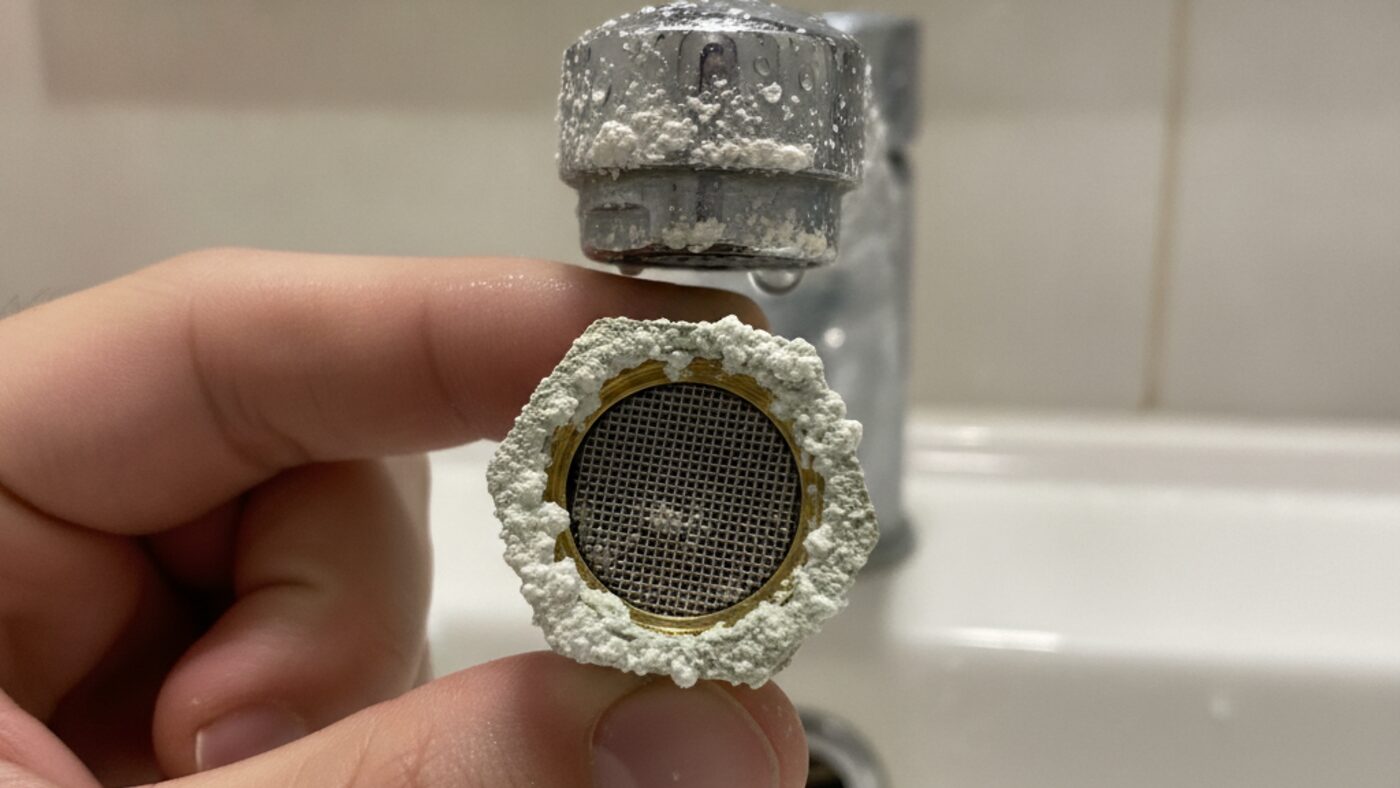
That is why faucets in this area tend not to reach the lifespan their manufacturers quote, and why a repair sometimes fails quickly: a new cartridge closing onto a scaled or pitted seat will not hold.
The same process is what blocks aerators and shower heads, covered in our post on low water pressure in a Lakeland home, and what puts sediment in water heaters, covered in our post on how often to flush a water heater.
When Repair Makes Sense
Repair is the right call when the faucet is a decent quality fixture, under roughly ten years old, with the body and finish in good condition, and parts still available for the brand.
Cartridges are widely available for major brands, and replacing one is a straightforward job. On a quality faucet this is clearly better value than replacement, because what you are keeping, the body and the finish, is the expensive part.
When Replacement Is Better
- The body is corroded or the finish is failing
- Parts are no longer available, which is common with older or off-brand fixtures
- It has already been repaired more than once for the same leak
- It leaks from the base or the mounting, and the mounting hardware is corroded
- It is an inexpensive fixture where parts plus labor approach the price of a better one
- You are changing the sink or countertop anyway, which is the natural moment
Do It Right at Replacement
Check the hole configuration in the sink or counter before buying, since single-hole and three-hole are not interchangeable without an escutcheon plate.
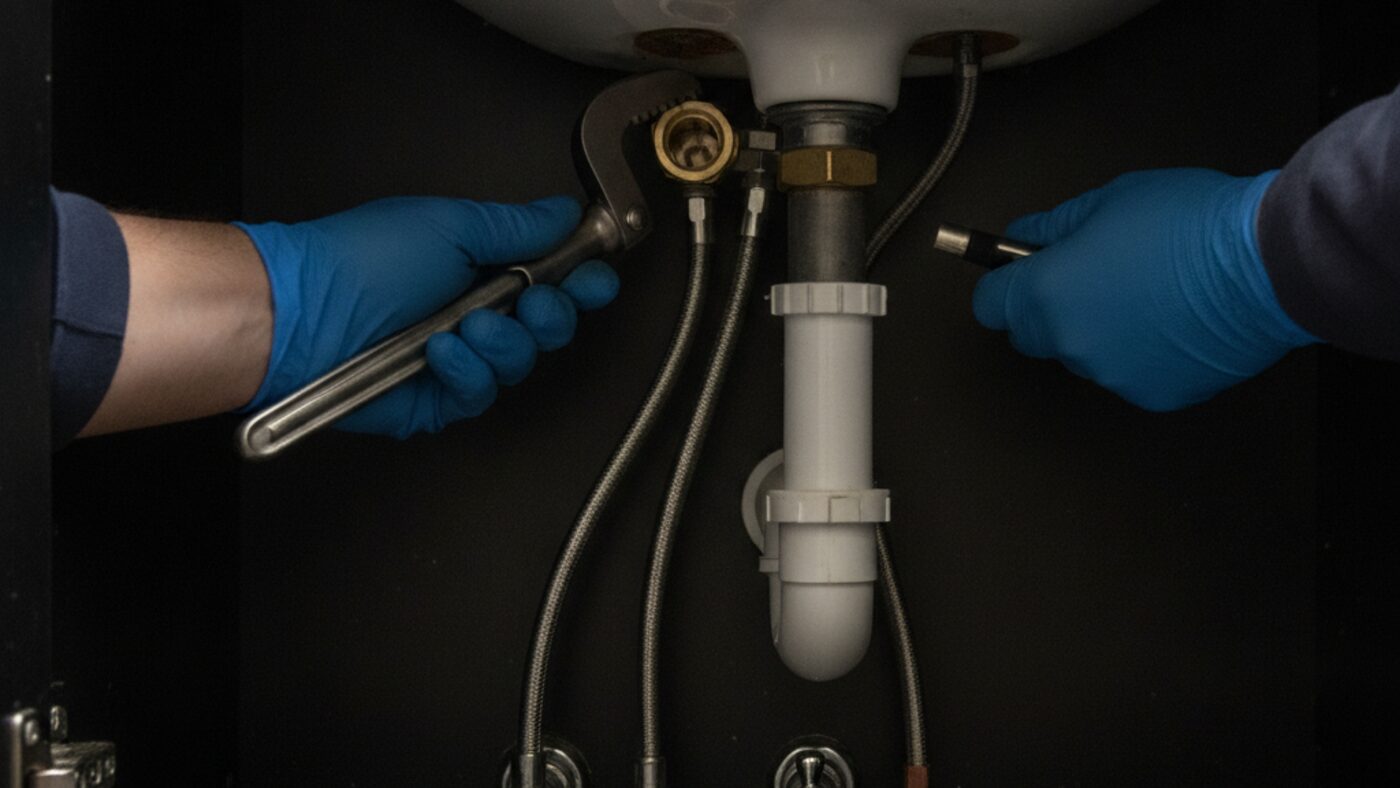
Replace the supply connectors at the same time rather than reusing old ones. They are inexpensive, they are the part that fails catastrophically rather than gradually, and the fixture is already off.
Replace the shutoff valves too if they are old, seized or weeping. Working shutoffs at every fixture make every future repair simpler, and they are what let you isolate one fixture instead of shutting off the house.
The Cost of Leaving It
The EPA's WaterSense program estimates that household leaks waste close to a trillion gallons nationally each year. A single drip is small; a drip running for months is not, and it shows up on the bill.
For homes on septic, there is a second reason. Extra water entering the system reduces the settling time in the tank and pushes solids toward the drain field, which is the failure described in our post on signs your drain field is failing.
Practical Takeaways
Identify where the water appears before deciding anything. Spout drips are repairable and usually worth repairing on a good fixture. Base and mounting leaks need prompt attention because they damage cabinetry. A repair that fails twice means the body, not the part. Replace supply connectors whenever the fixture is off.
Talk to a Licensed Professional
OC's Plumbing & Septic handles faucet repair and installation across Lakeland, Highland City, Bartow and the surrounding area. Call (863) 393-6473 or use the contact page.
Frequently Asked Questions
More than people expect. A steady drip adds up to gallons a day and shows on a water bill over a month. The EPA's WaterSense program estimates household leaks nationally waste close to a trillion gallons a year, and dripping faucets are a significant share of that.
Usually because the valve seat is damaged or scaled, so a new washer or cartridge cannot seal properly against it. In hard water the seat collects mineral deposit. If a second repair fails, the faucet body itself is typically the problem.
Often not. On an inexpensive fixture the cost of parts and labor can approach the cost of a better replacement that will last longer. On a quality faucet, repair is usually the better value because the body and finish are worth keeping.
No, and it matters more. A drip from the spout wastes water. A leak at the base runs into the cabinet and onto the counter, where it damages the cabinet base and can reach the subfloor. Deal with that one promptly.
