Key Takeaway
Kitchen faucet installation is usually a flat labor charge plus the faucet, if the plumber supplies it. What changes the total is what the plumber finds: worn shut-off valves or old supply lines that need replacing, a new faucet that does not match the holes in the sink or countertop, a seized old faucet that is hard to remove, or extras such as a touchless faucet that needs power under the sink. OC's Plumbing & Septic installs a faucet you bought or one we supply, and quotes any valve or supply line work before starting. Call (863) 393-6473.
Kitchen faucet installation is usually a flat labor charge plus the faucet itself, if the plumber supplies it. What moves the total is everything around the faucet: the condition of the shut-off valves and supply lines, whether the new faucet fits the holes in your sink or countertop, how hard the old one is to get off, and extras like touchless models.
Here is how each of those affects the price, so you know what you are paying for before you book.
The Faucet: Yours or the Plumber's
The biggest swing in the total is the faucet. You can buy one yourself and pay only for installation, or have the plumber supply it. OC's Plumbing & Septic is happy to install a faucet you bought, and can recommend models with ceramic disc cartridges and finishes that hold up to Lakeland's hard water, which wears out cheap cartridges quickly.
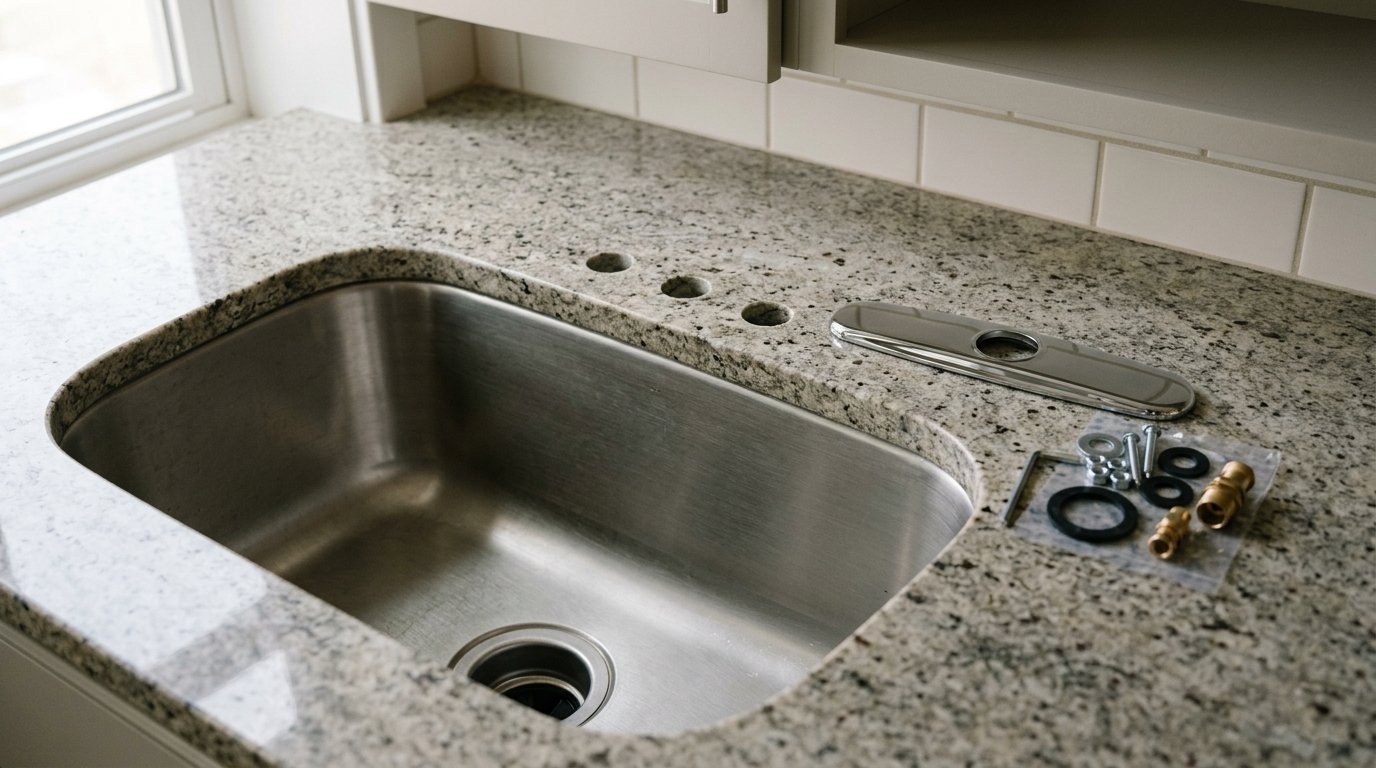
If you buy your own, keep the box and the parts bag. Most faucets come with the mounting hardware and a deck plate, and having them on hand keeps the install simple.
Under the Sink: Valves and Supply Lines
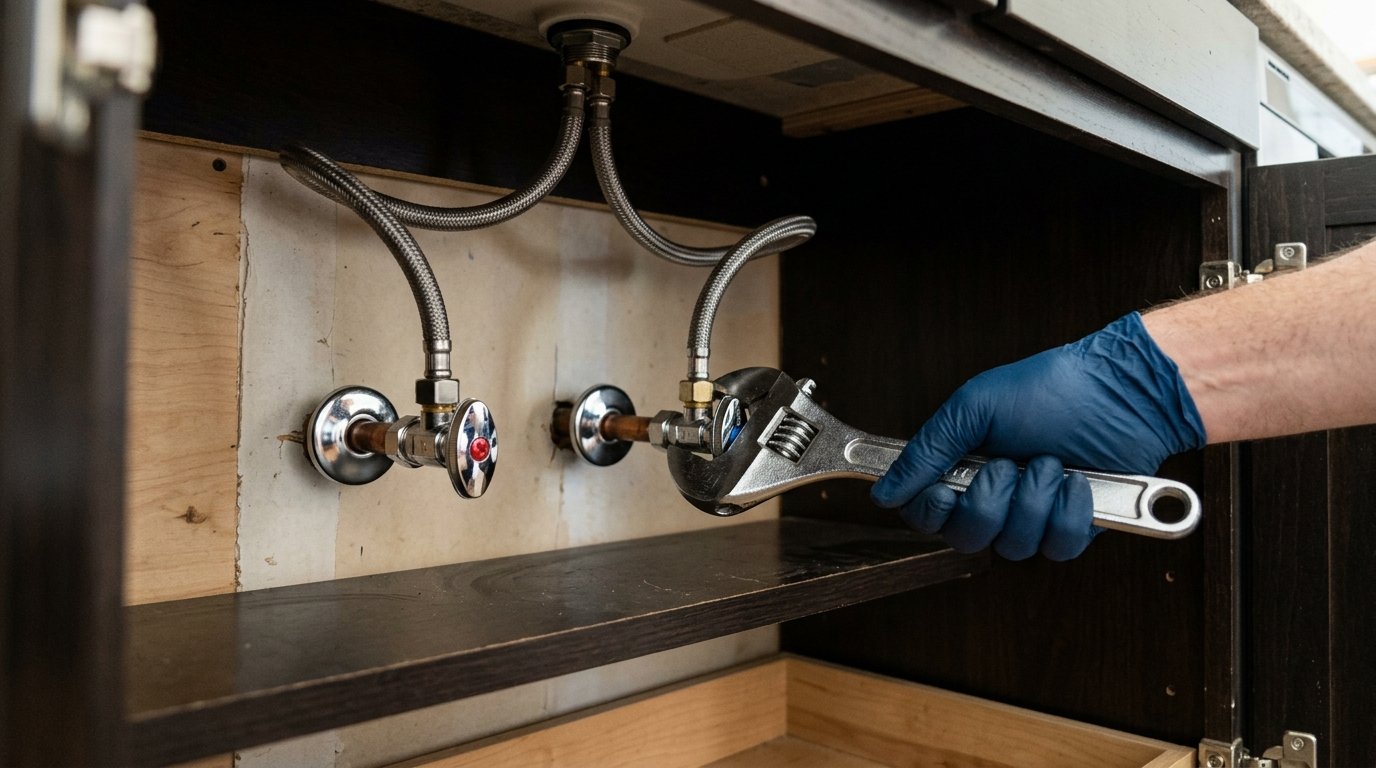
This is where most surprises come from. A new faucet connects to the two shut-off valves under the sink through flexible supply lines.
- Old supply lines. Supply hoses get brittle with age. We recommend replacing them with every new faucet, because an old hose is a common cause of slow leaks that ruin cabinet floors.
- Worn shut-off valves. Older valves often will not close fully or start to drip when turned after years of sitting still. If a valve fails, it needs replacing before the new faucet goes in, and that is quoted before the work starts.
The Florida Building Code, Plumbing, Section 605.6 says "Access shall be provided to all flexible water connectors." Those under-sink connections need to stay reachable for exactly this reason: they are the parts most likely to need attention later.
Sink and Countertop Holes
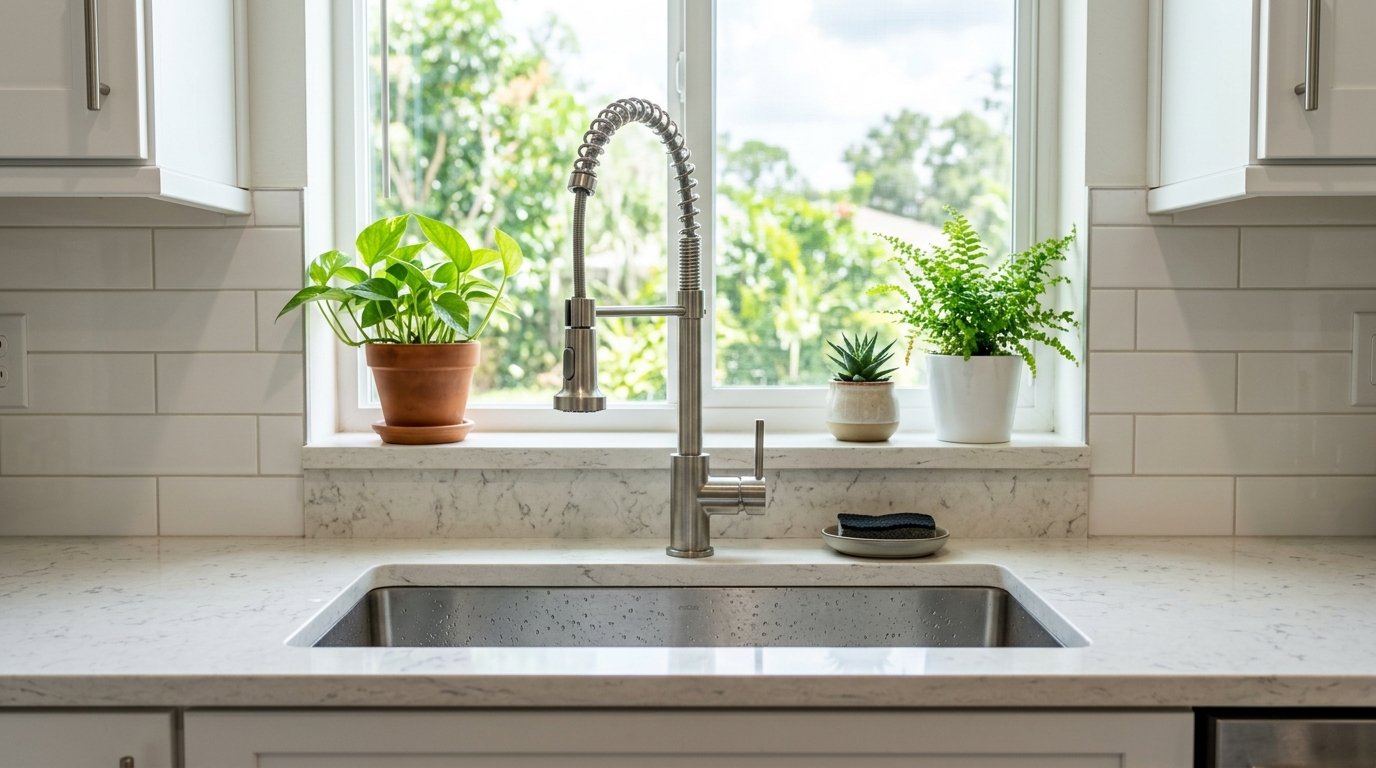
Faucets come in one-hole, two-hole, three-hole and four-hole designs, with the sprayer or soap dispenser sometimes taking the extra hole. If the new faucet matches the holes you already have, installation is straightforward. If it does not:
- Fewer holes than you have: a deck plate usually covers the extra holes.
- More holes than you have, or a different spacing: drilling a stone or stainless surface adds work, and sometimes is not practical.
Checking the hole count and spacing before you buy is the simplest way to keep the cost down.
Removing the Old Faucet
Taking out an old faucet is usually quick. But faucets that have been in place for many years in hard water can have mounting nuts seized by corrosion and mineral build-up. Removing them without damaging the sink or countertop takes more time, which can add to the labor.
Extras That Add to the Job
- Pull-down and pull-out sprayers are standard installs.
- Touchless and smart faucets need under-sink mounting for a battery pack or a power adapter, and a power adapter needs an outlet within reach.
- Separate sprayers, soap dispensers or filtered water taps each add a connection to fit and test.
A Note on Flow Rate
If your new faucet seems to have less flow than the old one, that is usually by design. The Florida Building Code, Plumbing, Table 604.4 caps a sink faucet at "2.2 gpm at 60 psi," and many new faucets run lower than that with water-saving aerators. It is not a sign the installation went wrong.
What a Good Installation Includes
Every faucet installation from OC's Plumbing & Septic includes shutting off the supply, removing the old fixture without damaging the countertop, cleaning the mounting surface, fitting the new faucet with new flexible supply lines, then flushing the lines and testing for flow, temperature mixing and leaks. Most installations take one to two hours.
If your current faucet is dripping and you are not sure it is worth replacing, our post on whether to repair or replace a leaky faucet can help you decide.
Book Your Faucet Installation
OC's Plumbing & Septic provides kitchen and bathroom faucet installation across Lakeland and Polk County, with a clear price before the work starts and any valve or supply line work quoted up front. Call (863) 393-6473 to schedule your installation.
Frequently Asked Questions
Most installs are a flat labor charge, plus the faucet if the plumber supplies it. The total goes up if the shut-off valves or supply lines need replacing, the new faucet does not fit the existing holes, or the old faucet is corroded in place. OC's Plumbing & Septic quotes any extra work before it starts.
Yes. OC's Plumbing & Septic will install a faucet you bought. Check the number of holes and their spacing in your sink or countertop before you buy, or ask us first, so the faucet fits without extra work.
Most installations take one to two hours, including cleanup and testing. A corroded old faucet or new shut-off valves can add time.
It is a good idea. Old supply hoses get brittle and are a common source of slow leaks under the sink. OC's Plumbing & Septic recommends new flexible supply lines with every faucet installation.