
Key Takeaway
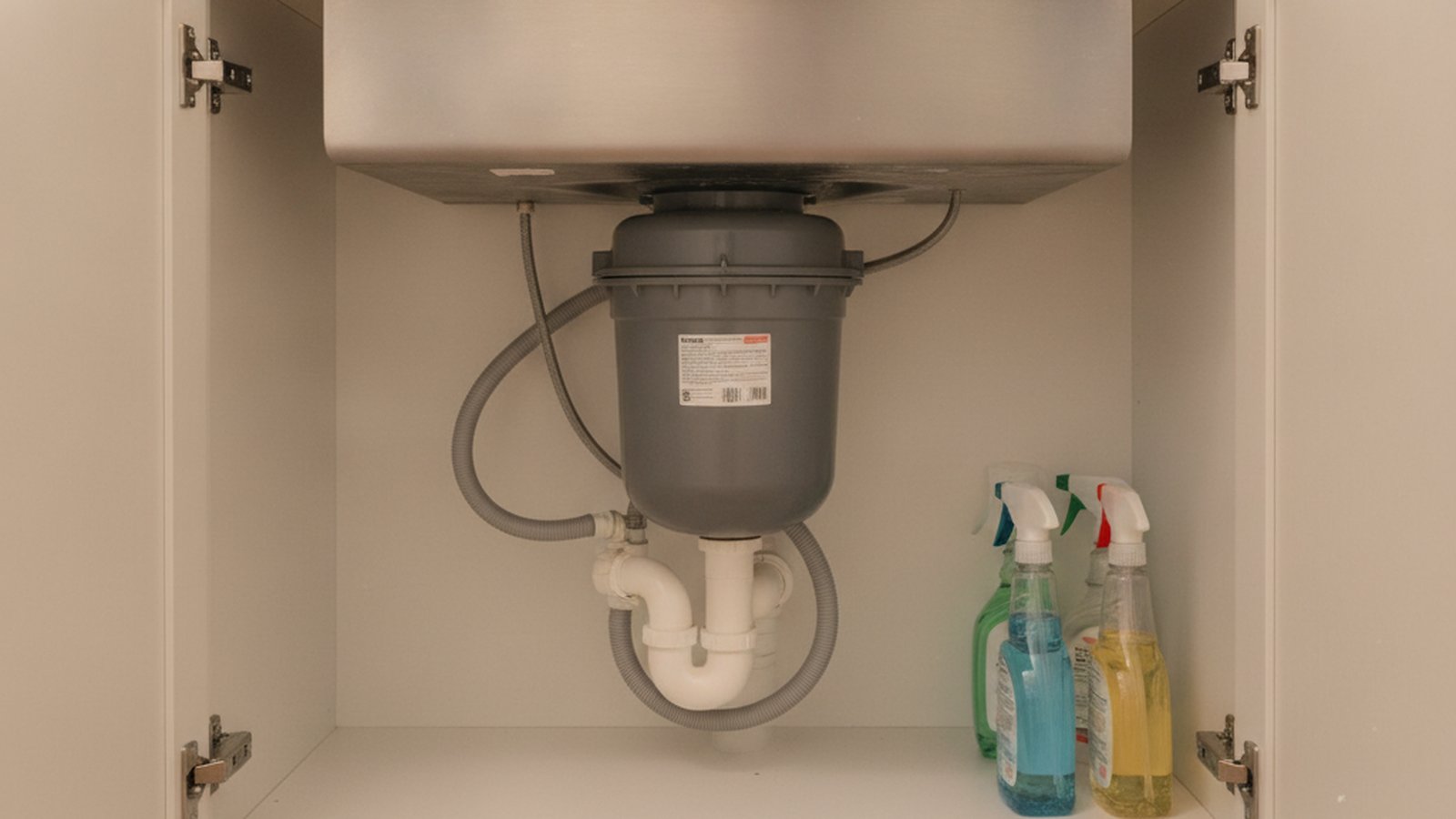
A disposal that hums but will not spin usually has a jammed flywheel: the motor is getting power but cannot turn. Switch it off, never reach into the chamber, and turn the flywheel from underneath with the hex key or a 1/4-inch Allen wrench until it moves freely. Then press the red reset button and test with cold water running. If it keeps jamming, trips repeatedly or leaks from the housing, it needs a repair visit or a replacement. Call (863) 393-6473.
A garbage disposal that hums but won't spin is almost always jammed: the motor is getting power, but something wedged inside is stopping the flywheel from turning. Switch it off straight away, free the jam from underneath with a hex key, press the reset button, and in most cases it will run again.
If it doesn't, the hum is telling you something more serious. Here is how to work through it safely and how to tell when it needs a repair visit instead.
Why a Disposal Hums Instead of Spinning
A disposal grinds food by spinning a plate with two small impellers against a stationary grinding ring. When a fruit pit, bone, bottle cap or piece of cutlery gets wedged between the two, the plate stops but the motor keeps trying to turn it. That is the hum.
Left humming, the motor overheats, and most units have a thermal overload that cuts the power to protect it. That is why a jammed disposal often hums for a moment and then goes silent.
How to Free a Jammed Garbage Disposal
The steps below follow InSinkErator's own guidance on fixing a jammed disposal. Other brands work similarly, but check your manual.
- 1Turn the disposal off at the wall switch. Make sure the switch is off before anything else.
- 2Never put your hand in the disposal. InSinkErator's wording is plain: "Do not place your hand in the garbage disposal at any time."
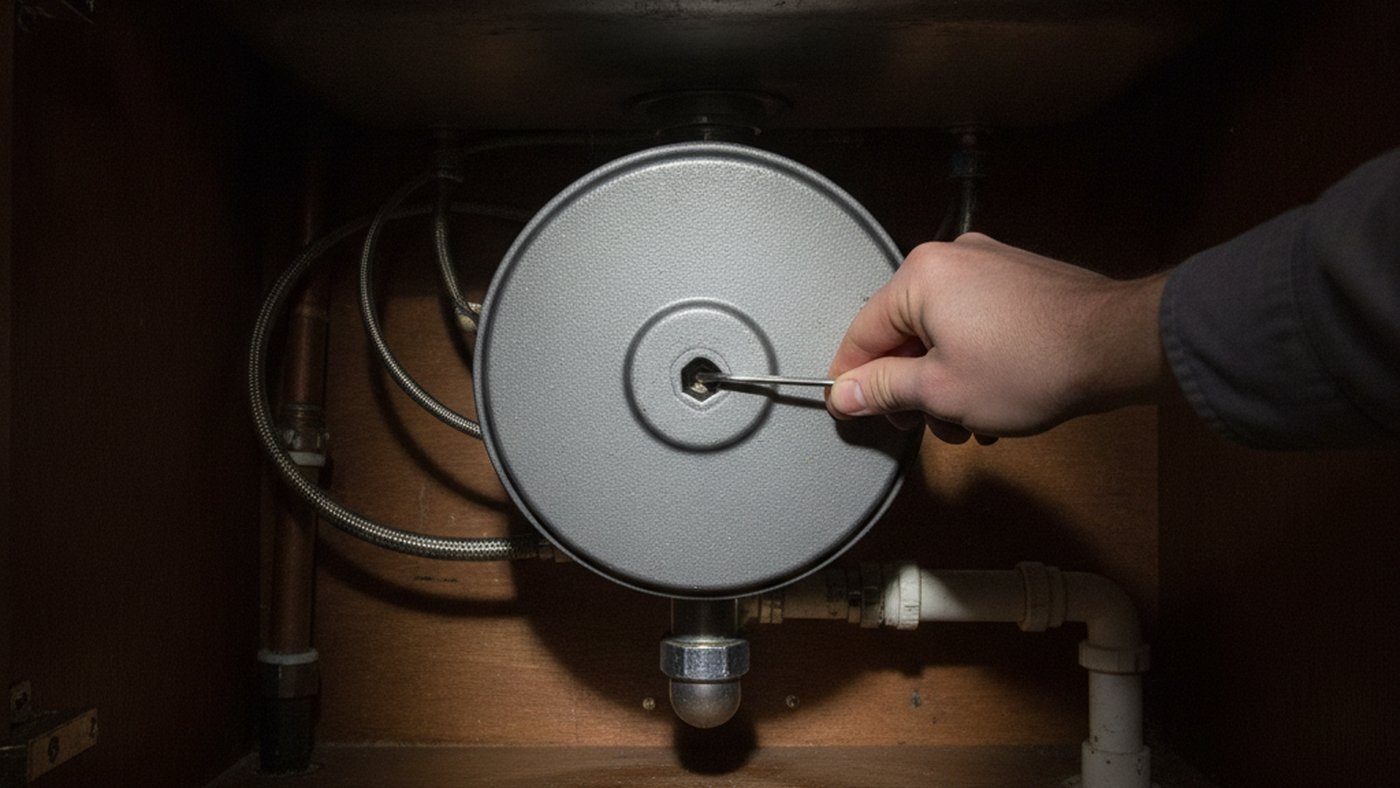
- 3Find the hole on the bottom of the unit, dead center, facing the floor.
- 4Insert the wrench. InSinkErator units ship with a small silver wrench "shaped like a little crank, about four inches long." A standard 1/4-inch Allen wrench also fits.
- 5Work it back and forth until it turns freely through full rotations. That moves the flywheel and loosens whatever is stuck.
- 6Remove the object with tongs or pliers, with the power still off, and a flashlight to see into the chamber.
Press the Reset Button, Then Test
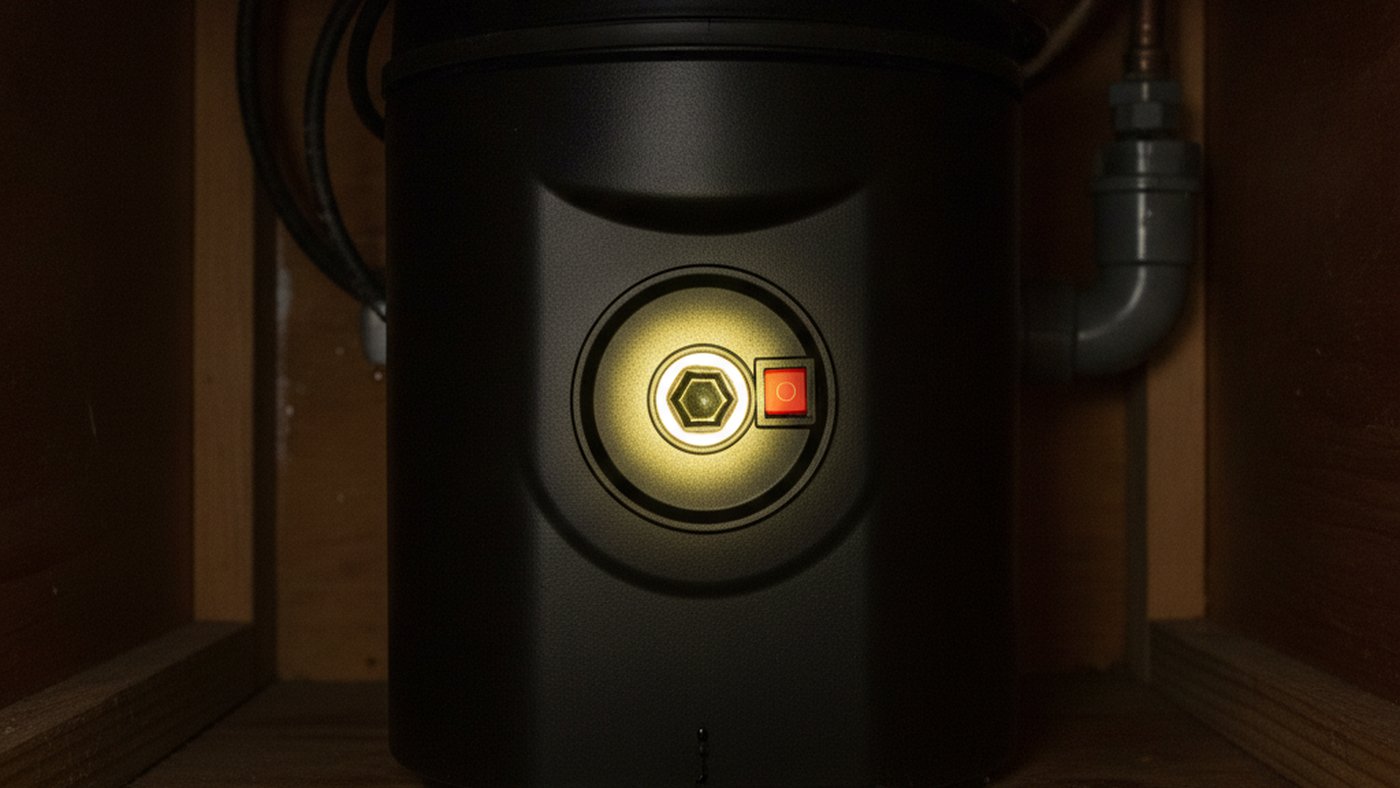
Once the flywheel moves freely, look at the bottom of the unit for the overload protector. InSinkErator describes it as "a small square red button." If it has tripped, it sits "dropped down about a quarter of an inch." Press it gently back up.
Then run cold water and switch the disposal on. It should spin up normally.
If It Makes No Sound at All
Silence is a different problem from humming. Check these in order:
- The reset button. A tripped overload leaves the unit completely silent.
- The breaker. InSinkErator advises checking the service panel for a tripped circuit breaker or blown fuse.
- The switch and plug. Many disposals plug into an outlet under the sink, so make sure it has not been knocked loose.
If the breaker trips again as soon as the disposal starts, stop resetting it. That points to an electrical fault in the unit or the circuit, and it needs a professional.
When the Hum Means Repair or Replacement
Not every hum is a simple jam. These signs mean it is time for a garbage disposal repair visit:
- It jams again soon after you have cleared it, or the wrench will not turn the flywheel at all.
- It keeps tripping the reset button even when nothing is stuck.
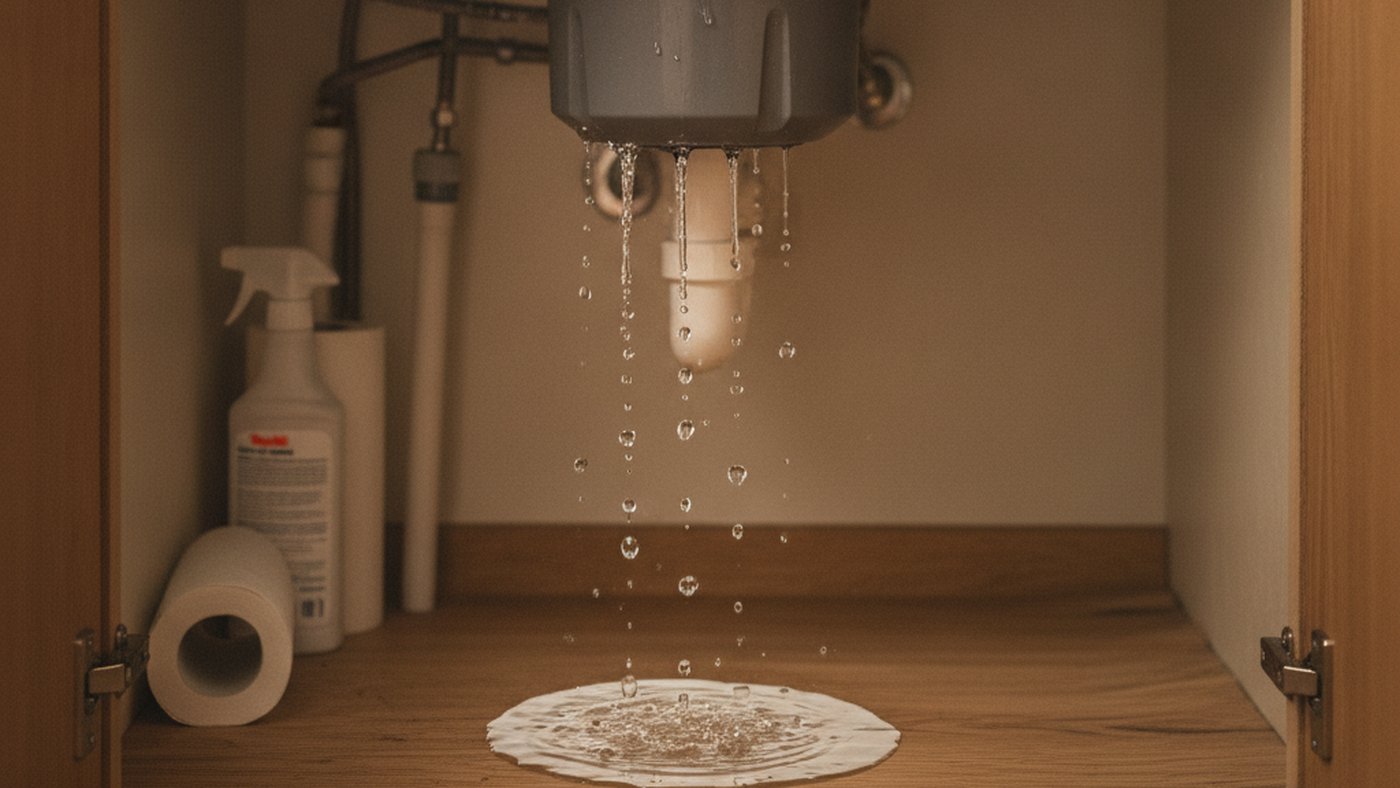
- It leaks. A leak at the sink flange, the dishwasher hose or the drain connection is usually repairable. Water dripping from the bottom of the disposal's own housing usually means internal seals have failed.
- It grinds, rattles or runs weakly after the jam is gone.
When a leaking housing or a worn-out motor makes a repair uneconomical, a like-for-like garbage disposal installation is usually quicker and cheaper over time than repeated fixes.
Stop the Next Jam Before It Starts
- Keep hard items out: fruit pits, bones, shells, bottle caps and cutlery are the usual culprits.
- Go easy on fibrous and starchy scraps such as celery, corn husks, potato peels and rice, which wrap around the plate or pack into the drain.
- Run cold water before, during and for a few seconds after grinding.
- Feed it gradually rather than filling the chamber and switching it on.
Many Polk County homes are on septic, and a disposal adds solids to the tank. If that is your setup, our guide to using a garbage disposal with a septic system covers how to use one without shortening the life of your system.
If your disposal is still humming, tripping or leaking after these steps, OC's Plumbing & Septic provides garbage disposal repair in Lakeland and across Polk County, with a firm price before any work begins. Call (863) 393-6473.
Frequently Asked Questions
In most cases something is wedged between the spinning plate and the grinding ring, so the motor is receiving power but cannot turn. Leaving it humming can overheat the motor, so switch it off at the wall before doing anything else.
On most units it is on the bottom of the disposal, under the sink. InSinkErator describes it as a small square red button that, when tripped, sits dropped down about a quarter of an inch. Press it gently back up once the jam is cleared.
InSinkErator disposals take the small crank-shaped wrench supplied with the unit or a standard 1/4-inch Allen wrench, inserted into the hole dead center on the bottom of the disposal. Other brands vary, so check the manual.
Jams, tripped resets and leaks at the sink flange or drain connections are usually worth repairing. A disposal that leaks from the bottom of its housing, keeps tripping after being freed, or will not turn by hand at all is usually due for replacement.
