Key Takeaway
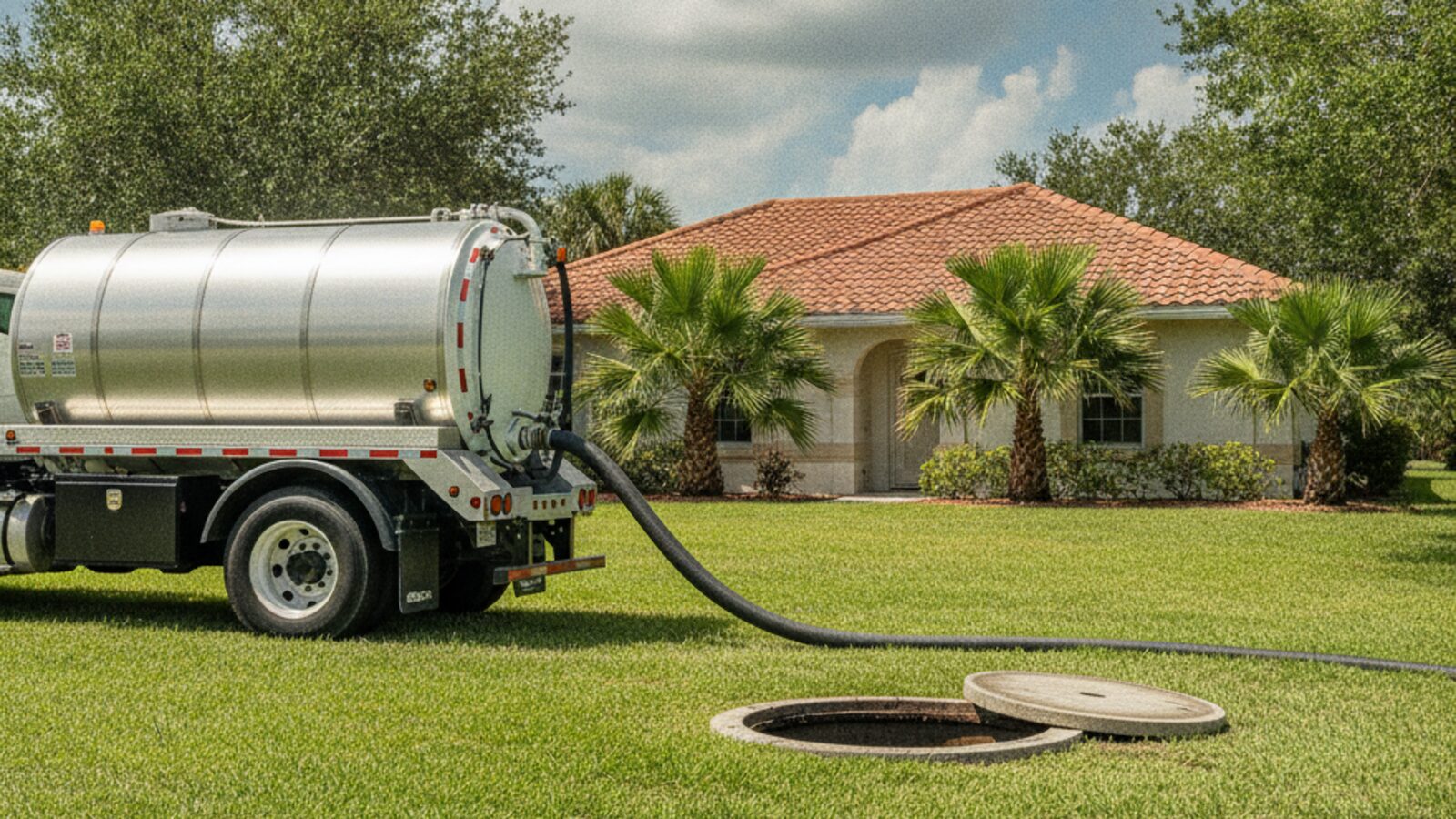
Most Polk County households need the septic tank pumped every three to five years. A small tank serving a large household may need it every two; a large tank serving one or two people may stretch longer. The EPA recommends an inspection every three years for typical systems. Do not wait for a backup, because solids that escape a full tank go into the drain field and clog it, and a drain field is far more expensive to replace than a tank is to pump. Call (863) 393-6473.
Every three to five years is the standard answer for most Polk County households, and it is a reasonable default. What moves the number is tank size relative to how many people are putting water and waste into it, so the same tank can need pumping every two years in one house and every six in another.
The expensive mistake is waiting for a symptom. By the time a septic tank announces itself, solids have usually already been leaving it for a while, and where they go is the part that costs money.
What the Tank Actually Does
A septic tank is a settling chamber, not a disposal. Wastewater enters, and it separates into three layers: scum floating on top, relatively clear effluent in the middle, and sludge settling to the bottom. Only the middle layer is meant to leave the tank and travel out to the drain field, where the soil finishes treating it.
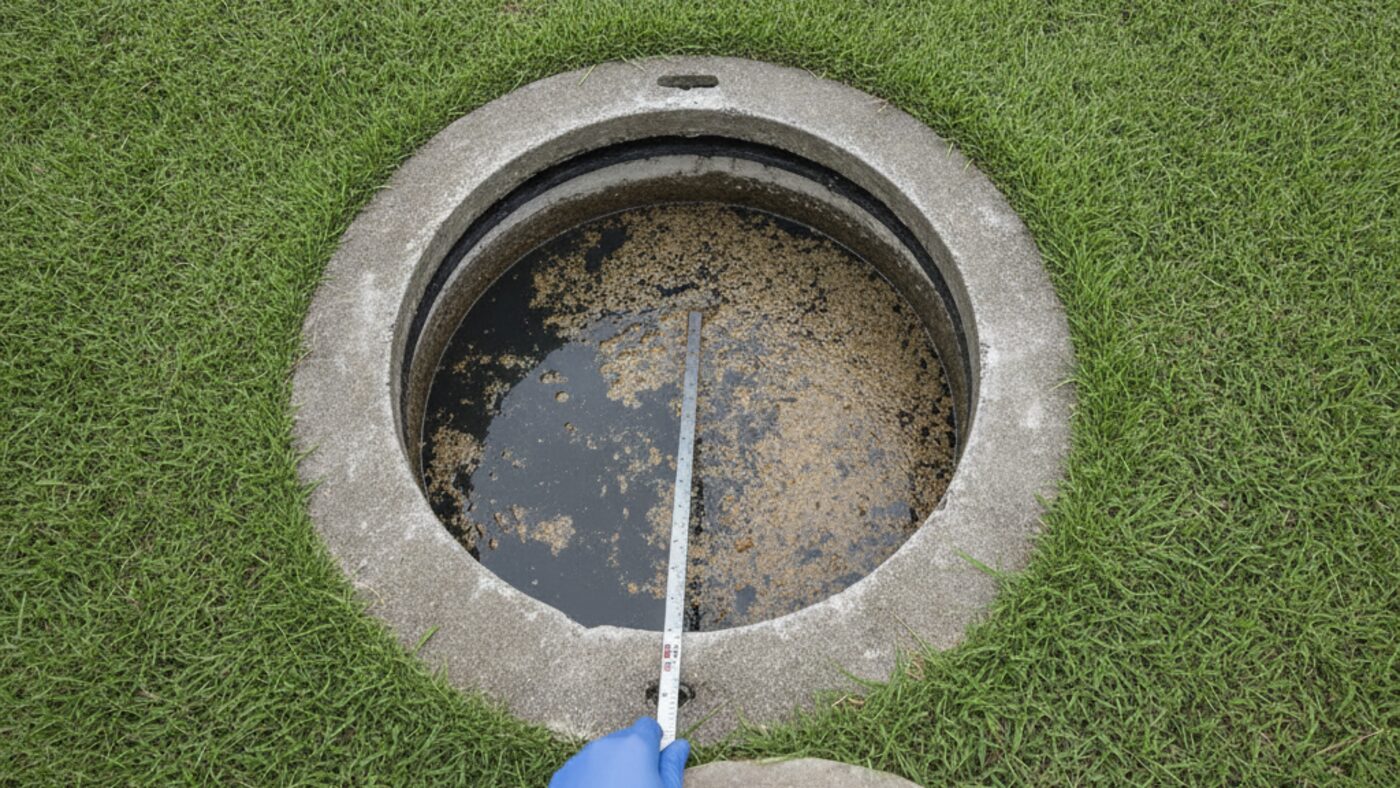
Pumping removes the top and bottom layers before they build far enough to reach the outlet. That is the whole purpose. Everything else follows from it.
The Interval, and What Changes It
The EPA's guidance for septic system owners recommends that a typical household system be inspected by a professional roughly every three years, with tanks generally pumped every three to five.
Factors that shorten the interval:
- More people in the house. The single biggest variable. Each additional person adds water and solids continuously.
- A small tank. Older Polk County homes sometimes have tanks sized for a smaller household than the one now living there.
- Heavy garbage disposal use. Food solids go into the tank and stay there. Our post on using a garbage disposal with a septic system covers this in detail.
- High water use. Long showers, frequent laundry, a leaking toilet running continuously. Excess water pushes solids through before they have settled.
- A water softener discharging to the tank, depending on the system.
Factors that lengthen it: fewer occupants, a larger tank, careful water use, and no disposal.
Signs You Have Already Waited Too Long
- Slow drains throughout the house, rather than in one fixture
- Gurgling from toilets or drains
- Sewage odor indoors, near the tank, or over the drain field
- Wet, soggy ground or unusually lush grass above the drain field
- Backups, particularly into the lowest fixtures in the house
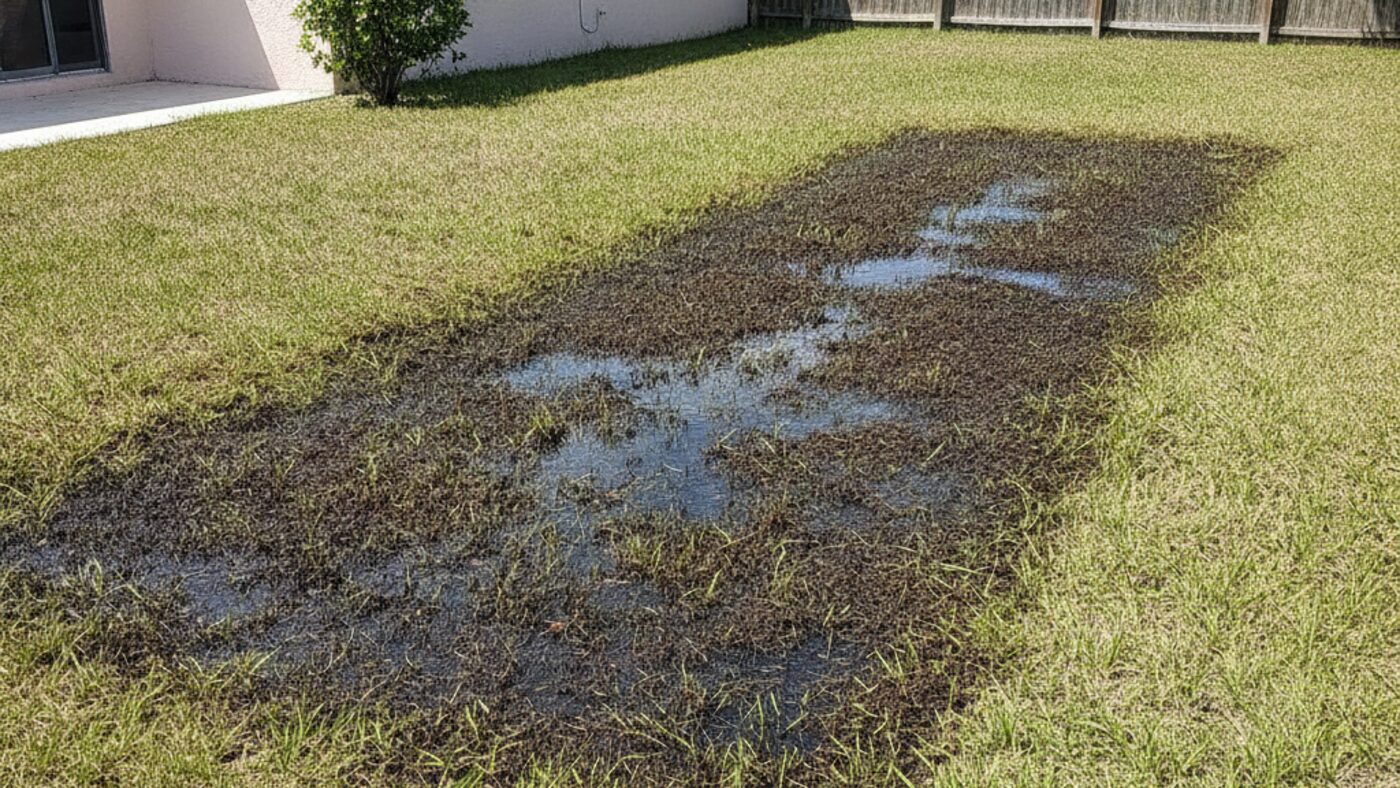
Those last two matter most. Soggy ground and vivid green growth over the drain field mean effluent is surfacing rather than being absorbed, which is a drain field problem rather than a tank problem. Our post on what to do when your septic backs up covers the immediate steps.
Why the Drain Field Is the Real Stake
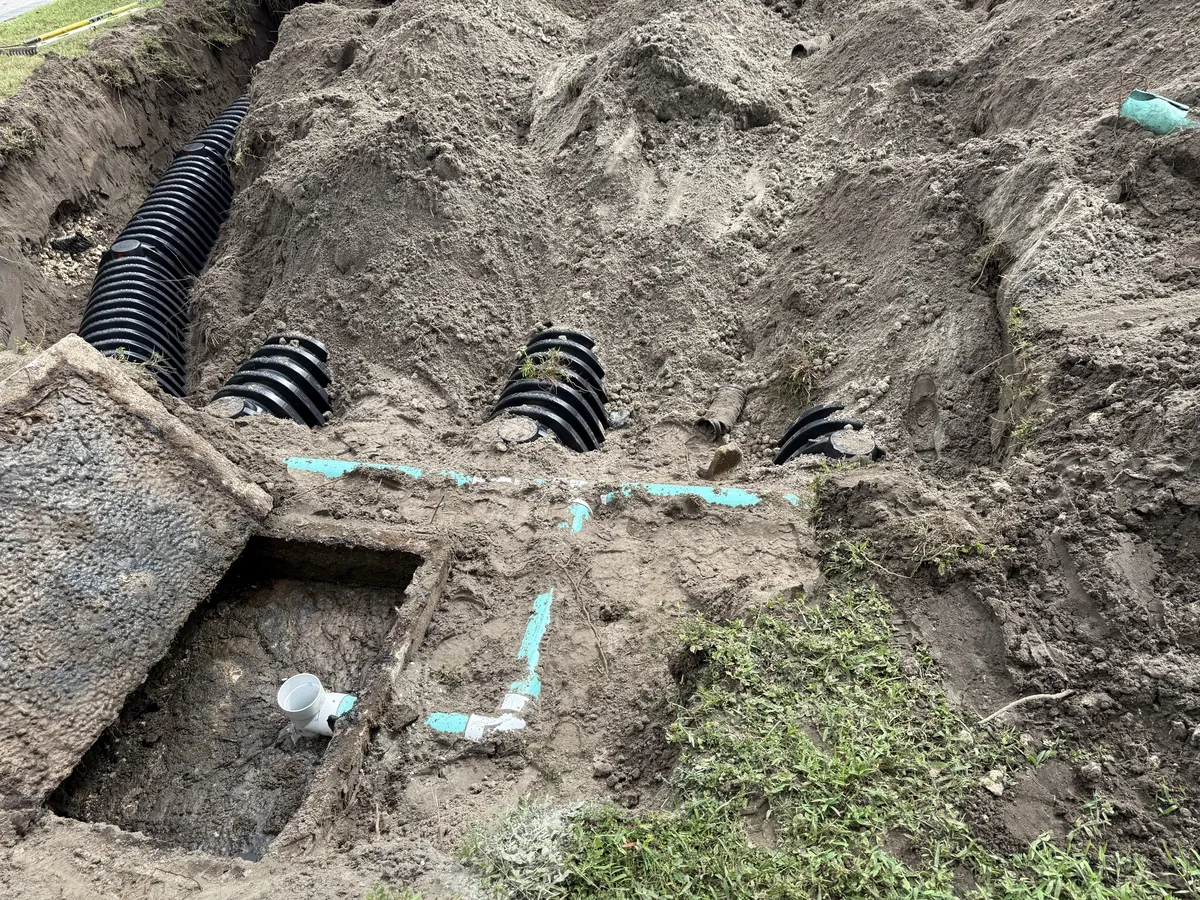
A pump-out is routine maintenance. A drain field replacement is a major project involving permitting, excavation and the loss of a large part of the yard.
When a tank is over-full, solids carry out to the drain lines and into the surrounding soil. Those solids clog the pore space the soil needs in order to absorb, and that clogging is not reversible by pumping afterwards. The damage happens quietly, over months, before any symptom shows.
This is the entire economic argument for pumping on schedule: it is cheap insurance on an expensive component. Where a field is already struggling, drain field rejuvenation or restoration may be options short of replacement, but prevention is better than either.
Keeping Records and Finding the Tank
Write down the date each time it is pumped, and keep the report. The pumper should note the sludge and scum levels, which is what lets the next interval be set from evidence rather than habit.
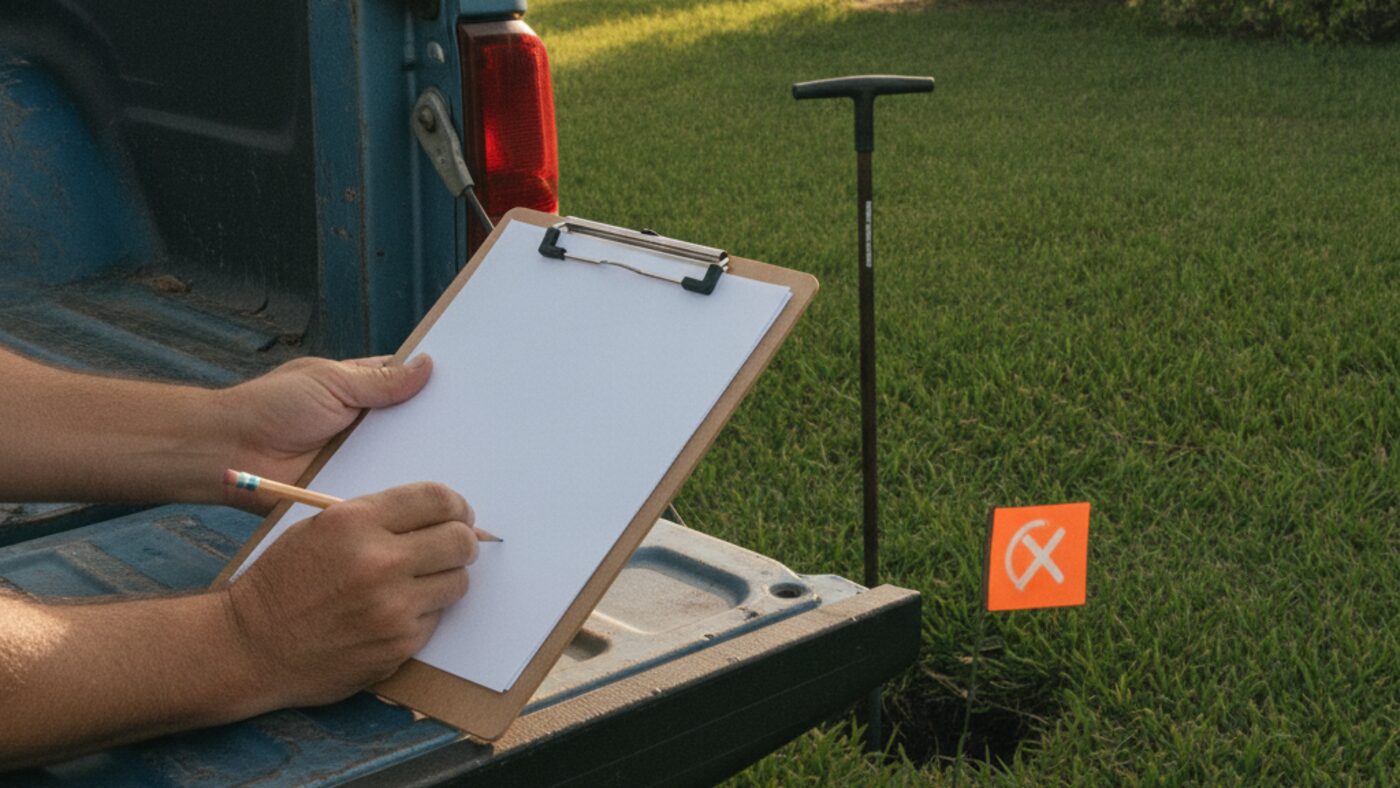
If you do not know where the tank is, that is worth resolving before it matters. Florida septic systems are permitted through the county health department, and records often exist for the original installation. The Florida Department of Health's onsite sewage program is the starting point.
Keep the access lids findable. A tank buried under a new patio or a shed becomes considerably more expensive to service.
What Not to Do
Do not use additives marketed as removing the need for pumping. Solids still have to come out physically.
Do not drive or park over the tank or drain field. Compaction damages both, and the lids are not built for vehicle loads.
Do not plant trees near the drain field or the line running to it. Roots find it, and then you have the separate problem covered in our post on tree roots in a sewer line.
Practical Takeaways
Three to five years for most households, shorter with a big family, a small tank or a disposal. Keep the records so the interval is based on measured levels. Never wait for a symptom, because the symptom usually means the drain field has already been taking solids.
Talk to a Licensed Professional
OC's Plumbing & Septic services septic systems across Lakeland, Polk City, Auburndale and the surrounding area. Call (863) 393-6473 or use the contact page.
Frequently Asked Questions
Every three to five years suits most households. The interval depends on tank size and how many people are using it, so a 900-gallon tank serving five people fills far faster than the same tank serving two. The EPA advises having a typical system inspected roughly every three years by a professional.
The solid layer builds until it reaches the outlet, and then solids pass into the drain field instead of staying in the tank. Those solids clog the soil around the drain lines, and once that happens the drain field stops absorbing. Replacing a drain field costs many times what routine pumping costs.
Yes. A disposal adds food solids the tank has to hold, and households that use one heavily generally need shorter pumping intervals. Our guide to using a garbage disposal with a septic system covers how to limit the impact.
Not usually. A saturated drain field during the wet season can cause backups that look like a full tank but are a different problem, and pumping alone will not fix it. A septic professional can tell which one you have.