
Key Takeaway
When heavy rain raises the water table above your drain field, effluent has nowhere to percolate, so drains slow and toilets gurgle even though nothing is clogged. Do not pump the tank while the soil is still saturated: the EPA warns a tank in saturated soil can float out of the ground. Reduce water use, keep vehicles off the field, and wait for groundwater to drop. If the problem repeats in dry weather, the drain field itself has failed. Call (863) 393-6473 for an evaluation.
If your drains slowed down or your toilets started gurgling in the days after a heavy Florida downpour, the problem is usually not a clog. It is almost always groundwater: rain has raised the water table into the soil under your drain field, and the field has nowhere left to put your household's wastewater.
That distinction matters: the fix for a soaked drain field is close to the opposite of the fix for a clogged pipe, and the most common reaction to a wet-season backup can turn a temporary problem into a full replacement.
How a drain field actually works
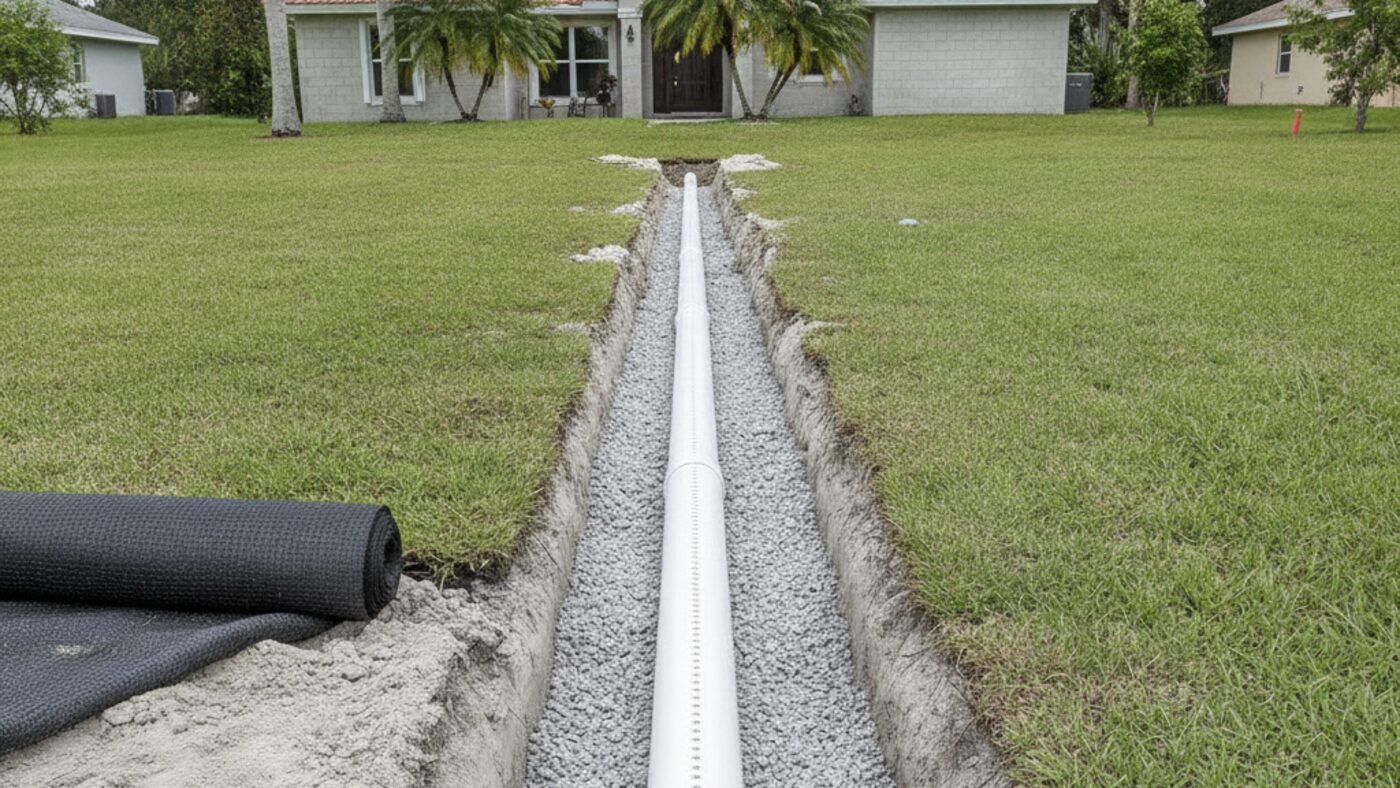
Your septic tank does not dispose of anything. It separates and holds solids, then passes the liquid effluent out to the drain field: a set of perforated pipes or chambers in trenches that lets the effluent percolate down through unsaturated soil, where bacteria treat it before it reaches groundwater.
The key word is unsaturated. The system depends on dry, airy soil below the trenches to take the water. Remove that and the field stops working, even though every component is intact.
Why Central Florida's wet season causes this
When heavy rain saturates the ground, the water table rises. If it reaches the bottom of your drain field, effluent has nowhere to percolate and backs up along the path of least resistance: your house.
Florida's rules recognise exactly this risk. Under Florida Administrative Code Rule 62-6.006(2), a site is only suitable for a conventional system where "the water table elevation at the wettest season of the year is at least 24 inches below the bottom surface of the drainfield." That two-foot buffer is the margin your system runs on in September.
Around Polk County, how much margin you have depends on where you are. Properties on the sandy Lake Wales Ridge soils drain quickly and tend to ride out a wet spell. Head west toward the county line and the lower-lying areas around Kathleen, Willow Oak, and Medulla, and you hit denser clay and hardpan that holds water. Two homes ten minutes apart can behave completely differently in the same storm, and older systems on lots that were marginal when permitted show symptoms first.
The mistake that turns a wet week into a replacement
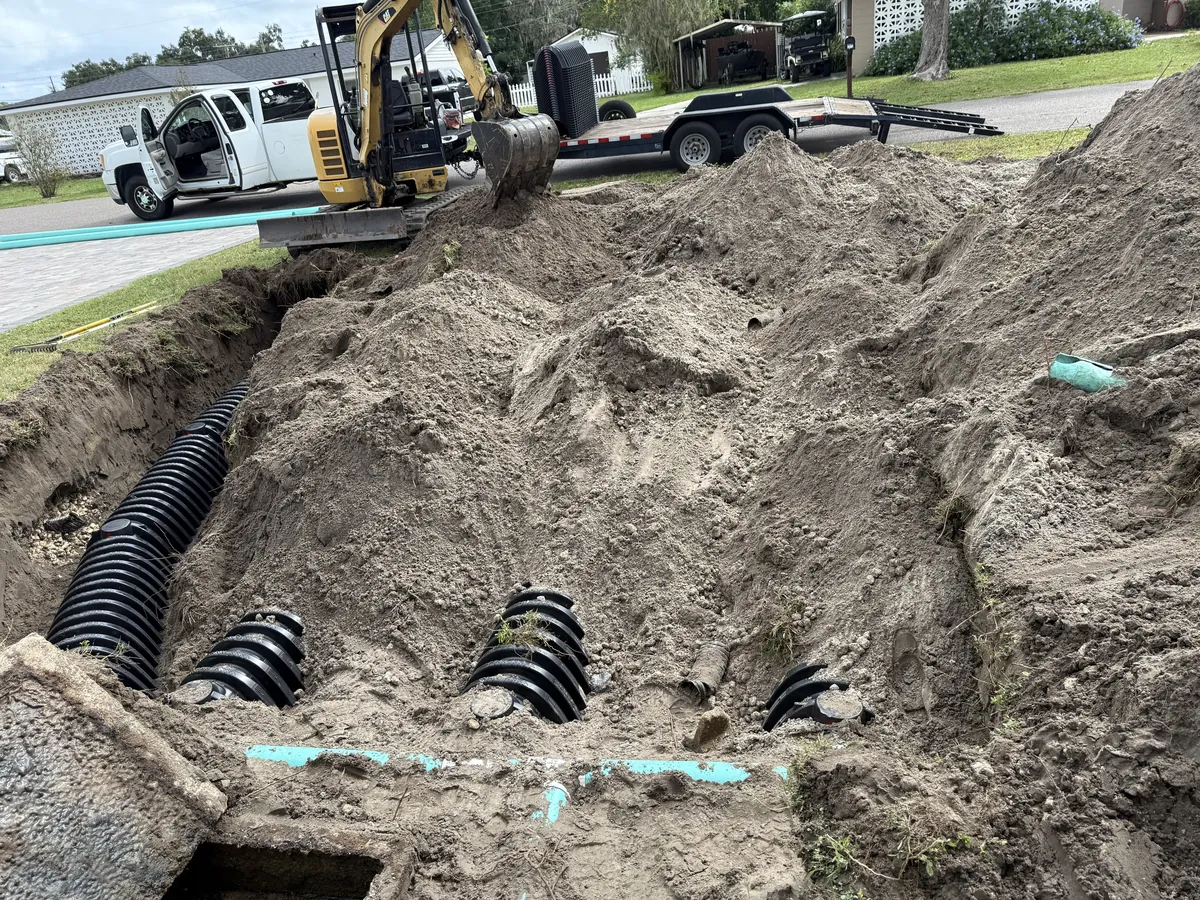
The instinct when a septic system backs up is to call for a pump-out. During a saturated spell that is the wrong move, and the US EPA is blunt about why. Its guidance on septic systems after a flood states: "Do not open the septic tank for pumping while the soil is still saturated... pumping out a tank that is in saturated soil may cause it to 'pop out' of the ground."
An empty tank in waterlogged soil is a buoyant object. Floating it breaks the inlet and outlet connections and can crack the tank, turning a problem that would have resolved on its own into a genuine replacement.
The EPA adds two more warnings worth following. "Do not compact the soil over the soil absorption field by driving or operating equipment in the area," because saturated soil compacts easily and compaction permanently reduces the field's ability to treat wastewater. And "do not use the sewage system until water in the soil absorption field is lower than the water level around the house."
What to do instead
While the ground is saturated, the only thing that reliably helps is putting less water into the system:
- Stagger laundry and dishwasher loads across the week instead of running them back to back, and space out showers.
- Fix any running toilet immediately. A single leaking flapper can add hundreds of gallons a day to a system with no room for it.
- Keep vehicles, trailers, and equipment off the drain field entirely.
- Redirect downspouts so roof runoff discharges well away from the field.
If sewage has actually backed up into the house, follow the emergency steps in our guide on what to do when your septic backs up.
Soaked, or failed?
Most rain-related drain field trouble resolves within a few days to a couple of weeks after the weather clears. Timing is the most reliable signal you have.
Probably just saturated if symptoms appear during or right after heavy rain, improve as the ground dries, and disappear in dry weather.
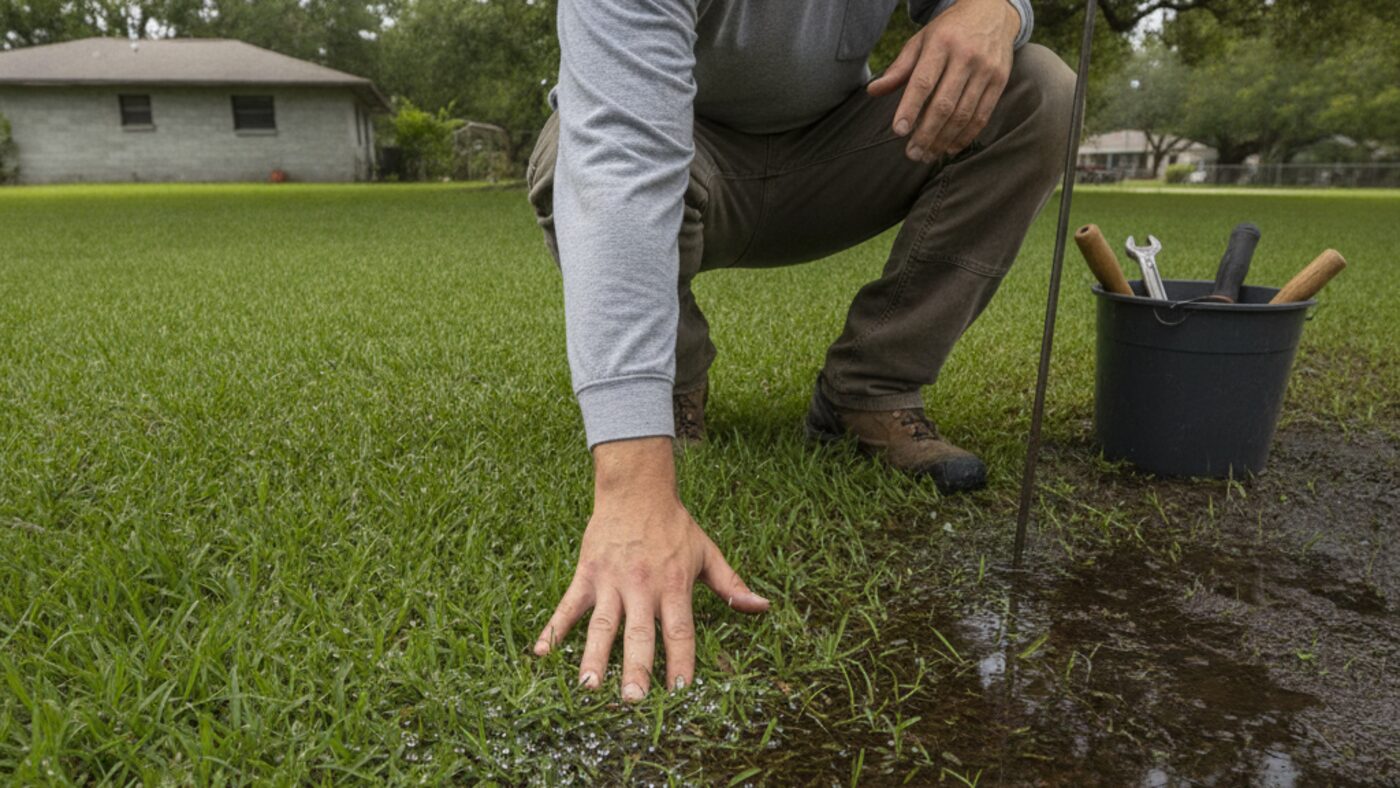
Probably failing if, once the ground has dried out, you still see slow drains, standing water or spongy ground over the field, sewage odours outdoors, grass noticeably greener over the trenches than the rest of the yard, or backups recurring regardless of weather. A field that has not recovered several weeks into dry conditions is not going to recover on its own.
What a real fix looks like
Not every failing field needs replacing, and that is worth checking before you budget for one.
Often the drain line feeding the field is the real bottleneck, choked with roots or solids so only a fraction of the field receives flow. Hydro jetting that line and clearing the blockage restores the field to full capacity, which is the core of drain field restoration. Where the field is sound but sluggish, drain field rejuvenation can extend its working life considerably.
When a field has genuinely reached the end of its life, a full septic and drain field installation is the answer: a site evaluation and percolation test to size the system to your soil, permits through the Florida Department of Health in Polk County at the Bartow office, and a design that accounts for your lot's wet season water table. Installation runs one to three days on site, plus permitting time.
You cannot tell which you need from the yard, but a camera inspection settles it in one visit.
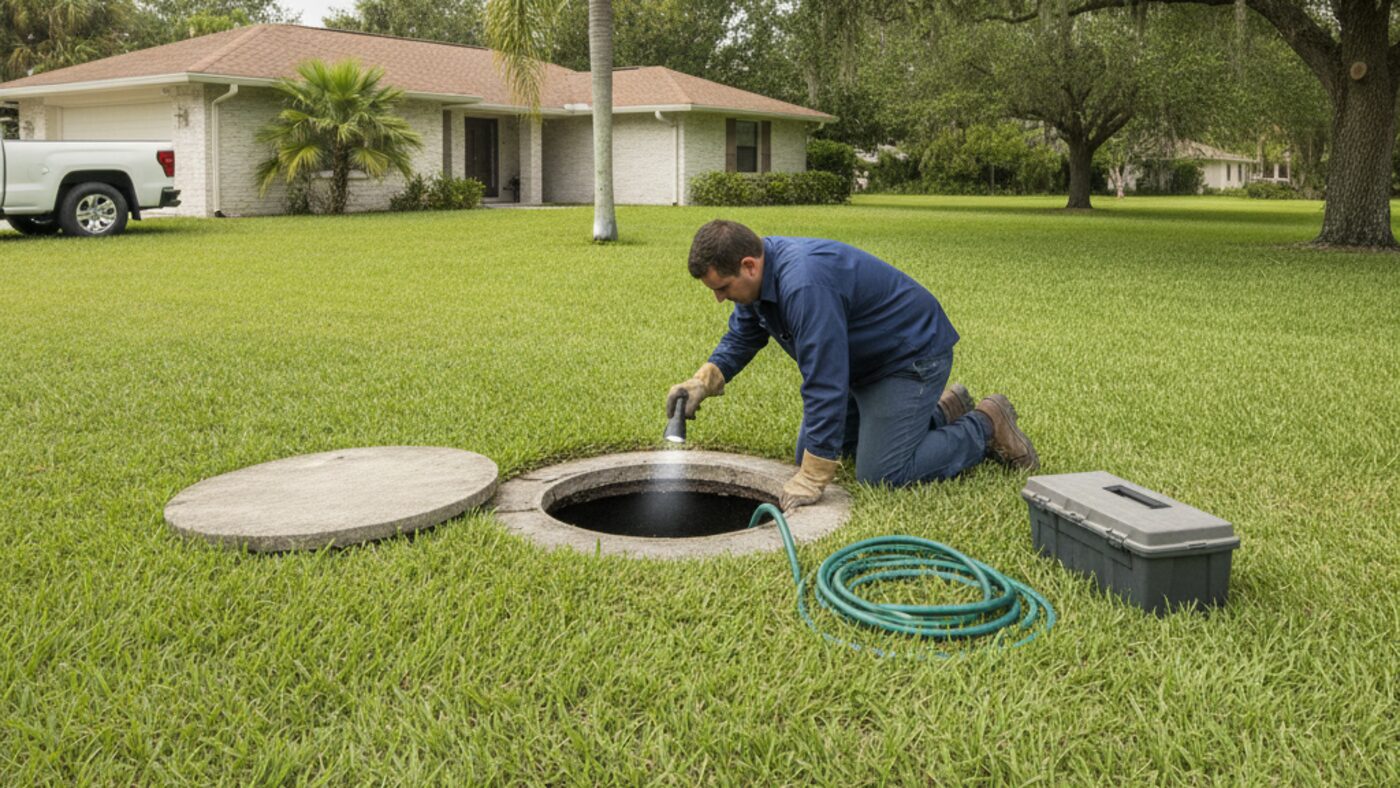
If your drains have been slow since the last big storm, or you are seeing standing water over the field, call OC's Plumbing & Septic at (863) 393-6473. We handle both the plumbing and the septic side, so one visit diagnoses the whole system rather than half of it.
Frequently Asked Questions
Heavy rain raises the groundwater table into the soil beneath your drain field. A drain field works by letting effluent soak into unsaturated soil, so when that soil is already full of rainwater, there is nowhere for the wastewater to go and it backs up toward the house. The system is not clogged, it is out of capacity until groundwater drops.
Not while the soil is still saturated. The EPA warns that pumping a tank surrounded by saturated soil can cause it to float out of the ground and can damage the inlet and outlet pipes. Pumping also does not fix the underlying problem, because a full drain field will simply refill the tank. Wait until groundwater recedes, then have the system inspected.
A drain field that is only saturated usually recovers within a few days to a couple of weeks after the rain stops, as groundwater drops and the soil drains. If your drains are still slow several weeks into dry weather, the field is not recovering on its own and needs to be evaluated.
Timing is the clearest signal. A soaked field causes problems that start with heavy rain and clear as the ground dries. A failed field causes backups, standing water, sewage odours, or unusually lush grass over the field in dry weather too. Recurring problems outside the wet season point to failure rather than saturation.
Often, yes. If the drain line feeding the field is blocked by roots or solids, hydro jetting the line and clearing the blockage restores flow to the field's full capacity. If the field itself is still structurally sound, restoration is usually far less expensive than a full replacement. A camera inspection and site evaluation determine which applies.
The Florida Department of Health in Polk County permits and inspects new and repaired septic systems, through the Bartow Environmental Public Health Office. Polk County was not included in the 16 counties where the Department of Environmental Protection took over onsite sewage permitting in January 2025.