
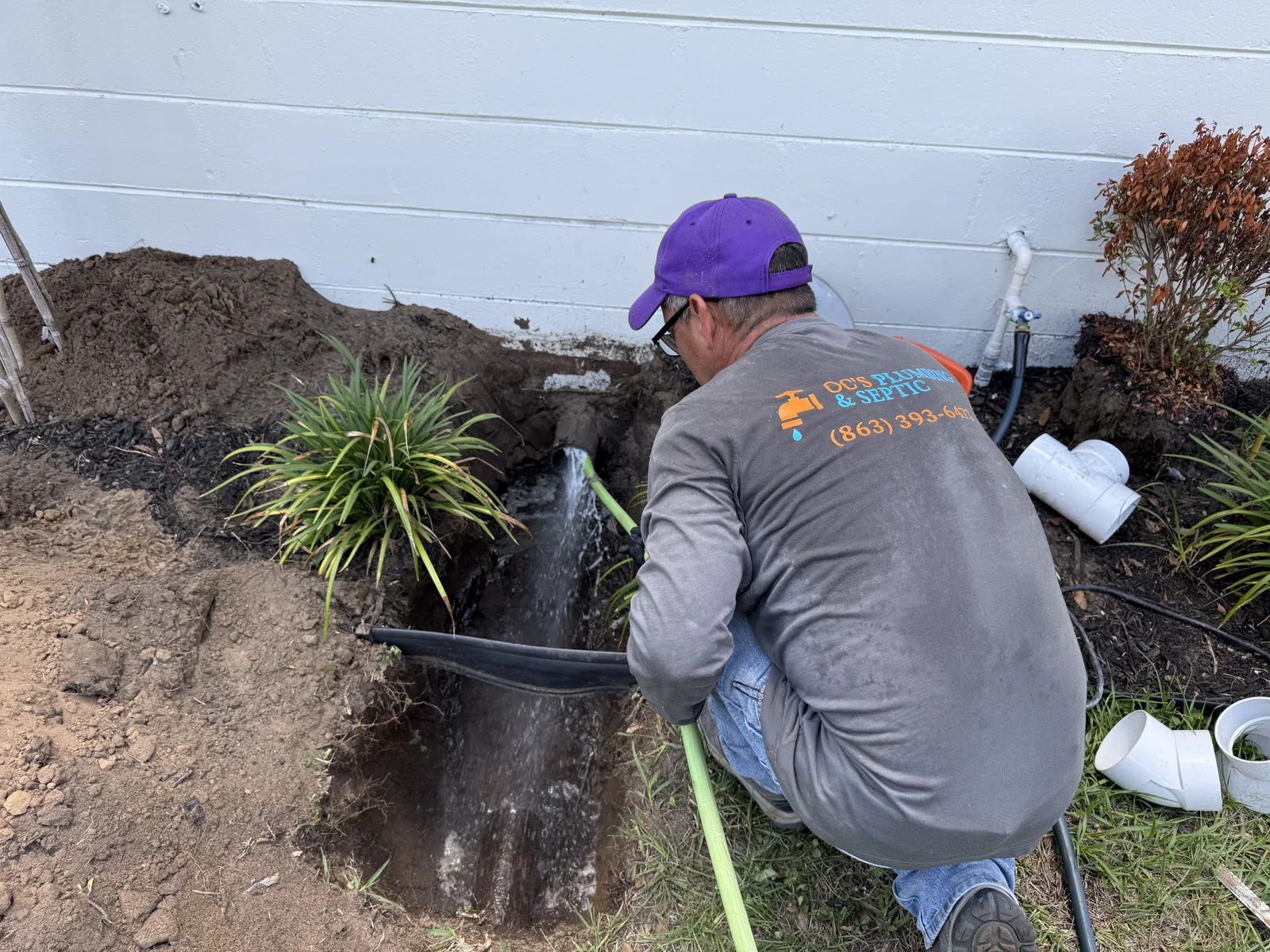
Key Takeaway
If your septic system is backing up into your Lakeland home, immediately stop all water usage. Turn off the washing machine, dishwasher, and do not flush any toilets. Keep children and pets away from the overflow, as raw sewage is a severe health hazard. Do not attempt to open the septic tank yourself. Call a licensed septic professional immediately at (863) 393-6473 for emergency pumping and diagnosis.
There are few home emergencies more stressful, and unsanitary, than a septic system backup. When raw sewage begins rising out of your bathtubs, showers, or floor drains, panic sets in quickly. The smell is overwhelming, the potential for property damage is massive, and the health risks to your family are very real.
If you live in Lakeland or the surrounding rural areas of Polk County and rely on a septic system, knowing exactly how to react in the first few minutes of a backup can save you thousands of dollars in water damage restoration. Many homeowners in Central Florida's unincorporated areas depend entirely on septic systems rather than municipal sewer lines, making this knowledge essential for protecting your property and your family's health.
Here is the step-by-step emergency protocol you must follow when your septic system backs up.
Step 1: Stop All Water Usage Immediately
This is the most critical step. A septic backup occurs when wastewater cannot exit the tank and flow into the drain field, forcing it to travel backward up the lowest plumbing lines in your home. In many Lakeland homes, this means sewage backs up through the lowest fixtures first, often the master bathroom, laundry room, or basement floor drain.
Every single drop of water you send down a drain will simply add to the sewage overflowing onto your floors. The more water that enters the system while it's backed up, the higher the backup will rise and the more damage it will cause.
- Turn off the washing machine immediately. Do not finish that load of laundry.
- Turn off the dishwasher. If it's mid-cycle, let it sit; do not drain it.
- Do not take a shower or run any sinks, even for hand washing.
- Absolutely do not flush a toilet. This is perhaps the hardest instruction to follow, but each flush sends 1.5 to 5 gallons of water directly into a system that cannot handle it.
If you have a large family or guests in your home, ensure everyone in the house knows that the plumbing is completely off-limits until the professionals arrive. Post a note on bathroom doors if necessary. In multi-story homes, the backup may not be immediately obvious on upper floors, but water is still accumulating in the tank and will eventually back up through every fixture in the house.
Step 2: Protect Your Family and Pets
Raw sewage is highly toxic. It contains harmful bacteria including E. coli, salmonella, and hepatitis A virus, along with parasites and other pathogens that can cause severe illness in humans and animals. Exposure through skin contact, inhalation, or accidental ingestion poses genuine health risks.
Evacuate children and pets from the area where the backup is occurring immediately. If you have young children who might be tempted to play in or touch contaminated water, consider leaving the house entirely until the area is professionally cleaned. If the sewage has overflowed onto carpets or porous flooring materials, consider that material contaminated and potentially unsalvageable. Do not attempt to clean up a large sewage spill with standard household cleaners and a mop; you risk serious infection and will likely spread contamination rather than eliminate it.
Professional water damage restoration companies have the necessary personal protective equipment (PPE), industrial-grade antimicrobial chemicals, and specialized equipment to sanitize the area safely. Many insurance policies cover professional sewage cleanup, so contact your homeowner's insurance before attempting any cleanup yourself.
Step 3: Do Not Open the Septic Tank
It is tempting to grab a shovel, uncover the septic tank lid, and open it to see if it is full or to attempt a quick fix yourself. Do not do this under any circumstances.
Septic tanks produce highly toxic and flammable gases, including hydrogen sulfide (which smells like rotten eggs) and methane. These gases accumulate in the empty space above the wastewater inside the tank. Opening the tank without proper training, ventilation, and safety equipment can result in rapid asphyxiation. You could lose consciousness within seconds and collapse into the tank. Rescue attempts by untrained family members often result in multiple fatalities.
Furthermore, if the tank is overfull due to a drain field failure, opening the lid could cause a massive, uncontrollable spill of raw sewage directly into your yard, contaminating your soil and potentially reaching groundwater. The septic tank is a confined space, and confined space entry requires specialized training and equipment. Leave the tank access entirely to licensed professionals like those at OC's Plumbing & Septic.
Step 4: Call a Licensed Septic Professional
A septic backup is not a problem that will resolve itself. You need an emergency response from a company licensed to handle both plumbing blockages and septic system pumping and repair. In Polk County, Florida, septic contractors must be properly licensed and insured to protect homeowners.
When you call, be prepared to provide the dispatcher with as much information as possible:
- When did you first notice the backup? (Hours or days ago?)
- Where is the water backing up specifically? (First-floor shower, master bathroom, basement floor drain, multiple fixtures?)
- When was the last time the septic tank was pumped? (If you don't know, this is important information.)
- Have you noticed any foul odors or wet spots in the yard recently, even before the backup?
- How many people live in the home? (Tank size is often calculated based on occupancy.)
- Have you had recent heavy rain or noticed standing water in the yard?
This information helps the dispatcher prioritize your call and allows the technician to arrive prepared with the right equipment.
Step 5: Identify the Root Cause (What the Plumber Will Do)
When the professionals arrive, their first priority is to stop the backup and relieve the pressure on your home's plumbing. They will typically begin by pumping the septic tank to lower the water level and stop the backup into your home.
However, a full tank is usually a symptom, not the root cause. A properly functioning septic system should never "fill up" with water; the liquid effluent should constantly drain out into the drain field. If the tank is overflowing, the plumber will investigate the three most common causes:
- 1A Main Line Plumbing Blockage: The pipe connecting your house to the septic tank may be clogged with grease buildup, "flushable" wipes (which don't actually break down), paper towels, or tree roots that have invaded the line. In Lakeland's sandy soil, tree roots are particularly aggressive and can penetrate even small cracks in older PVC pipes. In this case, the tank itself is fine, but the pipe needs to be cleared with a heavy-duty auger or hydro jetting. This is usually the least expensive fix.
- 1A Clogged Effluent Filter: Modern septic tanks installed in the last 20 years have a filter on the outlet pipe that prevents solid waste from entering the drain field. If this filter hasn't been cleaned in years, it will become clogged with solids, causing the tank to back up into the house. Cleaning the filter is a quick and inexpensive fix, often costing just $150-$300.
- 1A Failing Drain Field: This is the most serious and expensive diagnosis. If the drain field soil has become saturated with biomat (a thick, black, slimy layer of organic material that forms over years), it can no longer absorb wastewater. The effluent has nowhere to go, so it backs up into the tank and eventually into your home. Drain field failure requires either professional rejuvenation (hydro jetting the lateral lines and applying bacterial shock treatments) or, in severe cases, a complete drain field replacement, which can cost $10,000 to $30,000 or more in Polk County.
Step 6: Prevent Future Backups
Once the immediate emergency is resolved, take these steps to prevent a recurrence:
- Pump your tank on schedule. For a typical household of 3-4 people with a 1,000-gallon tank, pumping every 3 to 5 years is the standard recommendation. If you have a garbage disposal, a large family, or use significant amounts of water, pump more frequently.
- Never flush anything except toilet paper. No wipes (even "flushable" ones), no feminine hygiene products, no paper towels, no medications, no cooking grease.
- Spread out water usage. Running the washing machine, dishwasher, and showers simultaneously overwhelms the system. Space out heavy water use throughout the day and week.
- Protect the drain field. Never park vehicles on the drain field, never plant trees or shrubs near it, and never cover it with concrete or asphalt. The soil needs to breathe and absorb sunlight to function properly.
- Schedule regular inspections. Have a licensed professional inspect your system every 1-2 years to catch small problems before they become emergencies.
Need Emergency Septic Help in Lakeland? OC's Plumbing & Septic Is Ready
A septic backup requires immediate professional attention. Our licensed septic technicians serve Lakeland and throughout Polk County with emergency pumping, drain field diagnosis, and complete septic system repair. We understand the urgency of these situations and respond quickly to protect your home and family.
Call us at (863) 393-6473 or contact us today for emergency septic service. Licensed under CFC035684, we have the equipment and expertise to diagnose and resolve your septic emergency quickly and safely.
Frequently Asked Questions
Stop all water usage immediately. Turn off the washing machine, dishwasher, and do not flush any toilets. Every drop of water you send down a drain adds to the sewage overflowing onto your floors. Then call a licensed septic professional at (863) 393-6473.
No. Never open a septic tank yourself. Septic tanks produce highly toxic and flammable gases including hydrogen sulfide and methane that can cause rapid asphyxiation within seconds. Leave tank access entirely to licensed professionals with proper safety equipment.
Emergency septic pumping in Lakeland typically costs between $300 and $600 depending on tank size and accessibility. If the backup is caused by a drain field failure rather than a full tank, additional diagnostic work and repairs will be needed.
The three most common causes are a main line plumbing blockage between the house and tank, a clogged effluent filter, or a failing drain field that can no longer absorb wastewater. A licensed professional can diagnose the exact cause with a camera inspection.
For a typical Lakeland household of 3-4 people with a 1,000-gallon tank, pumping every 3 to 5 years is recommended. Larger families or homes with garbage disposals may need more frequent pumping to prevent solids from reaching the drain field.