Key Takeaway
A main sewer line clog blocks the single pipe that carries all of a home's wastewater away, so it shows up in several fixtures at once, usually starting with the lowest drain. Stop running water, skip chemical drain cleaners, and check the outdoor sewer cleanout. Florida Building Code Section 708.1.3 requires a cleanout where the building drain meets the building sewer, and it is where a plumber clears the line from outside. Call (863) 393-6473.
A main sewer line clog is a blockage in the one pipe that carries all of your home's wastewater out to the city sewer or the septic tank, so it affects several drains at once instead of just one. If more than one fixture is slow or backing up at the same time, and especially if the lowest drain in the house is the one filling up, the problem is almost certainly the main line rather than a single sink or toilet.
That difference matters, because a single clog is often a simple fix while a main line stoppage keeps getting worse every time anyone runs water. Here is how to tell which one you have and what to do next.
One Clogged Drain vs a Main Line Clog
Every fixture in your home has its own branch drain. Those branches join together and leave the house as one building sewer. A clog in a branch only affects that fixture: the bathroom sink drains slowly, but the tub and toilet next to it work normally.
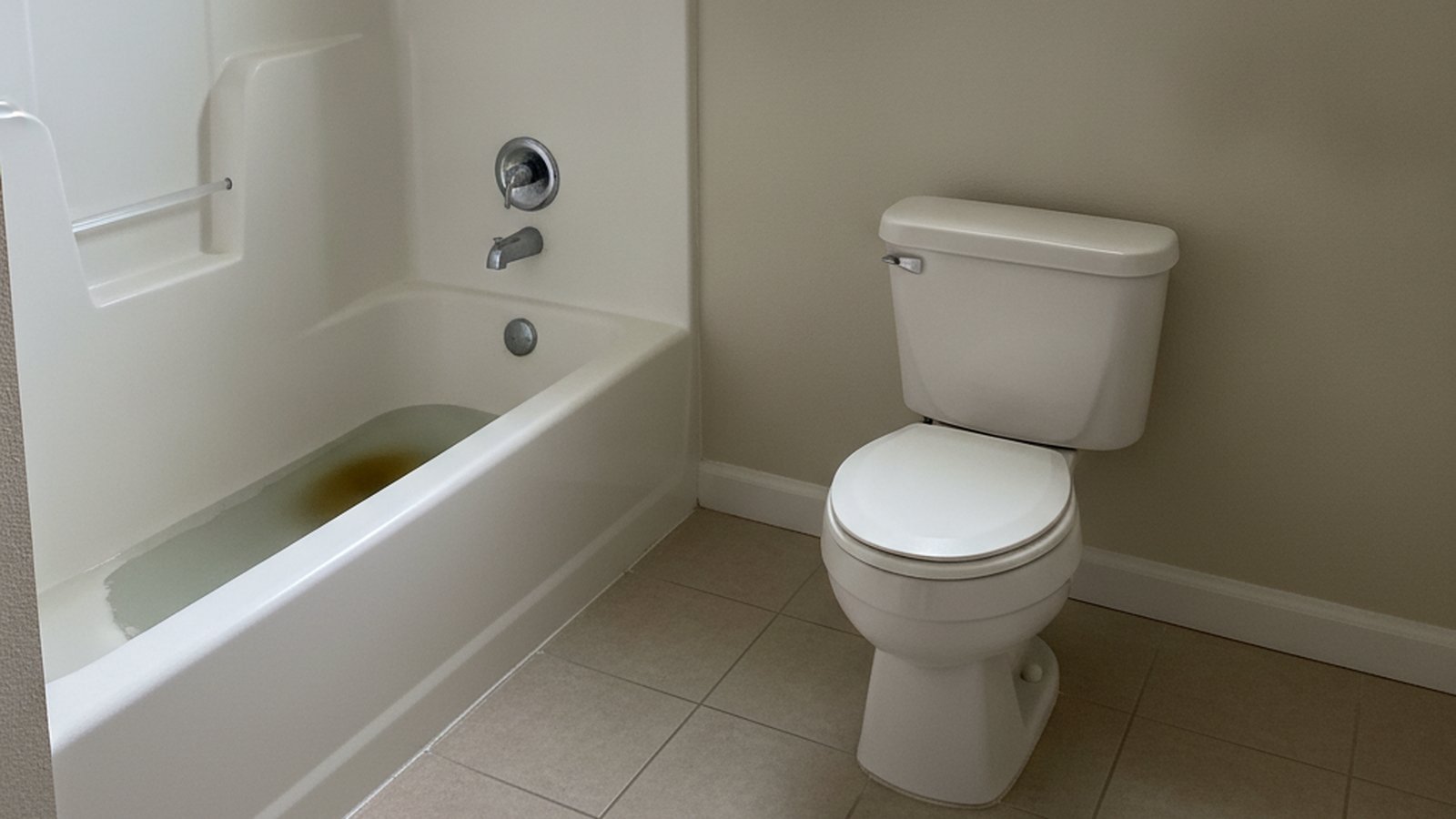
A clog in the main line is downstream of all of them. Water from every fixture has nowhere to go, so it comes back up at the lowest opening it can find. In most single-storey Lakeland homes that is a shower, a tub or a ground-floor toilet.
Signs Your Main Sewer Line Is Clogged
- Flushing a toilet makes water rise in the tub or shower.
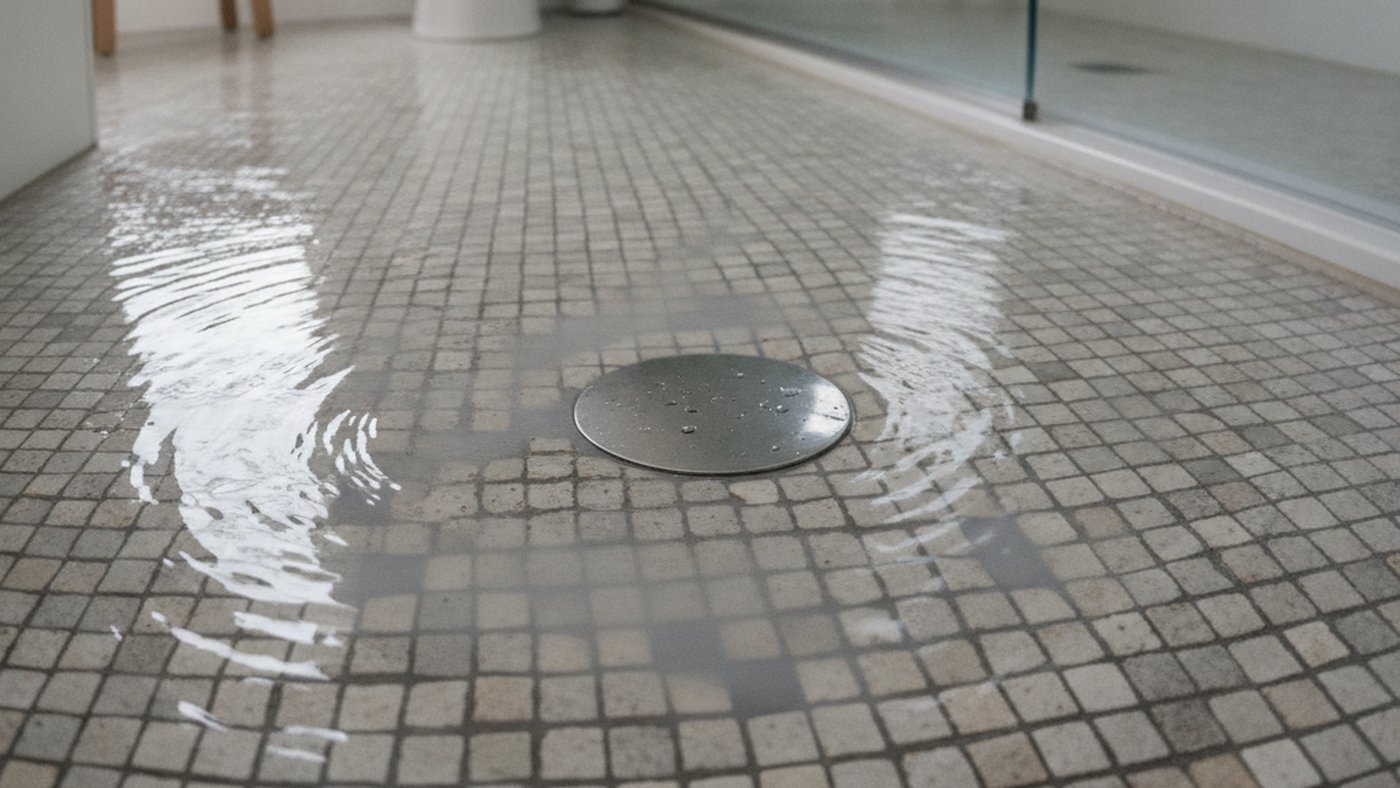
- The washing machine drains and a shower, toilet or floor drain backs up.
- Several drains are slow at once, in different rooms.
- Gurgling from toilets or drains when other fixtures are used.
- Sewage odour in the yard or near the foundation.
- Water or waste around the outdoor cleanout.
One of these on its own can have other causes. Two or more together are a strong sign the main line is involved.
Find Your Sewer Cleanout
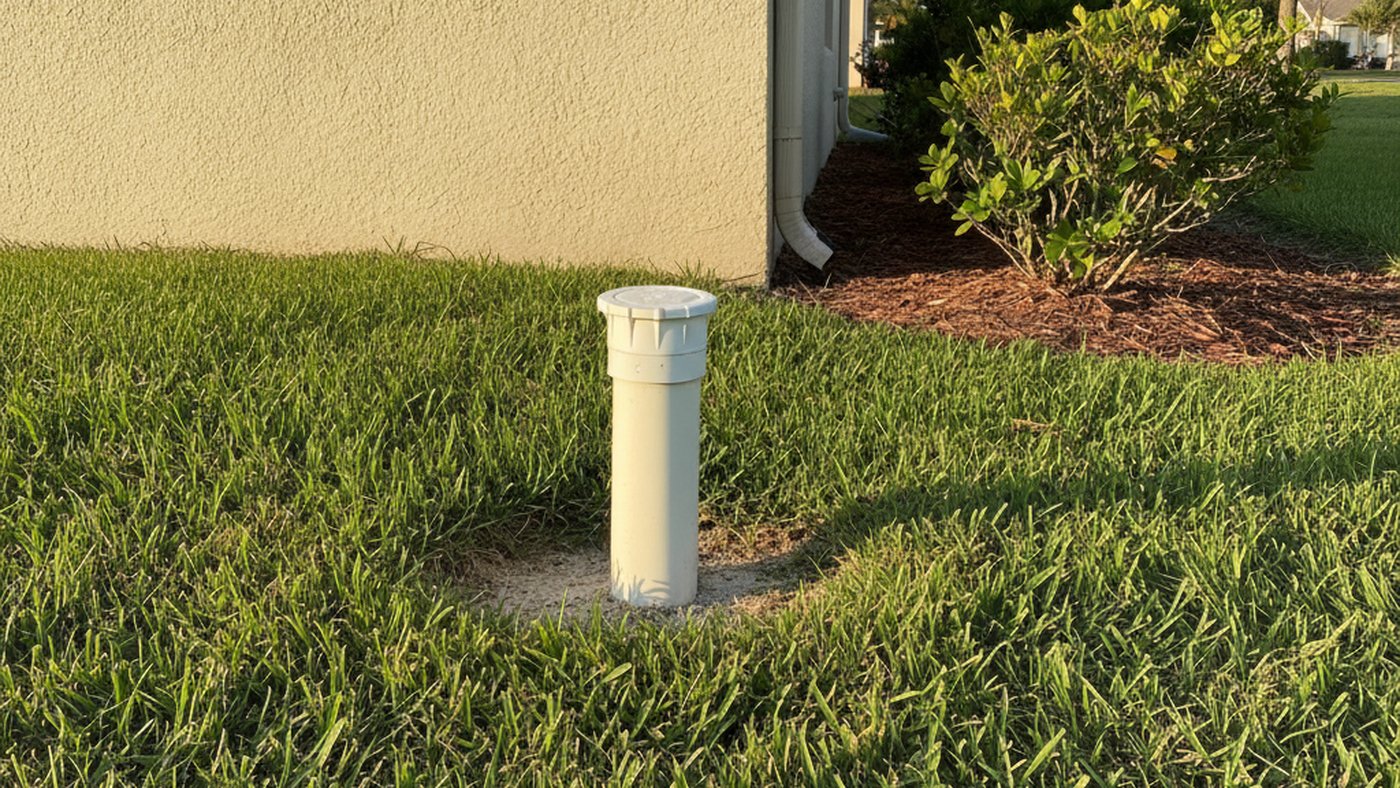
Your cleanout is the access point that lets a plumber clear the main line from outside, without pulling a toilet. On most Florida homes it is a capped 3 or 4 inch pipe sticking a few inches out of the ground near the foundation, often on the side of the house facing the street or the septic tank.
It is there by code. The Florida Building Code, Plumbing, Section 708.1.3 requires the junction of the building drain and the building sewer to be served by a cleanout "located at the junction or within 10 feet" upstream of it. Section 708.1.2 adds that building sewers smaller than 8 inches need cleanouts at intervals of no more than 100 feet, so a long run to the street or tank may have more than one.
Where it helps: if the cleanout pipe is full of standing water, the blockage is further out, between the cleanout and the city main or the tank. If the cleanout is dry while the house is backing up, the blockage is between the house and the cleanout. Be careful with the cap. If the line is full, loosening it can release sewage under pressure, so if you are unsure, leave it for the plumber.
What to Do Right Now
- 1Stop using water. No flushing, showers, dishwasher or laundry. Every gallon has to go somewhere, and in a blocked main line it comes back into the house.
- 2Skip chemical drain cleaners. They cannot reach a clog out in the sewer line, and they leave caustic water in the pipes.
- 3Don't keep plunging the toilet. With the main line blocked, plunging can push waste out of another drain.
- 4Keep children and pets away from any area where sewage has come up, and clean it with gloves.
If your home is on septic, our guide to what to do when your septic backs up covers the extra steps for that situation.
What Causes Main Line Stoppages in Lakeland Homes
- Tree roots. Mature oaks send roots into cracked joints in older cast iron and clay lines.
- Grease that cools and hardens inside the pipe.
- Wipes and paper products that do not break down, even the ones labelled flushable.
- A belly, a sunken section of pipe where waste settles. Our post on a belly in a sewer line explains why Central Florida's sandy soil causes them.
- Scale and corrosion inside ageing cast iron.
Homes on city sewer inside Lakeland and homes on septic across rural Polk County can show identical symptoms. On septic, though, the cause may also be a tank that is overdue for pumping or a drain field that is no longer accepting water, and those need a different fix from a clog in the pipe.
How a Main Line Stoppage Is Cleared
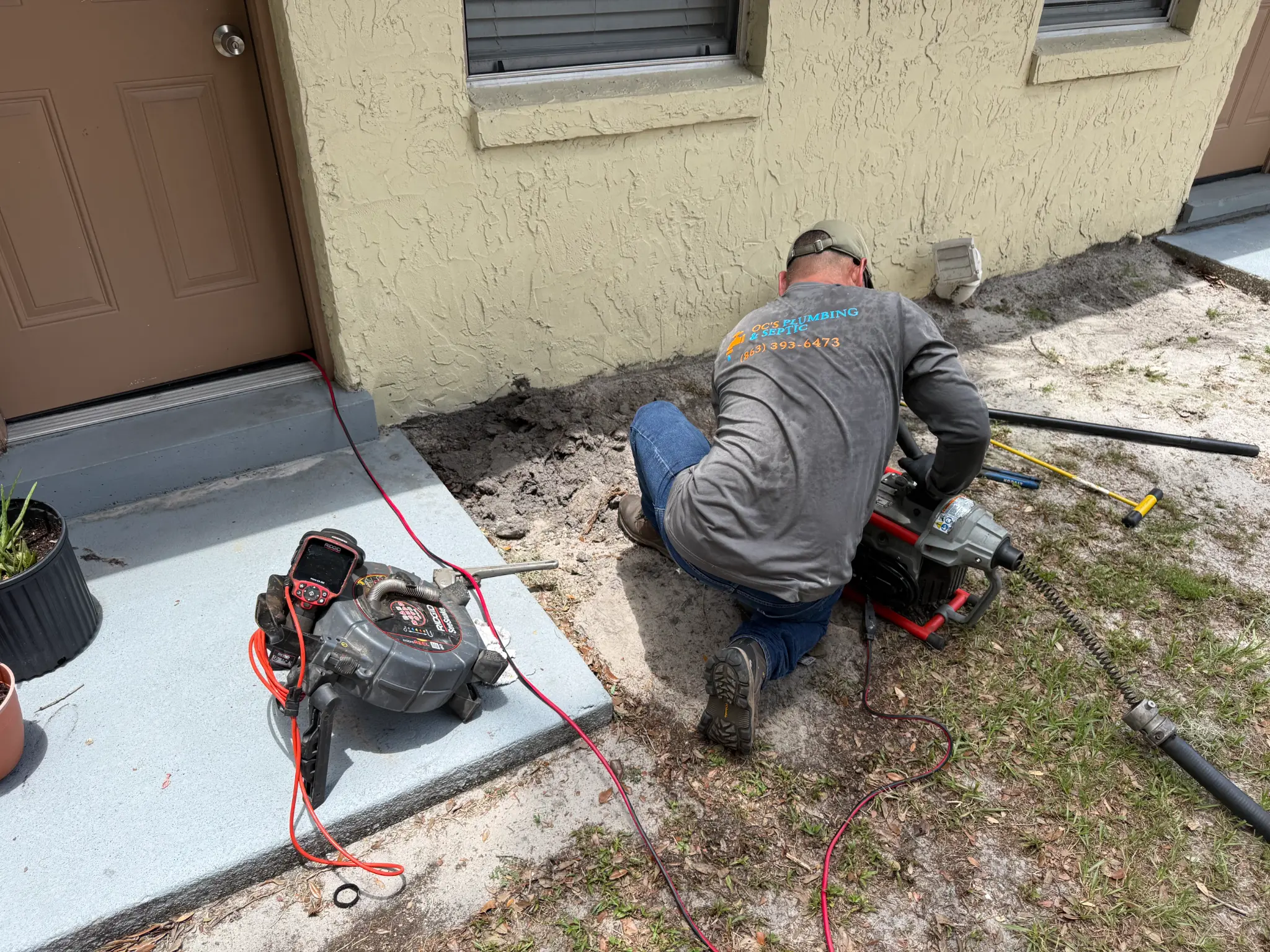
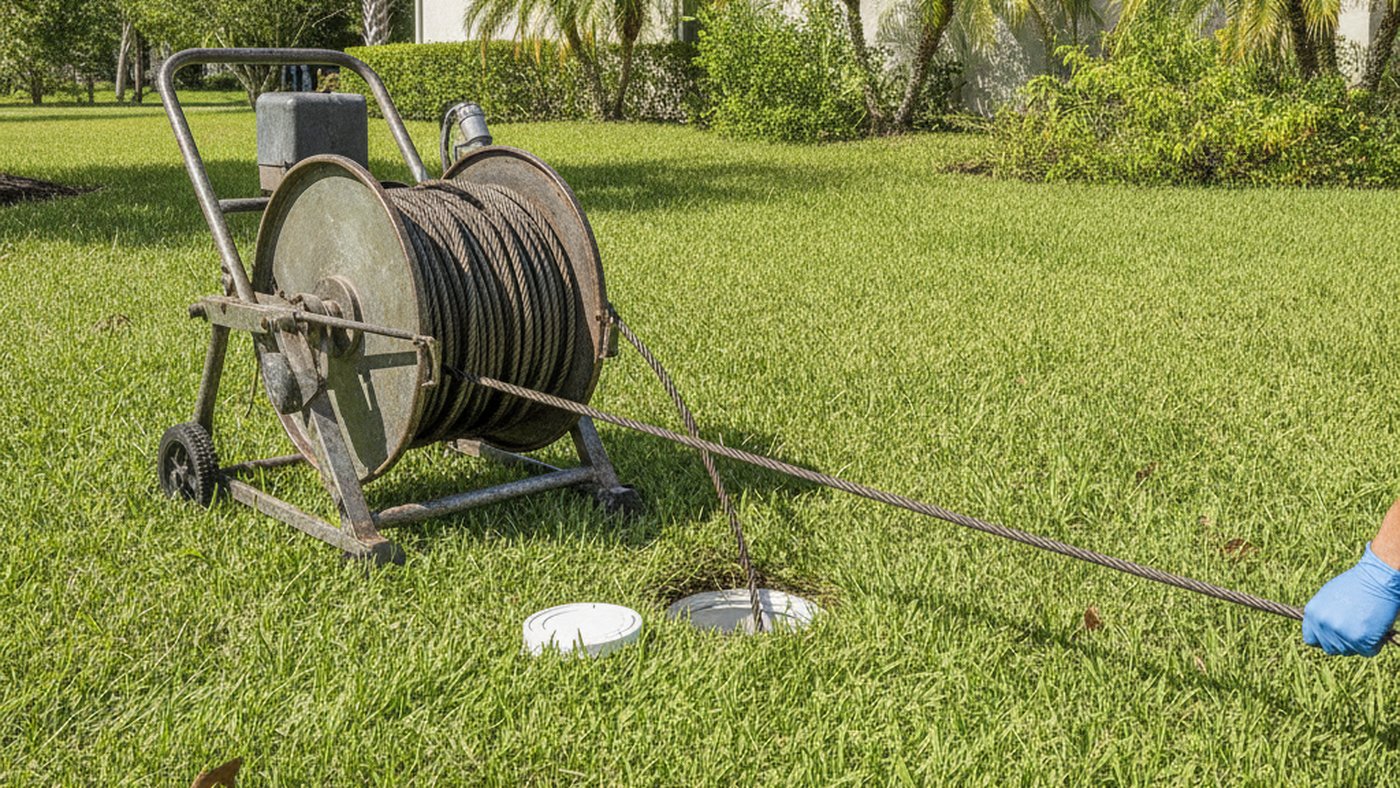
Most main line stoppages are cleared from the outdoor cleanout with a heavy-duty motorised auger that cuts through the blockage and restores flow. When the line clogs again, or the auger brings back roots or pipe fragments, a sewer video inspection shows what is actually inside the pipe: roots at a joint, a belly, a cracked section or heavy scale.
For grease, roots and scale coating the pipe walls, hydro jetting scours the line clean rather than just punching a hole through the blockage. If the camera finds a broken or sagging pipe, cleaning alone will not stop the clogs from coming back, and the damaged section needs repair.
If water is coming up in more than one drain, don't wait for it to get worse. OC's Plumbing & Septic provides main line stoppage clearing in Lakeland and across Polk County, working from your outdoor cleanout wherever possible and giving you a clear price before the work begins. Call (863) 393-6473.
Frequently Asked Questions
The clearest sign is more than one fixture misbehaving at the same time. Water rising in the tub or shower when a toilet is flushed, sinks or the shower backing up while the washing machine drains, and gurgling from several drains all point to the main line rather than a single fixture.
It is usually a capped 3 or 4 inch pipe standing a few inches out of the ground near the foundation, often on the side of the house closest to the street or the septic tank. Florida Building Code Section 708.1.3 requires a cleanout at the junction of the building drain and building sewer, or within 10 feet upstream of it.
It is not recommended. A chemical cleaner poured into a sink will not reach a blockage out in the sewer line, and it leaves caustic water sitting in the pipes for whoever has to open the line next. Stop using water and have the line cleared mechanically from the cleanout.
Not always. On a septic system the same symptoms can come from a clog in the pipe between the house and the tank, a tank that is overdue for pumping, or a drain field that is no longer accepting water. A plumber checks the line and the tank before deciding which it is.