Key Takeaway
Tree root removal from a sewer line is priced by the job, because four things change the work: how much root is in the pipe and how far down the line it sits, whether there is a cleanout to work from, whether the roots need mechanical cutting, hydro jetting or both, and whether the camera shows a cracked or broken pipe that clearing alone cannot fix. Clearing costs far less than replacing the line, but roots come back through the same gap, so the cheapest plan over several years depends on the pipe. OC's Plumbing & Septic runs a camera through the line first and gives a quote before any work starts. Call (863) 393-6473.
The cost of tree root removal from a sewer line comes down to four things: how much root is in the pipe and how far along the line it sits, how easy the line is to reach, whether it needs mechanical cutting, hydro jetting or both, and what the camera shows about the pipe itself. Clearing roots costs far less than digging up and replacing a sewer line, but the cheapest plan over a few years depends on why the roots got in.
Here is how each factor works, so the quote you get makes sense before anyone starts cutting.
Why Root Removal Has No Flat Price
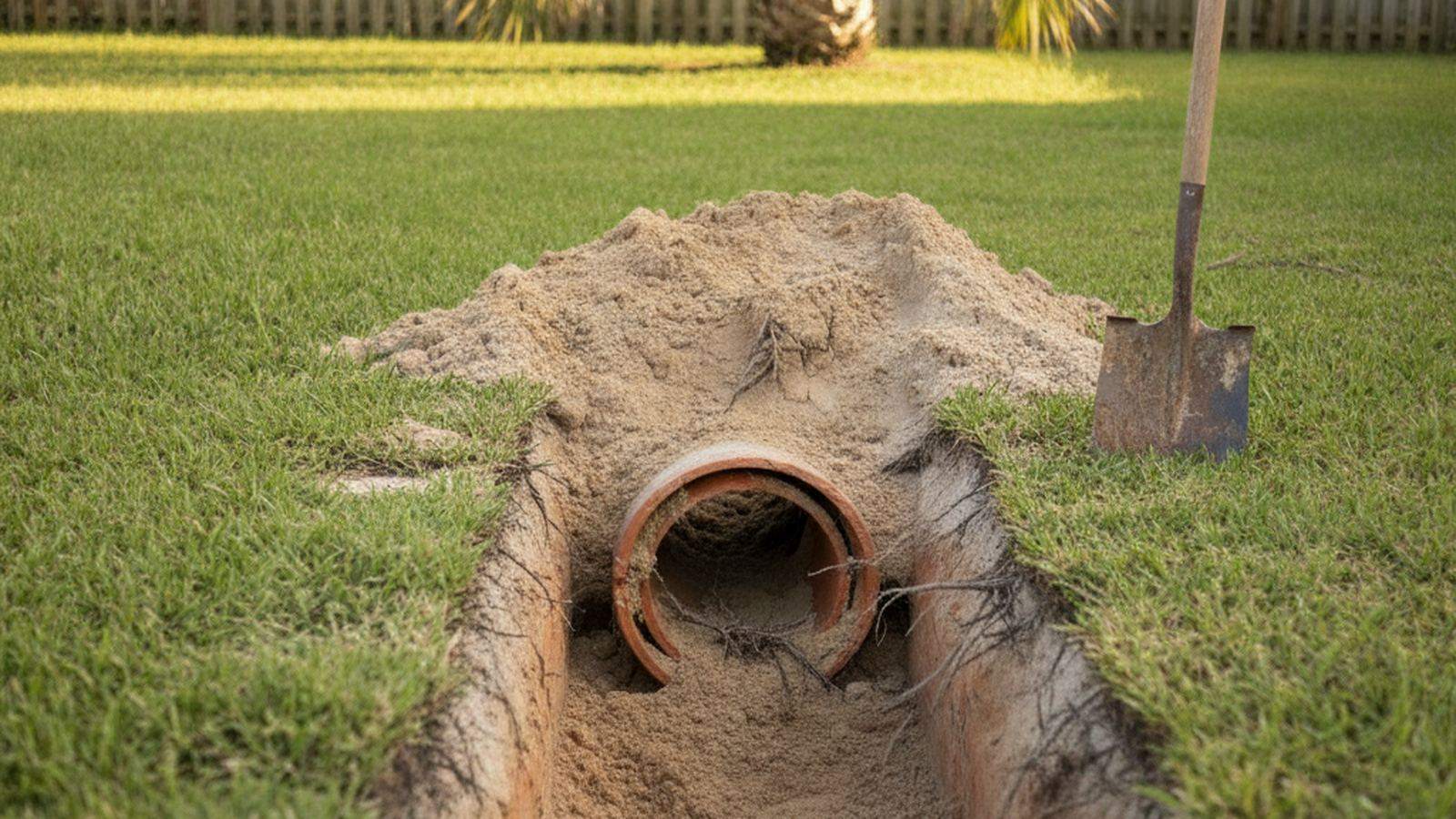
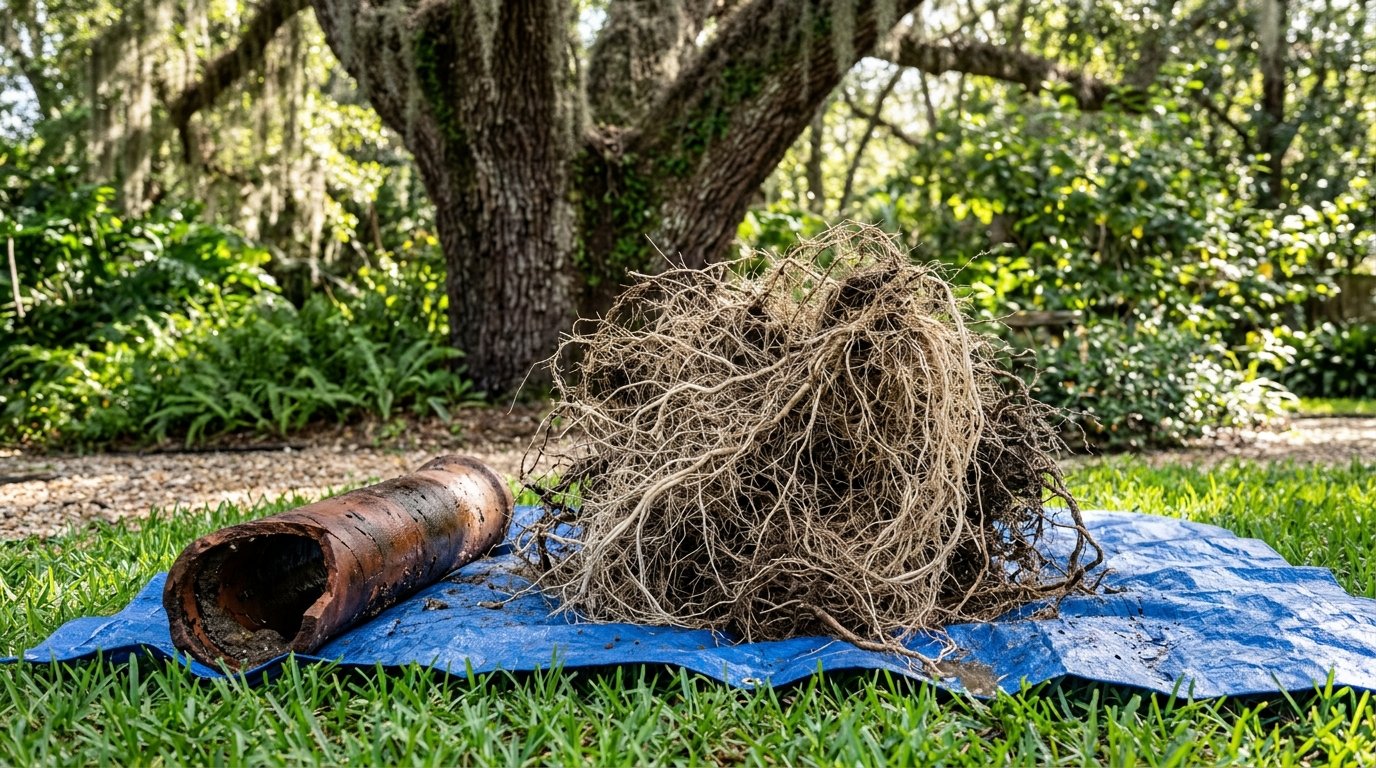
Roots go looking for the moisture and warmth that escape from a sewer pipe. They get in through hairline cracks, loose joints and worn seals, then grow into a mat that catches toilet paper and waste until the line slows or stops. In Lakeland, Bartow and Winter Haven that usually means older clay or cast iron lines running under yards with mature oaks.
No two root jobs look the same from the inside. A few strands at one joint near the house is a short visit. A line packed with root mass 60 feet out, under a driveway, is a different job. That is why OC's Plumbing & Septic quotes after the camera inspection, not over the phone.
The scale of the problem is well documented. A review of sewer system data published in the Journal of Infrastructure Systems reports that roots cause more than half of all sewer blockages, and that old pipes with joints, shallow pipes and small pipes are the ones most at risk. Many older home sewer lines fit that description.
Factor 1: How Much Root There Is, and Where
The first thing the camera tells us is how much root is in the line and how far along it starts.
- A few strands at one joint clear quickly with a single cutting pass.
- A full root mass that closes most of the pipe takes several passes with larger cutting heads, working up in size so the cutter does not jam.
- Roots at several joints along the line mean more footage to clear and more time on site.
- Roots far down the line, near the city connection or the septic tank, mean more cable or hose and slower, more careful work.
Thicker, older roots take longer than fine new growth. If the line has been cleared before and the roots have had a year or two to regrow, expect a heavier job than the last one.
Factor 2: Getting Into the Line
Access changes the labor more than most people expect.
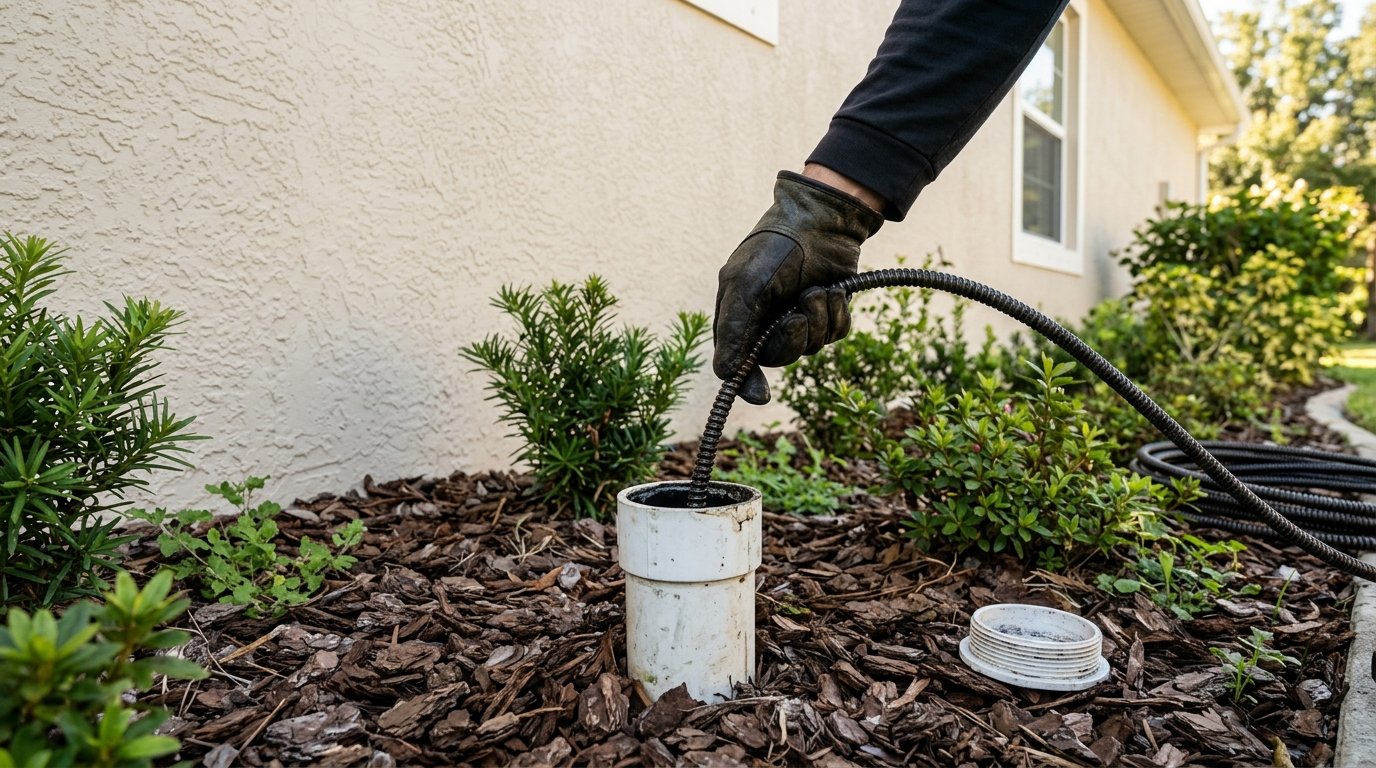
A working exterior cleanout is the easiest way in. It is a capped pipe, usually near the foundation or in a flower bed, that opens straight into the sewer line. The cutter or jetter goes in, the debris comes out, and nothing inside the house is touched.
No cleanout, or one that is buried or seized, means getting in another way, often by pulling a toilet and working through the floor flange. That adds time, and on some homes it makes sense to install a cleanout so every future clearing is quicker and cheaper.
If you know where your cleanout is, tell us when you call. It saves time on the day.
Factor 3: Cutting, Hydro Jetting or Both
There are two ways to clear roots, and the method changes the price.
Mechanical cutting uses a motorized drain machine with a rotating blade head that shears roots off at the pipe wall. It is fast and it opens a blocked line. On its own it leaves the fine root hairs and some debris on the walls, which gives regrowth a head start.
Hydro jetting sends water at high pressure through a nozzle that scours the inside of the pipe, flushing out root hairs, grease and sludge along with the roots. It takes more equipment and more time, so it usually costs more than a cutting pass on its own. You can read more on our hydro jetting service page.
Many root jobs use both: cut to open the line, then jet to clean it. That combination costs more on the day but usually keeps the line clear longer. Which one your line needs depends on what the camera shows, and the quote will say which method is planned and why.
Factor 4: What the Camera Finds About the Pipe
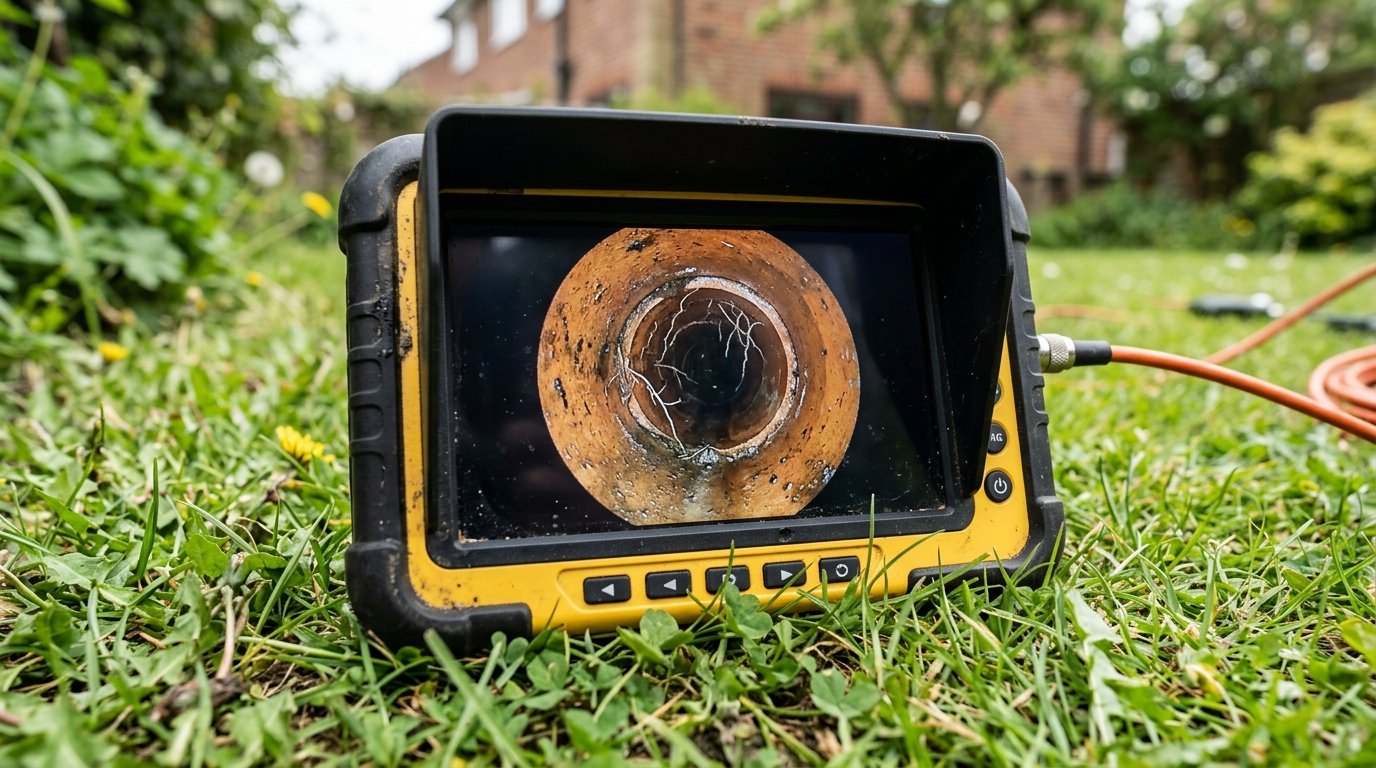
This is the factor that can change the whole job. Clearing roots fixes the blockage, not the gap the roots came through. The sewer camera inspection shows whether the pipe around the roots is still sound.
- Sound pipe with roots at a joint: clearing is the right call, with a plan for regular maintenance.
- Cracked or offset joints: clearing works for now, but roots will return through the same spot.
- A broken or collapsed section: the line needs a repair. Clearing may not even be possible past the break, and a cutter can snag on broken pipe.
A final camera pass after clearing shows the line is open and documents the joints that let roots in. That record is useful the next time, and it is what you need if you are weighing a repair.
Clearing vs Repair: The Cost Over a Few Years
Roots come back. The same Journal of Infrastructure Systems review notes that in smaller pipes, root removal every year or every other year is common, and that the cost of clearing roots is far below the cost of replacing the pipe.
So the honest comparison is not one clearing against one repair. It is:
- Clearing on a schedule: a lower cost each time, repeated every year or two for as long as the pipe holds up.
- Repairing the section that lets roots in: a higher cost once, after which that joint stops being the problem.
If the camera shows one bad joint letting roots in every time, repairing that section often costs less over a few years than repeated clearings. If the whole line is old clay with roots at every joint, the conversation is about the line, and our sewer line repair team will walk you through the options. If the pipe is sound and the roots are light, scheduled clearing is usually the cheaper path.
Why Lakeland Yards See More Root Problems
Polk County's warm, wet climate keeps trees growing for most of the year, and the older neighborhoods around Lakeland, Bartow and Auburndale have both mature trees and older sewer laterals. Live oaks and other large shade trees spread their roots wide and shallow, and a sewer lateral a couple of feet down sits right in their path.
Heavy summer rain can make things worse. A wet season pushes more water through the soil and the line, and a partly blocked pipe that coped in spring can start backing up by August. If your line has needed clearing before, it is worth having it checked before the rainy months, not after the first backup.
What to Ask For in a Root Removal Quote
A clear quote should tell you:
- what the camera showed, with the footage or still images
- how far along the line the roots are, and how many joints are affected
- the method planned (cutting, jetting or both) and why
- how the line will be accessed, and whether a cleanout is recommended
- the condition of the pipe, and whether a repair is worth considering
- a final camera pass to confirm the line is clear
If a quote does not mention a camera inspection, ask how the price was worked out.
Keeping the Cost Down Between Clearings
A few things help stretch the time between visits:
- Clear on a schedule, not after a backup. A planned clearing is lighter work than a line packed solid with roots.
- Use a foaming root inhibitor after a clearing, not instead of one. These products can slow regrowth once the line is open, but they cannot clear a pipe that is already blocked.
- Know where your sewer line runs before planting trees or large shrubs, and keep new plantings well away from it.
- Watch for early signs: gurgling toilets, slow drains on the lowest fixtures, and a lush green strip over the line. Our post on tree roots in your sewer line covers the signs in more detail.
Get a Camera-First Quote in Lakeland
The fastest way to an accurate price is to see inside the line. OC's Plumbing & Septic runs a camera through your sewer line, shows you what is in there, and gives you a quote for tree root removal before any work starts. If the pipe needs more than clearing, you will hear that first, along with the options.
We serve Lakeland and nearby towns including Bartow, Winter Haven, Auburndale, Mulberry and Plant City, Monday to Friday, 8am to 4pm. Licensed plumbing contractor, licence CFC035684. Call (863) 393-6473 to book.
Frequently Asked Questions
It depends on how much root is in the pipe and where, whether there is a cleanout to work from, whether the line needs cutting, hydro jetting or both, and what the camera shows about the pipe. Clearing roots costs much less than digging up and replacing the line. OC's Plumbing & Septic quotes after the camera inspection, so the price reflects your actual line.
Because the camera shows how much root there is, how far along the line it starts, and whether the pipe is still sound. A line with a broken joint or a collapsed section needs a repair, and quoting a clearing without looking would mean guessing.
Jetting takes more equipment and usually more time on site, so it tends to cost more than a cutting pass on its own. Many root jobs use both: the cutting head opens the line, and the jetter scours the fine root hairs and debris off the pipe walls so the line stays clear longer.
Often, yes. Roots enter through cracks and loose joints, and clearing them does not close those gaps, so they grow back. A study of sewer systems in the Journal of Infrastructure Systems notes that in smaller pipes root removal every year or every other year is common. If the camera shows the same joint letting roots in every time, repairing that section can cost less over a few years than repeated clearings.
Most root clearings take 2 to 4 hours, depending on how thick the roots are and how long the line is.