
Key Takeaway
A belly is a section of sewer pipe that has sunk below the pipe on either side, so wastewater and debris pool there instead of draining. Florida Building Code Section 704.1 requires drainage piping at uniform slopes, and a sag breaks that slope. In Central Florida, bellies usually come from sandy soil washing out beneath the pipe, poor bedding, and wet season groundwater. Hydro jetting clears the debris but not the dip, so a belly that keeps causing backups needs that section re-laid at proper slope. A camera inspection confirms it first. Call (863) 393-6473.
A belly in a sewer line is a section of pipe that has sunk lower than the pipe on either side of it, so wastewater pools there instead of draining away. A shallow sag can sometimes be watched, but a belly that keeps collecting waste and causing backups usually needs that section dug up and re-laid at the correct slope.
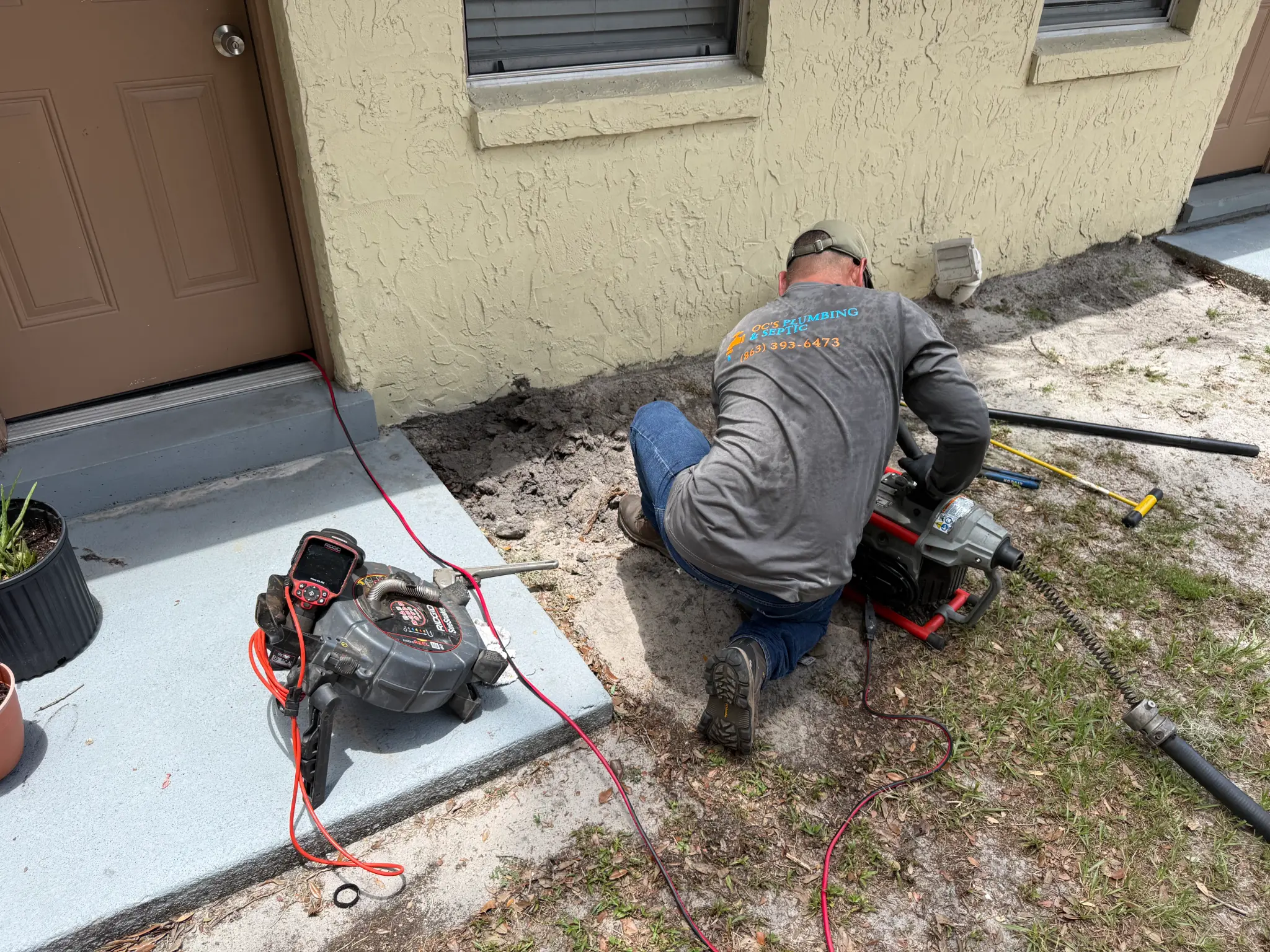
If a camera inspection has just found one under your Lakeland yard, here is what it means, why they are common in Central Florida soil, and what the repair involves.
What a Sewer Line Belly Is
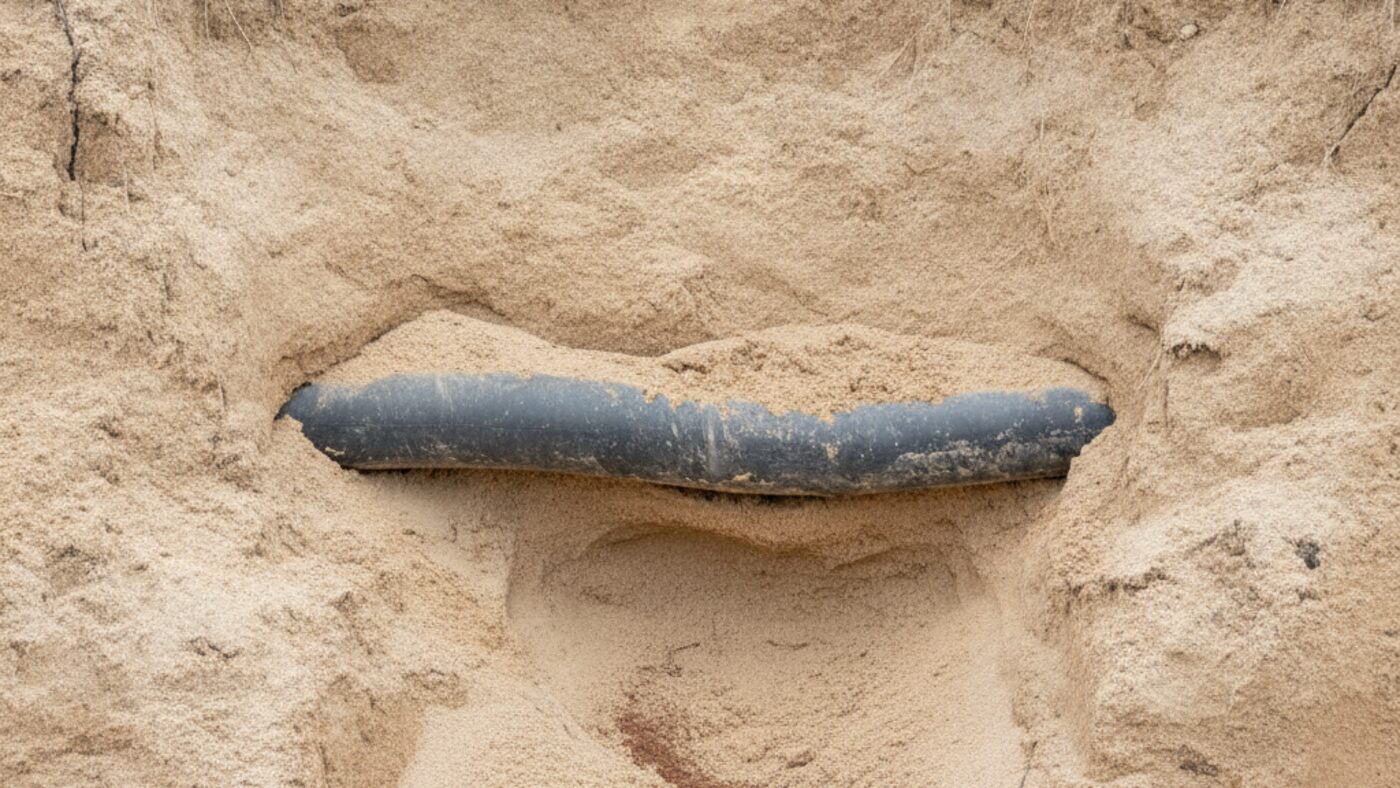
A house sewer line runs on gravity. It carries everything from the home to the city main or the septic tank on a steady downhill slope. When one stretch of pipe drops below that line, the pipe is still connected, but it now has a low spot that holds water all the time.
Plumbers call this a belly or a sag. Grease, paper and solids settle in the standing water, the open space inside the pipe shrinks, and the next heavy flush has to push through a partial blockage.
Why Slope Matters: What the Florida Code Requires
Slope is not a matter of preference. The Florida Building Code, Plumbing, Section 704.1 says that "horizontal drainage piping shall be installed in uniform alignment at uniform slopes," and Table 704.1 sets the minimums:
- 2½ inches or smaller: ¼ inch of fall per foot
- 3 to 6 inches: ⅛ inch of fall per foot
- 8 inches or larger: 1/16 inch of fall per foot
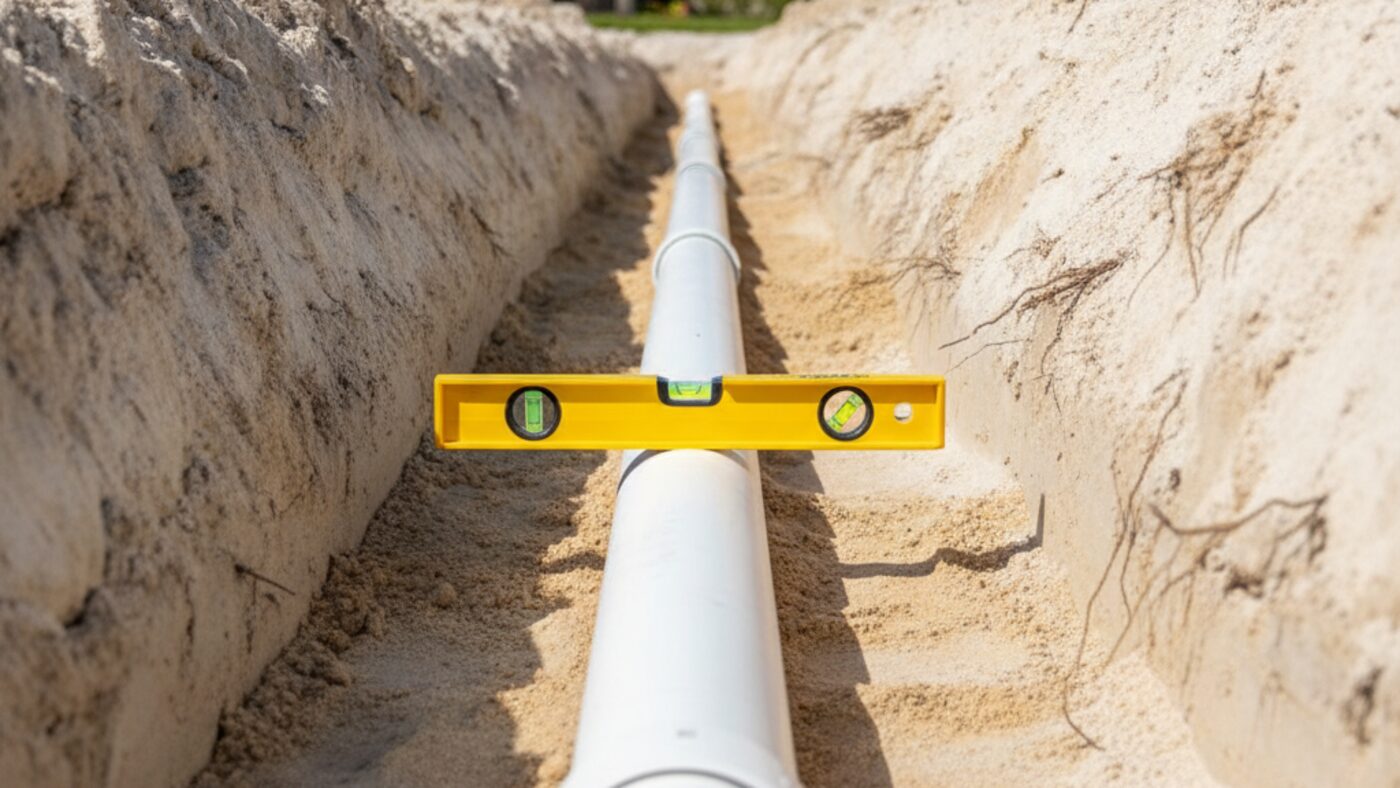
Those are small numbers. At ⅛ inch per foot, a pipe falls only about 1¼ inches over 10 feet, so a section that settles an inch or so can flatten or even reverse the fall across that whole stretch.
Why Bellies Form in Central Florida
Most bellies come down to what is supporting the pipe from below.
- Sandy soil washing out. Heavy summer rain gets into cracked joints and carries sand away from beneath the pipe, leaving a section unsupported.
- Poor bedding when the line was laid. Pipe set on loose or uneven fill that was never properly compacted settles over the years.
- The wet season water table. Ground that is soaked and then drained again every year moves more than ground that stays dry.
- Roots and ageing materials. Lakeland's older neighbourhoods combine mature oaks with cast iron and clay sewer lines that are decades old. Root pressure can push sections out of line, and old joints separate more easily.
If your home still has its original cast iron, our guide to preventing cast iron pipe failure covers the corrosion side of the same ageing problem.
Signs Your Sewer Line May Have a Belly
- Main line backups that come back weeks or months after the line was cleared
- Several drains slowing down at the same time
- Gurgling from toilets or tub drains
- Sewage odour in the yard or near the foundation
None of these is unique to a belly. Roots, a cracked pipe or an ordinary clog cause the same symptoms. The pattern that should make you suspect a sag is a line that keeps clogging in the same place, because the low spot keeps collecting debris however often it is cleared.
How a Camera Inspection Finds It
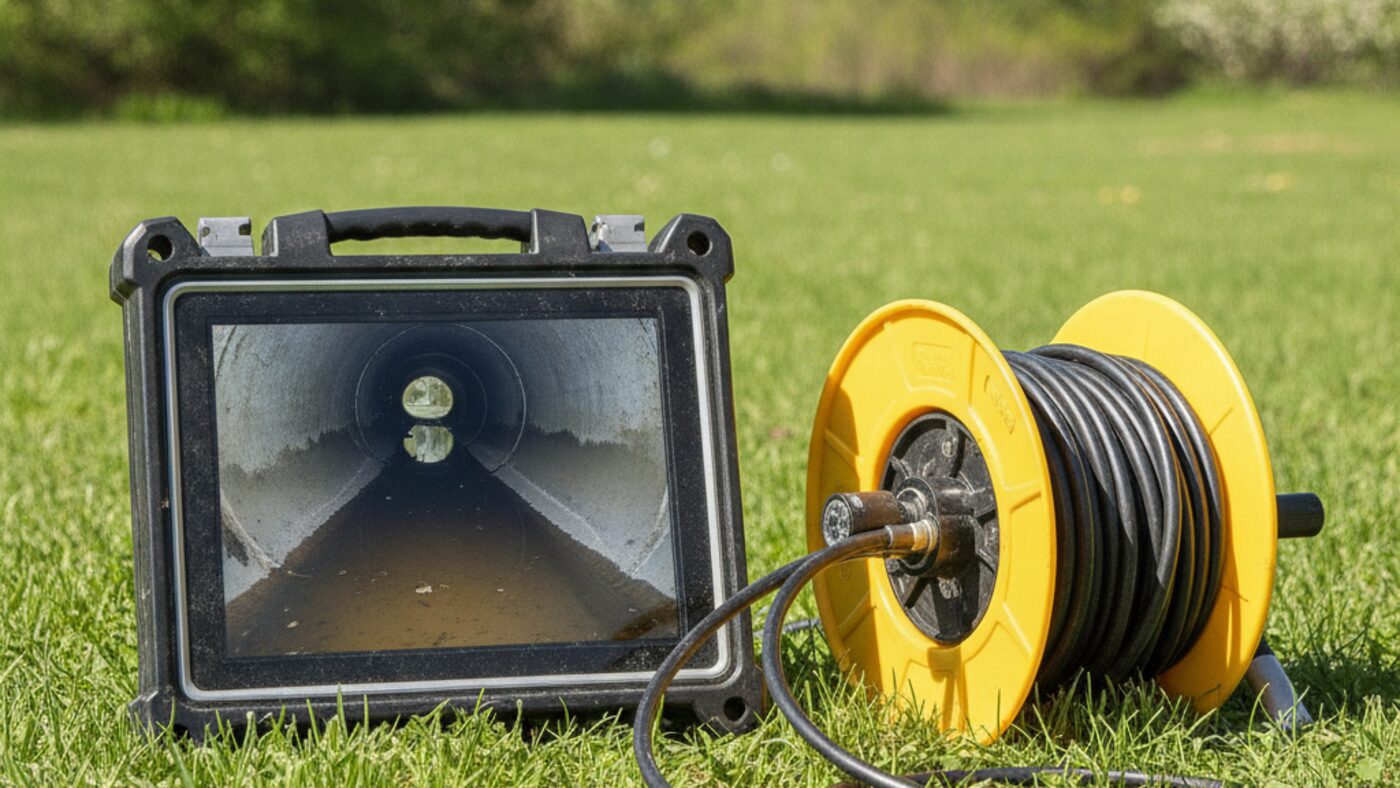
A sewer video inspection is the way to confirm a belly without digging. As the camera travels down the line, a sag shows up as a stretch where water sits across the bottom of the pipe, and in a deeper belly the lens goes under the water completely. A locator above ground then marks the depth and position of that section, so any repair targets the right few feet of yard.
Good footage also shows whether the belly is the only defect or one of several, and that is what decides between a spot repair and replacing more of the line.
Can You Just Jet It?
Hydro jetting is very effective at clearing grease, sludge and roots out of a sewer line, including the debris sitting in a belly. What it cannot do is change the shape of the pipe. The low spot is still there afterwards, so it starts filling again. If a line needs jetting every few months, which is one of the signs you need hydro jetting worth taking seriously, a belly is one of the first things to rule out.
Pipe lining has a similar limit. A liner takes the shape of the existing pipe, so it can seal cracks but leaves a sag exactly where it was.
What the Repair Involves
Fixing a belly means restoring the slope. The usual process is:
- 1Camera and locate the sag and mark its depth.
- 2Excavate over that section only, rather than trenching the whole run.
- 3Remove the settled pipe and rebuild a firm, compacted bed beneath it.
- 4Re-lay new pipe at proper slope, with any Polk County or municipal permit the job requires.
- 5Backfill, compact and re-camera the line to confirm water now runs through.
When the camera shows several bellies along with cracking or badly deteriorated cast iron or clay, replacing the full line is often the better long-term decision. Either way, you should see the footage and have both options priced before any digging starts.
Our sewer line repair service in Lakeland begins with a camera inspection, so you see the belly for yourself before deciding anything. If your main line keeps backing up after being cleared, call OC's Plumbing & Septic at (863) 393-6473. We serve Lakeland and communities across Polk County.
Frequently Asked Questions
It depends on how deep it is and whether it is causing problems. A shallow sag that holds a little water and has never caused a backup may simply be noted and watched. A belly that collects enough waste to cause repeat stoppages will keep doing so, because cleaning the pipe does not change its shape, and it should be repaired.
Florida Building Code, Plumbing, Table 704.1 sets minimum slopes for horizontal drainage pipe: a quarter inch per foot for pipe 2.5 inches or smaller, an eighth of an inch per foot for 3 to 6 inch pipe, and a sixteenth of an inch per foot for 8 inch pipe or larger. Section 704.1 also requires uniform alignment at uniform slopes.
Not usually. Hydro jetting clears the debris that settles in a belly but leaves the low spot in place, and pipe lining follows the shape of the existing pipe, so the sag remains. Correcting the slope means excavating over that section and re-laying the pipe on a firm bed. A camera and locator keep that excavation to the section that needs it.
A clog that returns to the same place after every cleaning points to something about the pipe itself, such as a belly, an offset joint, or a crack letting roots in. A sewer camera inspection shows which one it is before any repair decision is made.