Key Takeaway
Repair is usually right for a failed thermostat, element, thermocouple, valve or dip tube on a tank under about eight years old. Replace when the tank itself is leaking, which cannot be repaired at any price, when the unit is past ten years and needs significant work, or when it has never been flushed and is already producing rusty hot water. Polk County's mineral-rich water shortens tank life, so age alone matters more here than the rating on the label suggests. Call (863) 393-6473.
Two things decide this: what has actually failed, and how old the unit is. One symptom settles it immediately, though, and it is worth stating first.
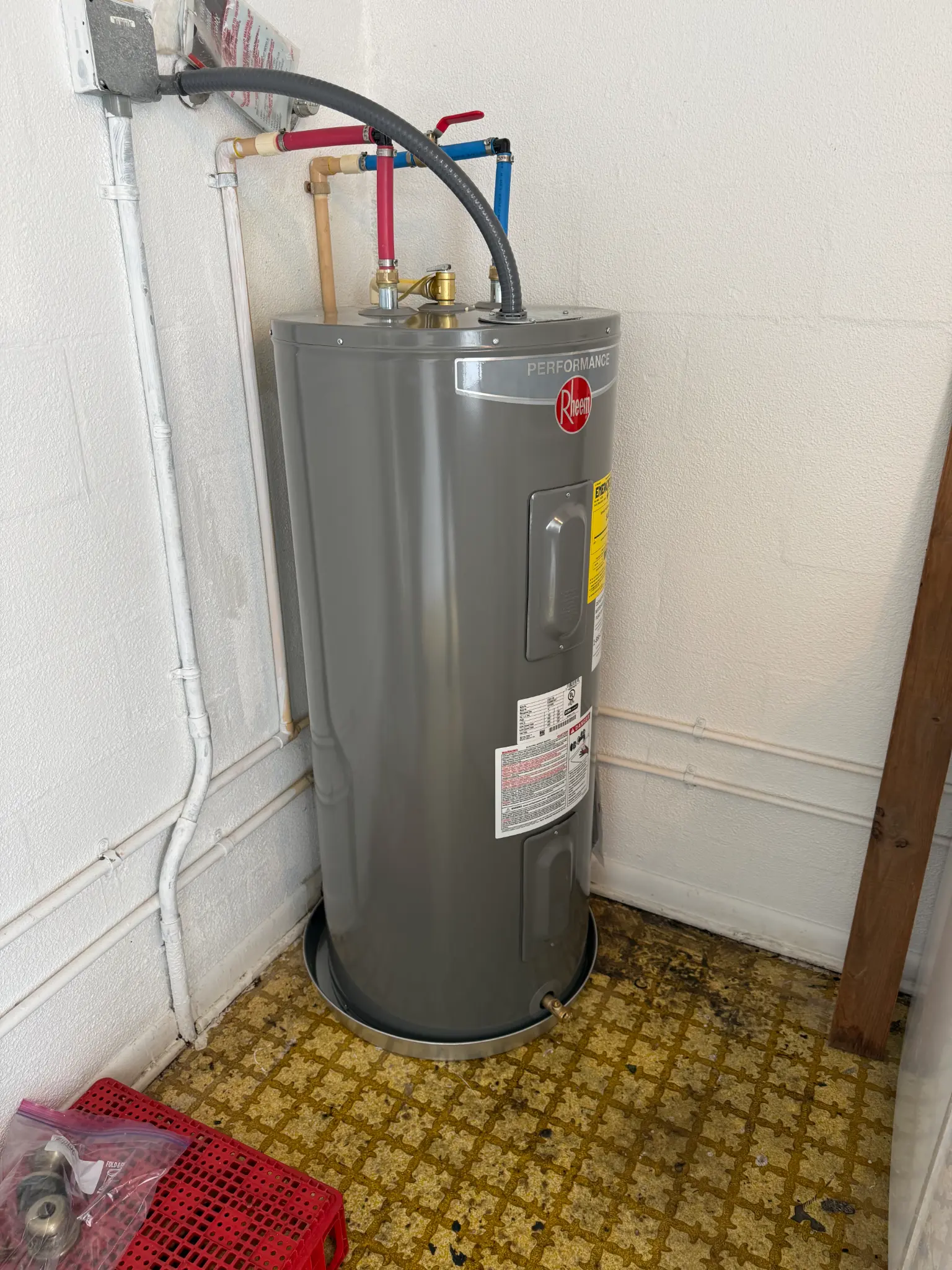
If water is coming from the tank body itself, the heater cannot be repaired. The steel has perforated, and there is no fix at any price. Everything else on this page is for the cases where it has not.
Where Is It Leaking From?
This is the first question, because the answer is often reassuring.
A fitting or supply connection at the top. Repairable, frequently just a connector.
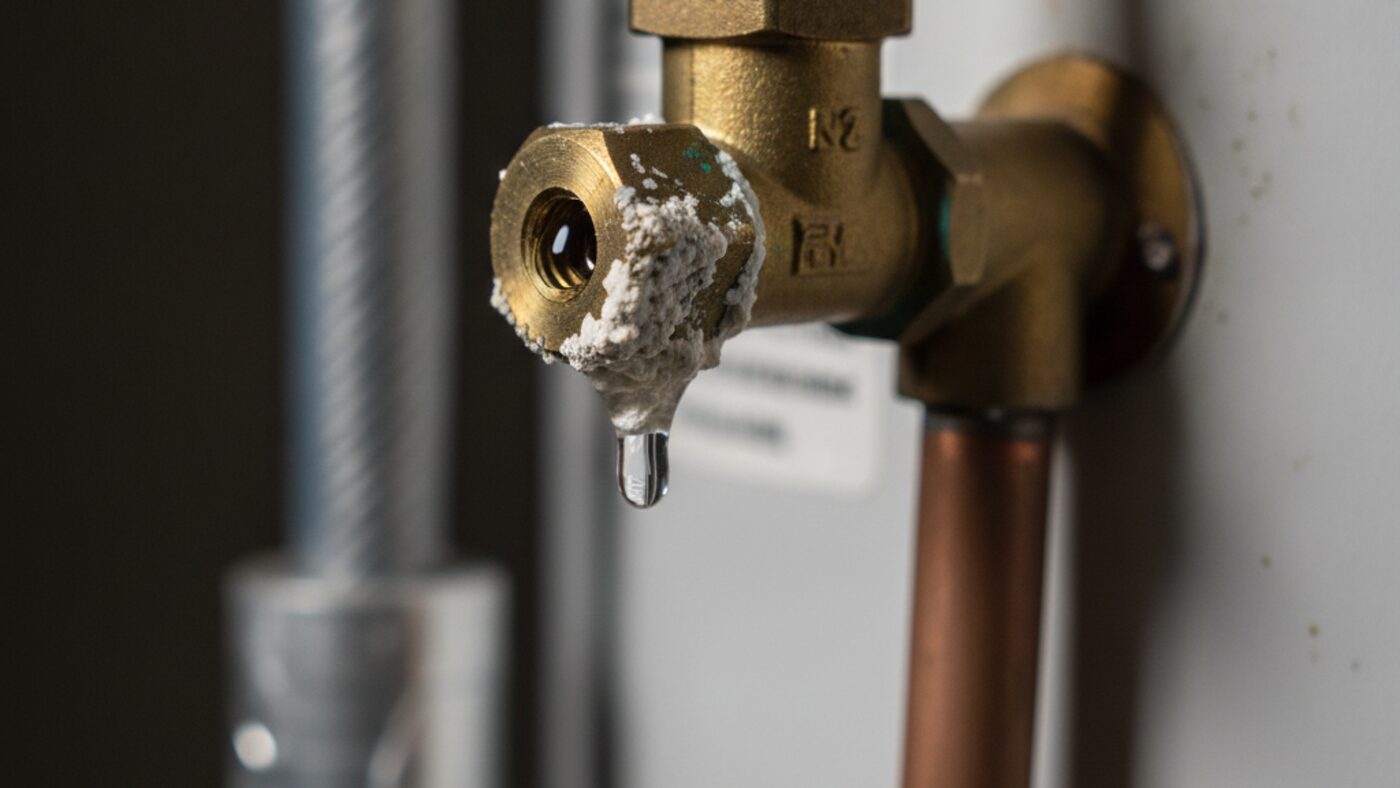
The drain valve at the bottom. Repairable. These weep after being opened for a flush, and they are replaceable.
The temperature and pressure relief valve. Sometimes the valve itself, sometimes a sign that pressure or temperature is running too high, which is worth investigating rather than just replacing the valve.
The tank body, or water pooling under the unit with no other source. Not repairable. Plan a replacement, and in the meantime know where the cold inlet shutoff is so you can isolate it.
What Is Repairable
On a tank under roughly eight years old that has been maintained, these are straightforward repairs:
- Thermostat. Producing water that is too cool, too hot, or inconsistent.
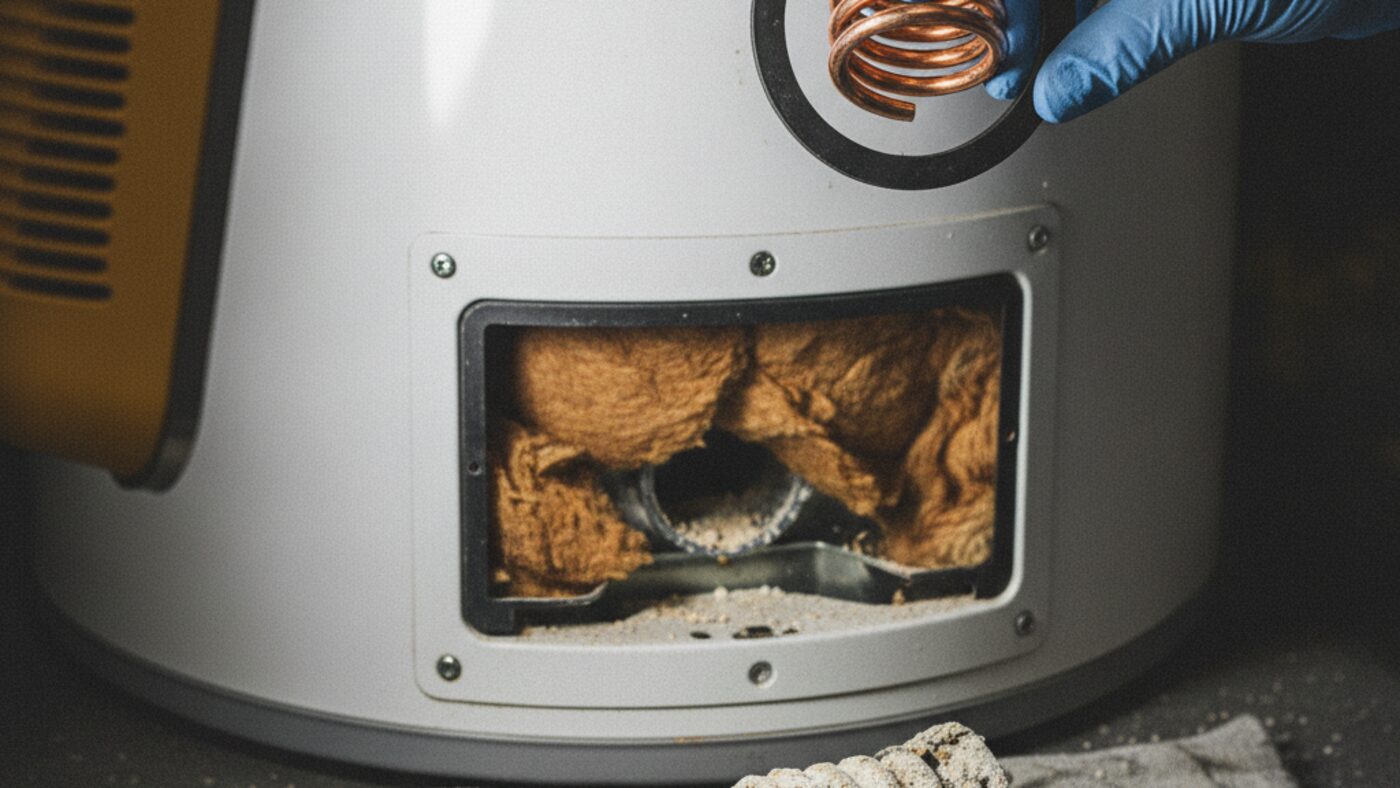
- Heating element, on electric units. A failed lower element gives the distinctive pattern of a short burst of hot water followed by cold.
- Thermocouple or gas control valve, on gas units. Usually presents as a pilot that will not stay lit.
- Dip tube. A cracked or broken tube lets incoming cold mix straight into the hot outlet, so hot water goes lukewarm fast.
- Anode rod. Not a failure as such, but a consumable that should be checked and replaced. It is the part that makes a steel tank last a decade.
- Drain valve, connectors and the relief valve.
Why Age Weighs More Here
Tank heaters are generally rated for eight to twelve years. In Polk County many fall short, because water drawn from the Floridan aquifer carries dissolved calcium and magnesium that settle in the tank as sediment.
That sediment insulates a gas burner from the water above it, so the steel at the bottom overheats and the tank is thermally stressed year after year. On an electric unit it buries the lower element. Either way it shortens the life of the appliance.
Annual flushing is what prevents it, and our post on how often to flush a water heater covers the schedule and when an old tank is better left to a plumber. The important caveat: flushing a neglected tank that is eight or more years old can disturb hardened sediment and start a leak, which is why that particular job is worth handing over at that age.
The Decision, Plainly
Repair when the unit is under about eight years old, the tank shows no rust, the failure is a component rather than the tank, and the repair is modest relative to replacement.
Replace when the tank is leaking, when the unit is past ten years and needs significant work, when it has never been flushed and the hot water already runs rusty, or when repairs are becoming repetitive.
The middle ground, eight to ten years with a moderate repair needed, is a genuine judgment call. The condition of the tank matters more than the number: a well-maintained ten-year-old tank may have years left, and a neglected eight-year-old one may not.
At Replacement Time
Consider capacity honestly, since a household that has grown may have outgrown its tank regardless of condition. Consider a tankless unit, bearing in mind that tankless also scales in this water and needs periodic descaling.
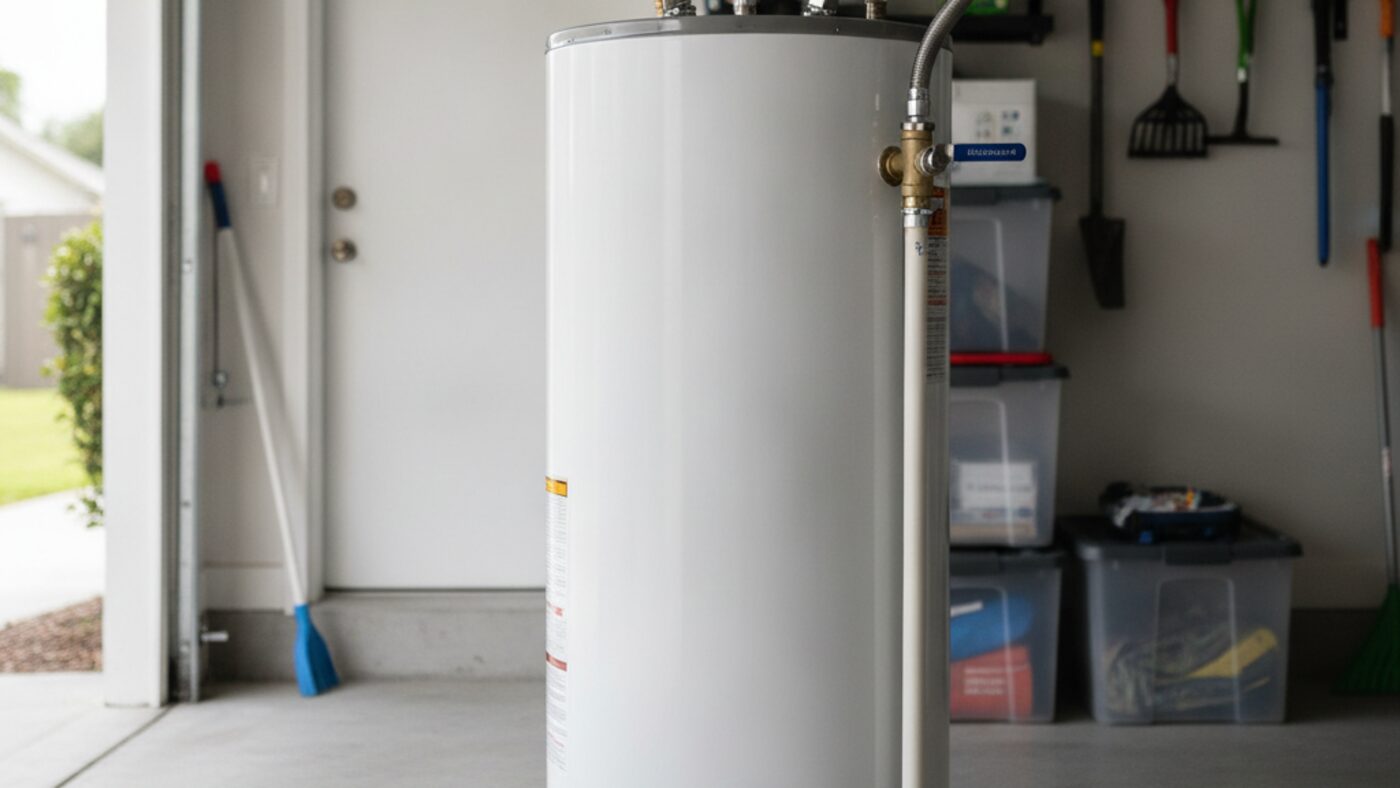
Have the expansion tank, relief valve discharge and shutoff checked at the same time. Those are cheap to address while the unit is being changed and awkward afterwards.
Practical Takeaways
Find the source of the leak before assuming the worst, because most leaks are fittings rather than tanks. A leaking tank body is decided for you. Under eight years with a component failure, repair. Past ten with a significant failure, replace. Flush annually and the decision arrives later.
Talk to a Licensed Professional
OC's Plumbing & Septic repairs and replaces water heaters across Lakeland, Mulberry, Eagle Lake and the surrounding area. Call (863) 393-6473 or use the contact page.
Frequently Asked Questions
Tank heaters are generally rated for eight to twelve years. In areas with mineral-rich water, which includes much of Polk County, many fall short of that unless they have been flushed regularly. The anode rod and annual flushing are the two things that most affect where in that range a tank lands.
It depends where from. A leak at a fitting, a supply connection, the drain valve or the temperature and pressure relief valve is repairable. A leak from the tank body itself is not, at any price. Once the steel tank has perforated, replacement is the only option.
It depends on the repair and the tank's condition. An inexpensive part on a tank that has been flushed regularly and shows no rust is worth doing. A significant repair on a neglected tank at that age is usually money spent on months rather than years.
It is worth considering. Tankless units take up less space and heat on demand rather than maintaining a stored volume. They also scale in mineral-rich water and need periodic descaling, so they are not maintenance-free. A plumber can size one properly for your household.