Key Takeaway
A tank water heater that stops heating usually has one of five problems: no power or gas reaching it, a tripped high-temperature safety control, a failed heating element or thermostat, a gas burner or pilot problem, or heavy sediment. Checking the breaker or the gas supply is safe for a homeowner. Anything behind the access panels, and any leak, rusty water or gas smell, is a job for a licensed plumber. Call (863) 393-6473.
When a tank water heater stops heating, the cause is usually one of five things: no power or gas reaching it, a tripped safety control, a failed heating element or thermostat, a pilot or burner problem on a gas unit, or heavy sediment in the tank. A couple of those are safe for a homeowner to check. The rest sit behind panels with live wiring or gas connections and are a job for a licensed plumber.
Here is how to narrow it down, and the signs that mean it is time to call.
First, What Kind of Water Heater Do You Have?
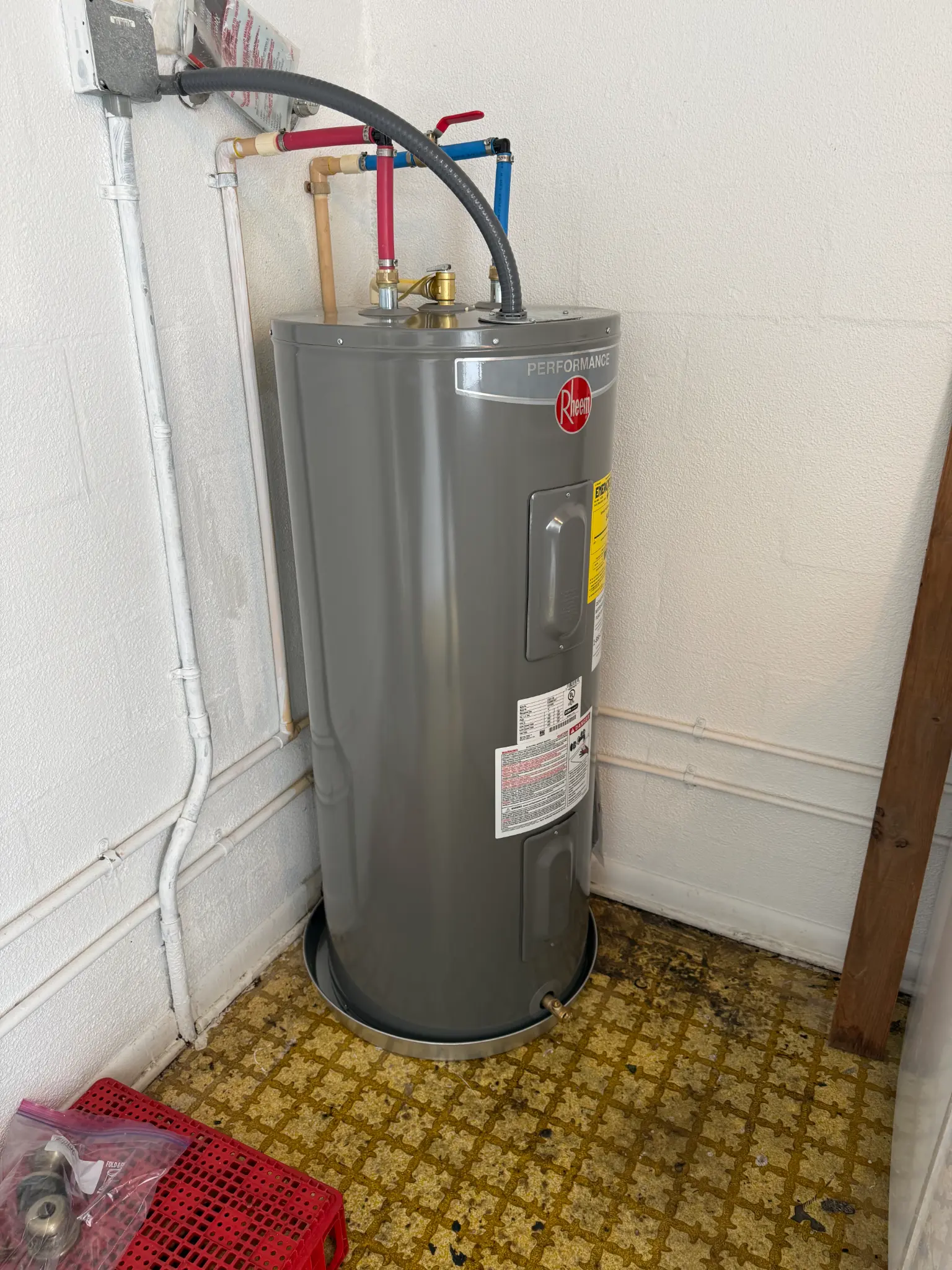
Most homes around Lakeland have a tank water heater, either electric or gas. An electric tank has one or two metal access panels on the side and a heavy cable running to the top. A gas tank has a gas line and control knob near the bottom and a metal vent pipe on top. The causes are different for each, so start there.
Electric Water Heater Not Heating
- The breaker has tripped. Check the panel for the water heater breaker. If it has tripped, reset it once. If it trips again, stop: something in the heater is shorting, and resetting it repeatedly is unsafe.
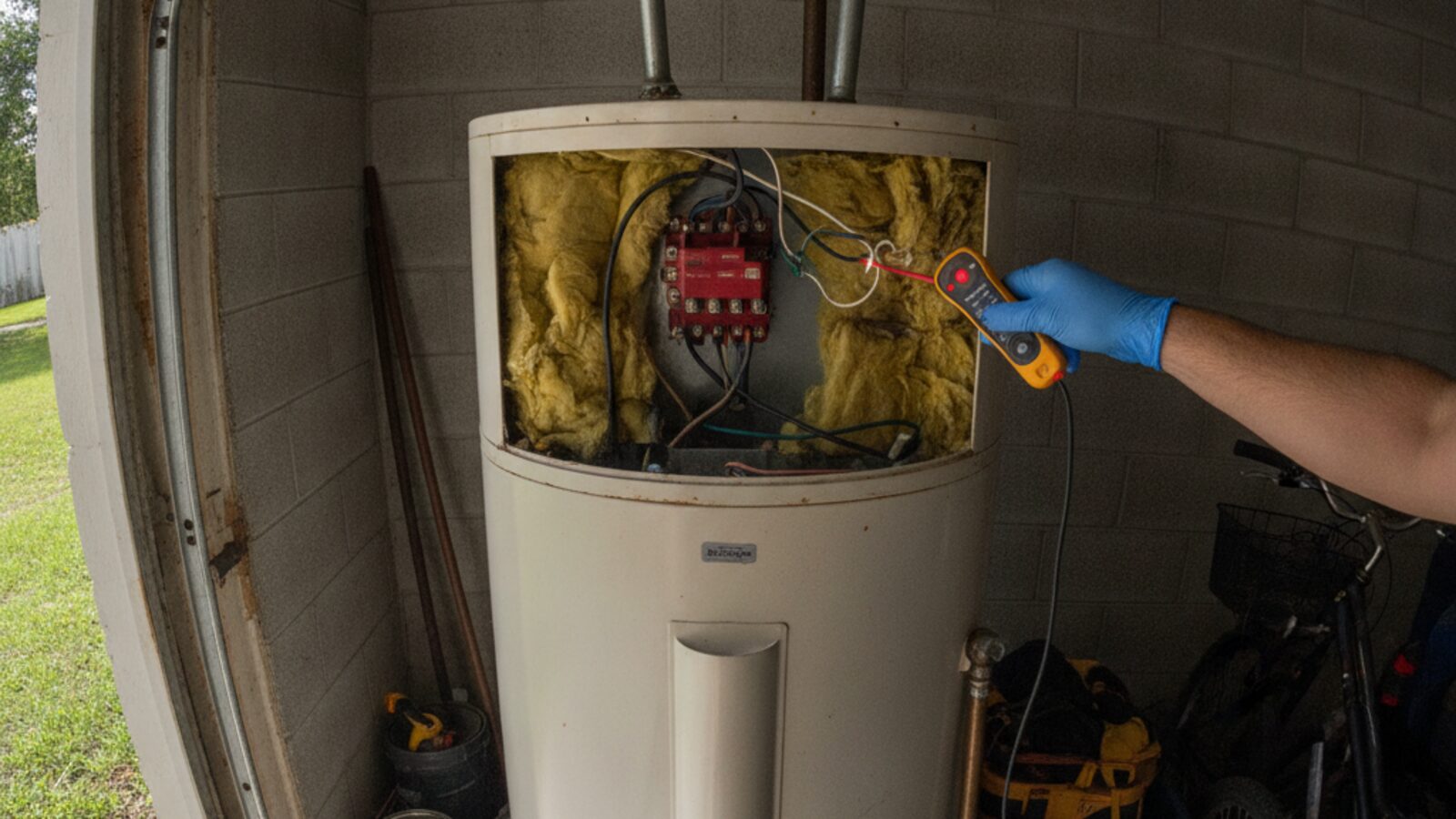
- The high-temperature safety switch has tripped. Electric tanks have a high-limit switch with a red reset button behind the upper access panel. It cuts power when the water gets too hot.
- A heating element has failed. Most electric tanks have two elements. When the upper one fails you get no hot water at all; when the lower one fails you get some hot water that runs out quickly.
- A thermostat has failed. A bad thermostat can stop an element from turning on, or keep it running until the safety switch trips.
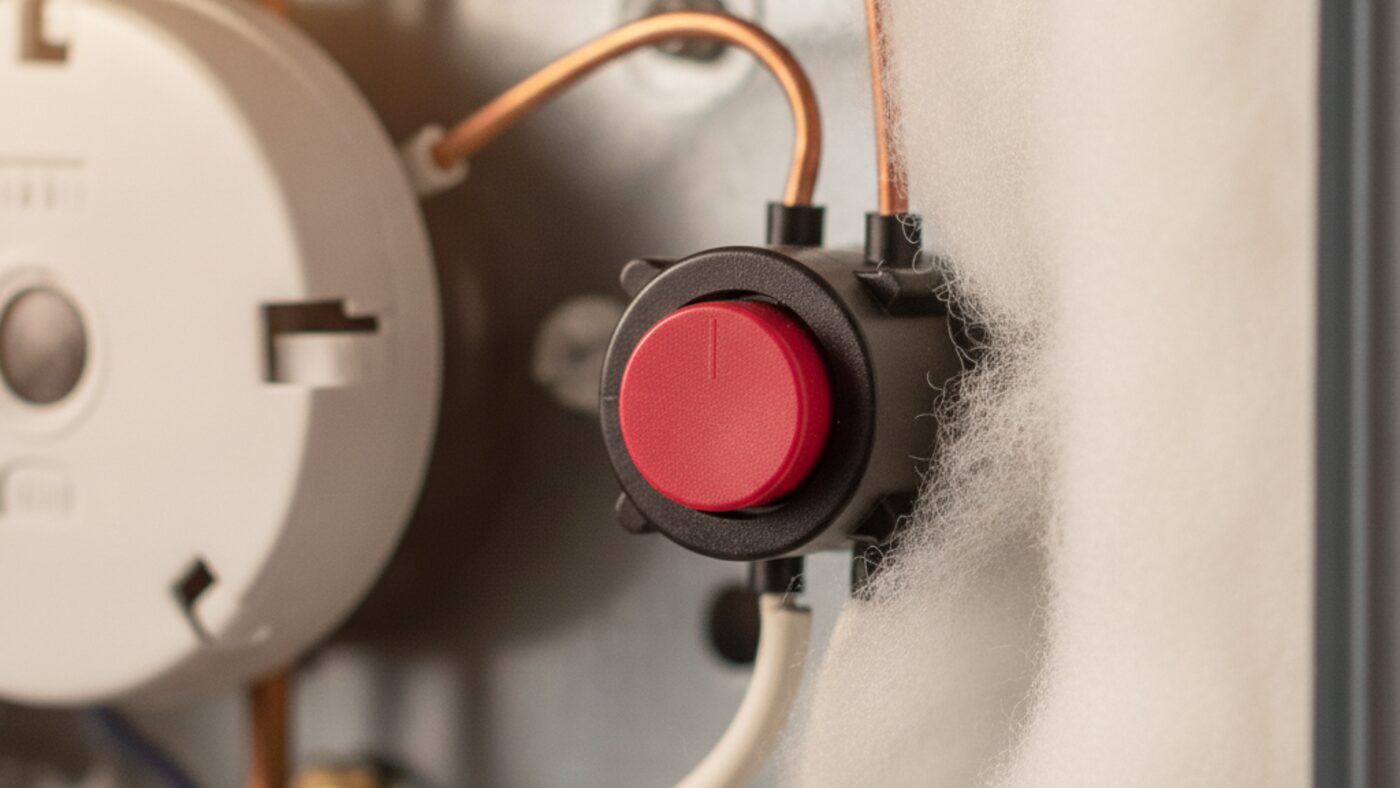
A note on that reset button: it sits right next to live wiring, so the power has to be off at the breaker before the panel comes off. And a reset is a clue, not a fix. If the button trips again, something is overheating the water, usually a failed thermostat or element, and the heater needs a proper diagnosis.
Gas Water Heater Not Heating
- No gas reaching the heater. Check that the gas valve on the supply line is open and that other gas appliances are working.
- The pilot is out or the burner will not light. Many older tanks have a standing pilot. A pilot that will not stay lit often points to a worn thermocouple or a gas control problem.
- The gas control has failed. The control valve near the bottom of the tank regulates the burner. When it fails, the burner may not light at all.
If you ever smell gas near the water heater, leave the house and call your gas utility from outside before calling a plumber.
Sediment: The Polk County Factor
Hard water in Lakeland and across Polk County leaves minerals that settle in the bottom of the tank. Over time that layer insulates the water from the burner or the lower element, so the heater runs longer and delivers less. Popping or rumbling from the tank is the classic sign. Our guide on how often to flush a water heater covers how to keep it under control.
When It Is Time to Call a Plumber
Call a licensed plumber when:
- The breaker or the reset button trips again after one reset.
- You would need to open an access panel or work on the gas control.
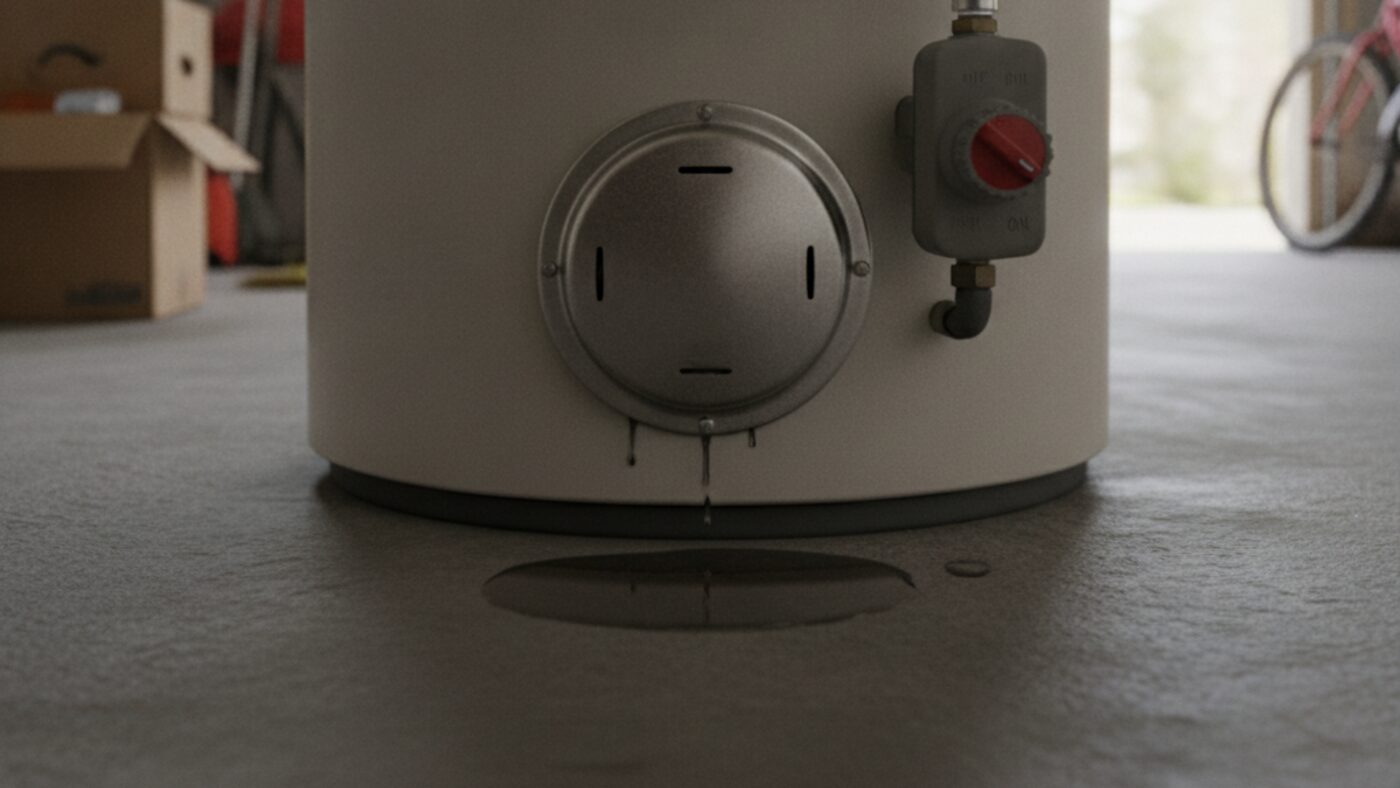
- There is water around the base of the tank. Even a slow leak can turn into a flood.
- The hot water is rusty or smells like rotten eggs.
- The relief valve on the side of the tank is dripping or discharging. Florida Building Code, Plumbing, Section 504.4 requires storage water heaters "operating above atmospheric pressure" to be fitted with an approved pressure and temperature relief valve. That valve is a safety device, and when it opens it is telling you something is wrong.
Repair or Replace?
Most no-heat problems are repairable: elements, thermostats, safety switches and gas controls are all replaceable parts. When the tank itself is leaking, heavily rusted or more than about 10 years old, replacement is usually the better spend. Our post on water heater repair or replacement walks through that decision.
Get Your Hot Water Back
OC's Plumbing & Septic provides water heater repair and replacement for gas and electric tank water heaters across Lakeland and Polk County. We test the elements, thermostats, gas controls and relief valve, explain what failed in plain language and give you a firm price before the work starts. Call (863) 393-6473 to book a water heater repair.
Frequently Asked Questions
On an electric tank the usual causes are a tripped breaker, a tripped high-temperature safety switch, or a failed heating element or thermostat. On a gas tank it is usually the gas supply, the pilot or burner, or the gas control. Heavy sediment in the tank can cause slow or weak heating on both types.
On an electric water heater, running out of hot water quickly often means one of its two heating elements has failed. Sediment taking up space in the bottom of the tank and a thermostat set too low are other common causes.
The reset button sits behind an access panel next to live electrical parts, so the power must be off at the breaker first. If the reset trips again, something is causing the water to overheat, such as a failed thermostat or element, and the heater needs a plumber rather than another reset.
If the tank is under about 10 years old and the fault is a part like an element, thermostat or gas control, repair usually makes sense. If the tank is leaking from the base, heavily rusted or over a decade old, replacement is usually the better choice.