Key Takeaway
A slab leak can be repaired three ways. A spot repair opens the floor and slab over the leak and replaces the damaged piece of pipe. A reroute runs a new line through the walls or attic and abandons the leaking pipe under the slab. A repipe replaces the home's water lines when the old pipe is failing in several places. The right choice depends on the pipe's age and condition, where the leak is, and what sits on the floor above it. Call (863) 393-6473.
There are three ways to repair a slab leak: a spot repair that opens the slab and fixes the pipe where it failed, a reroute that runs a new line through the walls or attic and abandons the leaking pipe, or a repipe when the home's plumbing is failing in more than one place. Which one is right depends on the condition of the pipe, where the leak sits, and what is on the floor above it.
This guide assumes the leak has already been found. If you are still trying to work out whether you have one, start with our post on the signs of a slab leak.
Option 1: Spot Repair Through the Slab
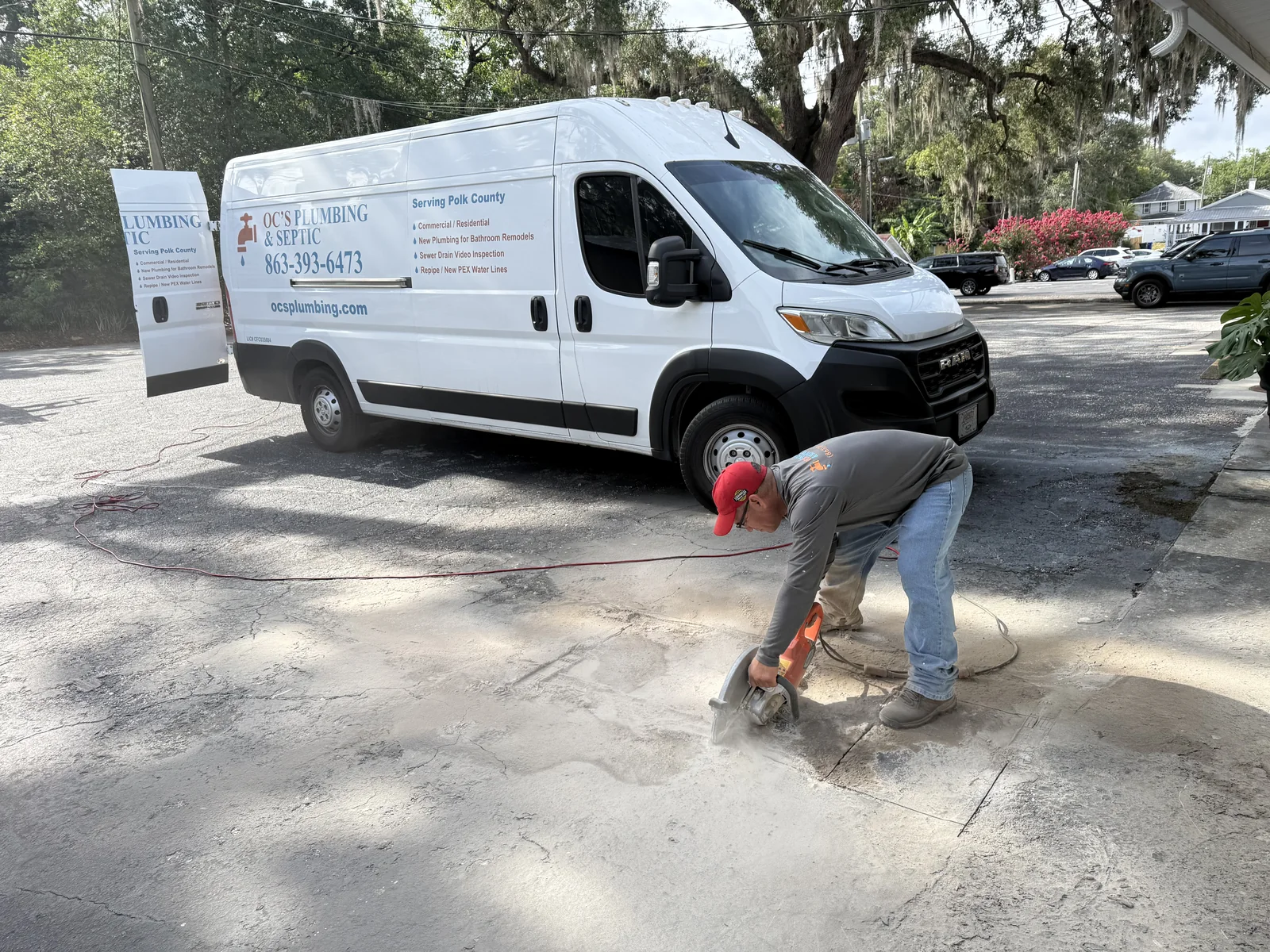
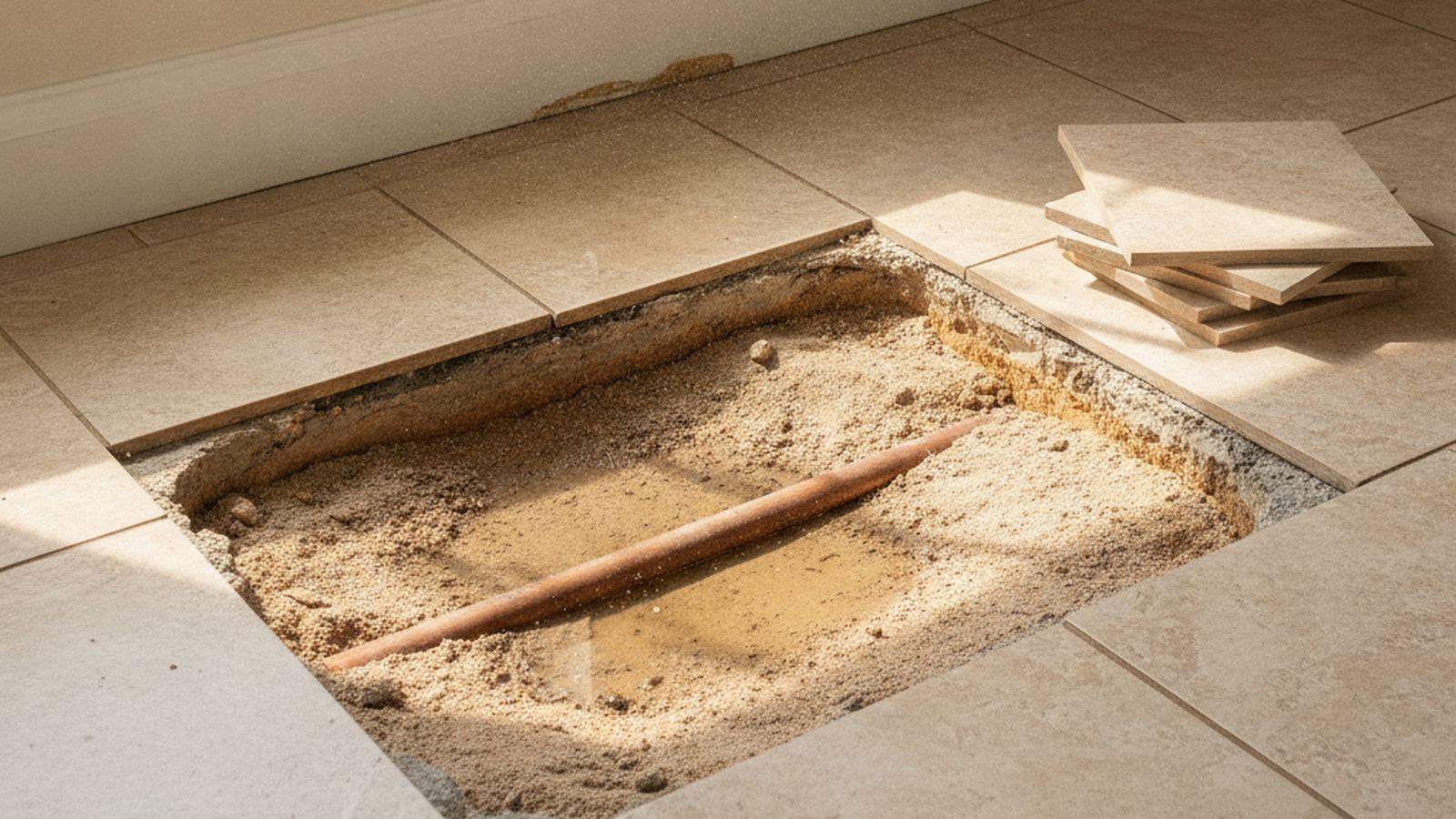
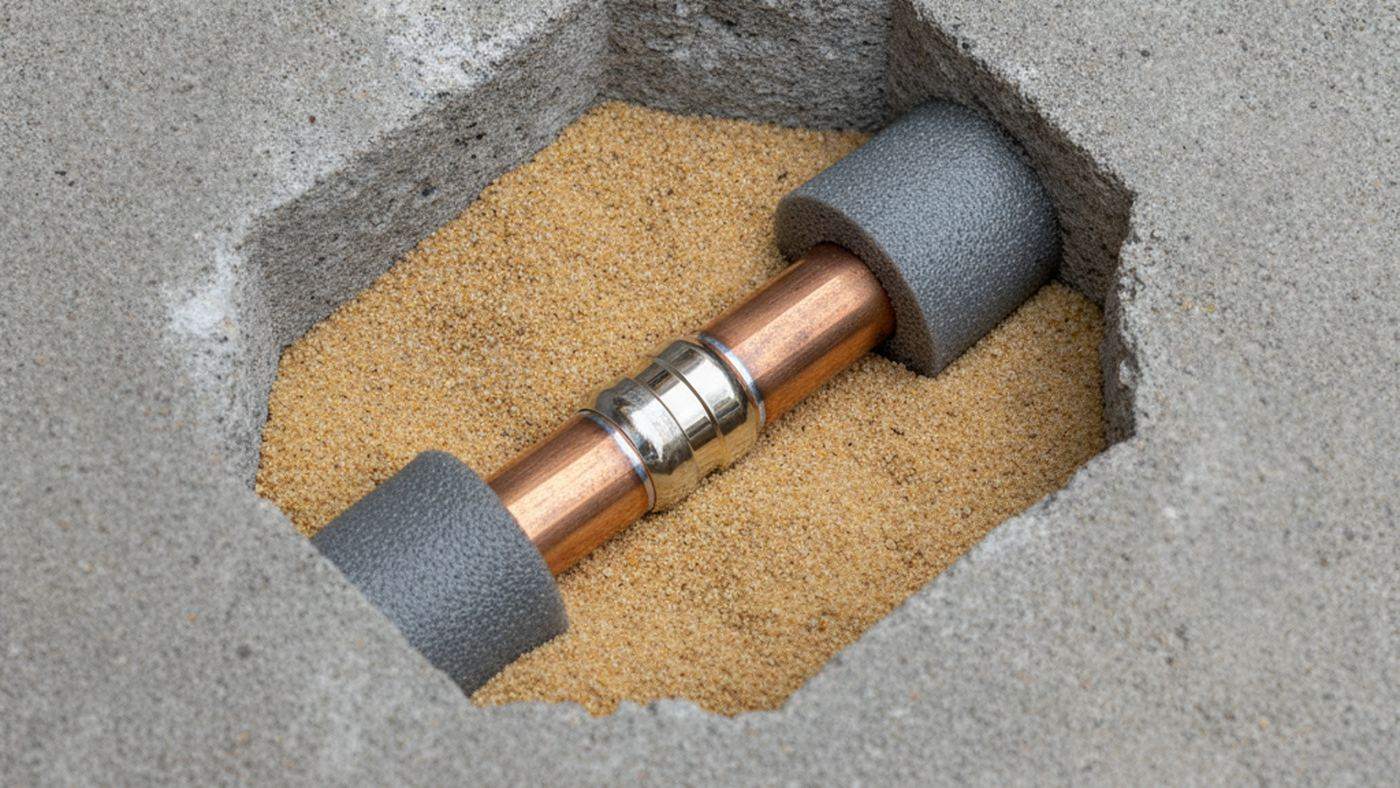
A spot repair goes straight to the leak. The flooring over it is lifted, a small section of concrete is cut out, the sand beneath is dug away to expose the pipe, and the damaged piece is cut out and replaced. The opening is then filled, the slab is patched and the floor is restored.
When it makes sense:
- The leak is a single failure in pipe that is otherwise in good condition.
- The spot is reasonably easy to reach, such as an open floor area rather than under a kitchen island or built-in cabinets.
- The home has not had slab leaks before.
Pipe that runs through concrete needs protecting from it. Florida Building Code, Plumbing, Section 305.1 states that pipes passing through concrete floors "shall be protected against external corrosion by a protective sheathing or wrapping or other means that will withstand any reaction from the lime and acid of concrete." A correctly done spot repair restores that protection rather than pouring new concrete straight onto bare pipe.
The trade-off is that a spot repair fixes one leak. The rest of the pipe under the slab is the same age and has been through the same conditions.
Option 2: Reroute the Line Above the Slab
A reroute leaves the leaking pipe where it is and takes it out of service. A new supply line is run through the walls, ceiling or attic to the fixtures it fed, and the old line under the slab is disconnected and capped.
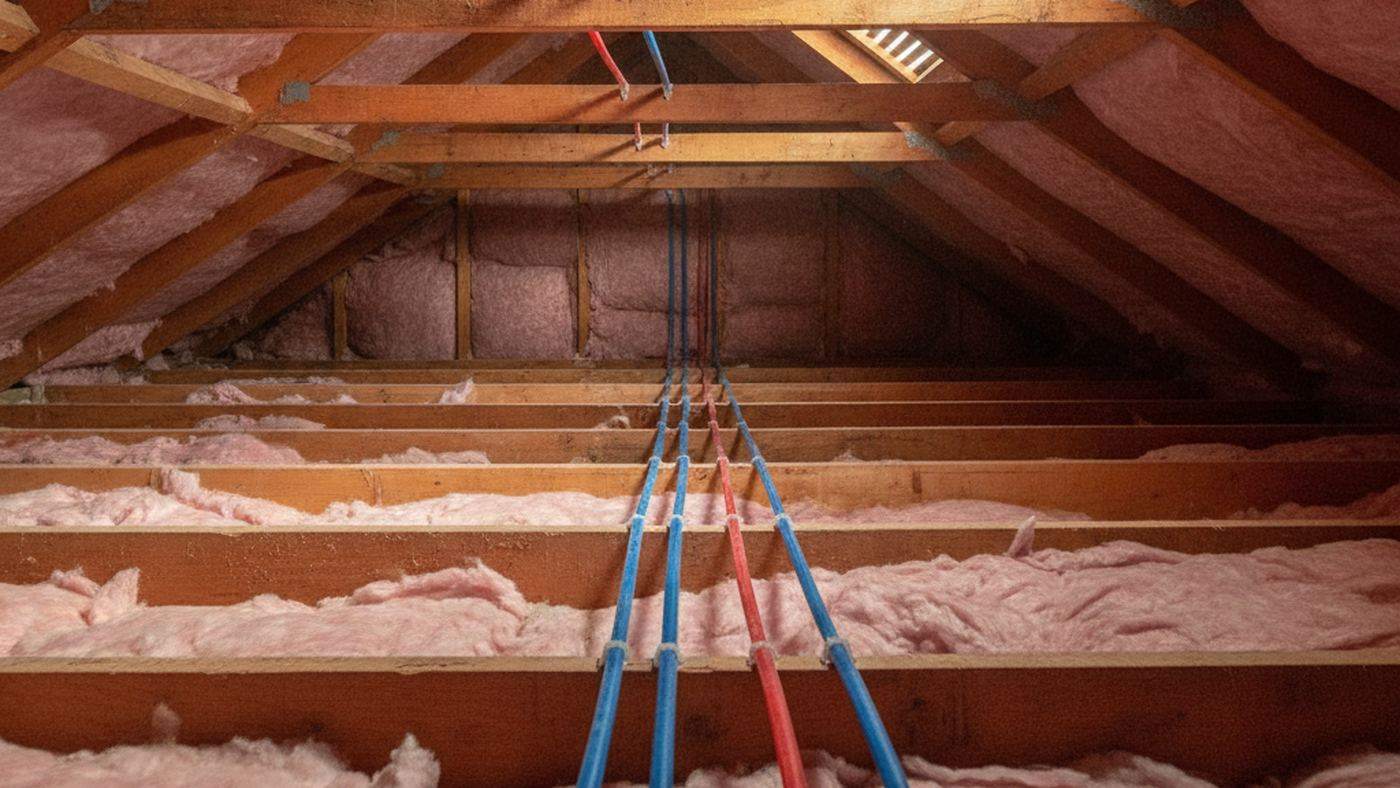
Reroutes are usually done in PEX, a flexible plastic pipe that can be pulled through walls and attics with small access openings instead of long runs of open wall.
When it makes sense:
- The same line has leaked before, or the pipe is old enough that another leak is likely.
- The leak is under something expensive to remove: cabinets, an island, a shower or new tile.
- A shorter, simpler path above the floor exists to the fixtures the line serves.
The main advantage is that the failed pipe is gone from the system for good. The trade-offs are drywall openings to patch and paint, and in a Florida attic, a route that keeps the new line protected from the heat.
Option 3: Repipe the Home
When the home's history and the condition of the pipe show the plumbing failing in several places, fixing leaks one at a time stops making sense. A full home repipe replaces the water supply lines throughout the house, usually routed overhead, so nothing important is left under the slab.
When it makes sense:
- This is the second or third slab leak.
- The home still has its original pipe and it is reaching the end of its life.
- Water pressure, discolored water or pinhole leaks elsewhere point to the whole system, not one spot.
A repipe is the largest of the three jobs, but it is often the one that ends the problem. Our guide to when a Lakeland home needs a repipe covers the warning signs in more detail.
How the Right Option Gets Chosen
The decision comes down to a few questions:
- First leak, sound pipe, easy spot? A spot repair.
- The line has leaked before, or the leak is under cabinets or new flooring? A reroute.
- The pipe is failing in several places, or this is a repeat problem? A repipe.
Timing matters too. Simple spot repairs are often finished in a day. Reroutes and jobs that need a permit take two to several days, and patched concrete usually needs 24 to 72 hours to cure before final flooring goes back down.
Why Slab Leaks Are Common Around Lakeland
Homes across Lakeland, Winter Haven and Polk County are mostly built slab-on-grade, with the water lines running in the sand beneath the concrete. Sandy soil shifts as it wets and dries, the water table rises in the summer wet season, and older pipe rubs and corrodes where it touches concrete or gravel. Those are the conditions that cause a first leak, and the reason a second one in the same line is common.
Get a Repair That Fits Your Home
OC's Plumbing & Septic provides slab leak repair in Lakeland and across Polk County. We repair or reroute the affected line to code, explain each option in plain language, and give you a written estimate for each before work starts. Call (863) 393-6473 to schedule your repair.
Frequently Asked Questions
It depends on the pipe. A single leak in otherwise sound pipe is often fixed with a spot repair through the slab. If the line has leaked before, or the leak sits under cabinets or finished flooring that would be costly to open, rerouting the line through the walls or attic is often the better long-term fix. If the pipe is failing in several places, a repipe is usually the answer.
For a spot repair, yes: the floor covering and a small section of slab over the leak are opened, the pipe is repaired, and the slab is patched. A reroute avoids breaking the slab by running a new line above the floor, through walls or the attic, and disconnecting the leaking line.
Simple spot repairs are often completed in a single day. Reroutes and jobs that need a permit take two to several days, and new concrete usually needs 24 to 72 hours to cure before flooring goes back down.
Often, over the long term. A spot repair fixes one leak, but the rest of the old pipe under the slab is the same age and may leak next. A reroute takes that pipe out of service entirely. A spot repair can still be the right choice when the pipe is in good condition and the leak is easy to reach.