
Key Takeaway
A slab leak is a break in a water line running beneath your home's concrete foundation. The common signs are a warm or damp patch on the floor, the sound of running water when every fixture is off, a water bill that rose without a change in habits, and unexplained low pressure. Confirm it with the meter test: shut off every fixture, note the meter, wait two hours, and check again. If it moved, water is escaping somewhere. Nearly every Lakeland home is built on a slab, so this is a local problem rather than a rare one. Call (863) 393-6473 for leak location.
A slab leak is a break in a water line running underneath the concrete slab your house sits on. Because the pipe is buried under several inches of concrete, the leak almost never announces itself directly — it shows up as a warm patch on the floor, a water bill that climbed without explanation, or the sound of water running through a house where nothing is turned on.
Nearly every home in Lakeland is built slab-on-grade. There is no basement and usually no crawl space, so the supply lines run beneath the foundation rather than under accessible floors. That construction is normal here and it is the reason slab leaks are a routine call in Polk County rather than an exotic one.
The Signs Worth Acting On
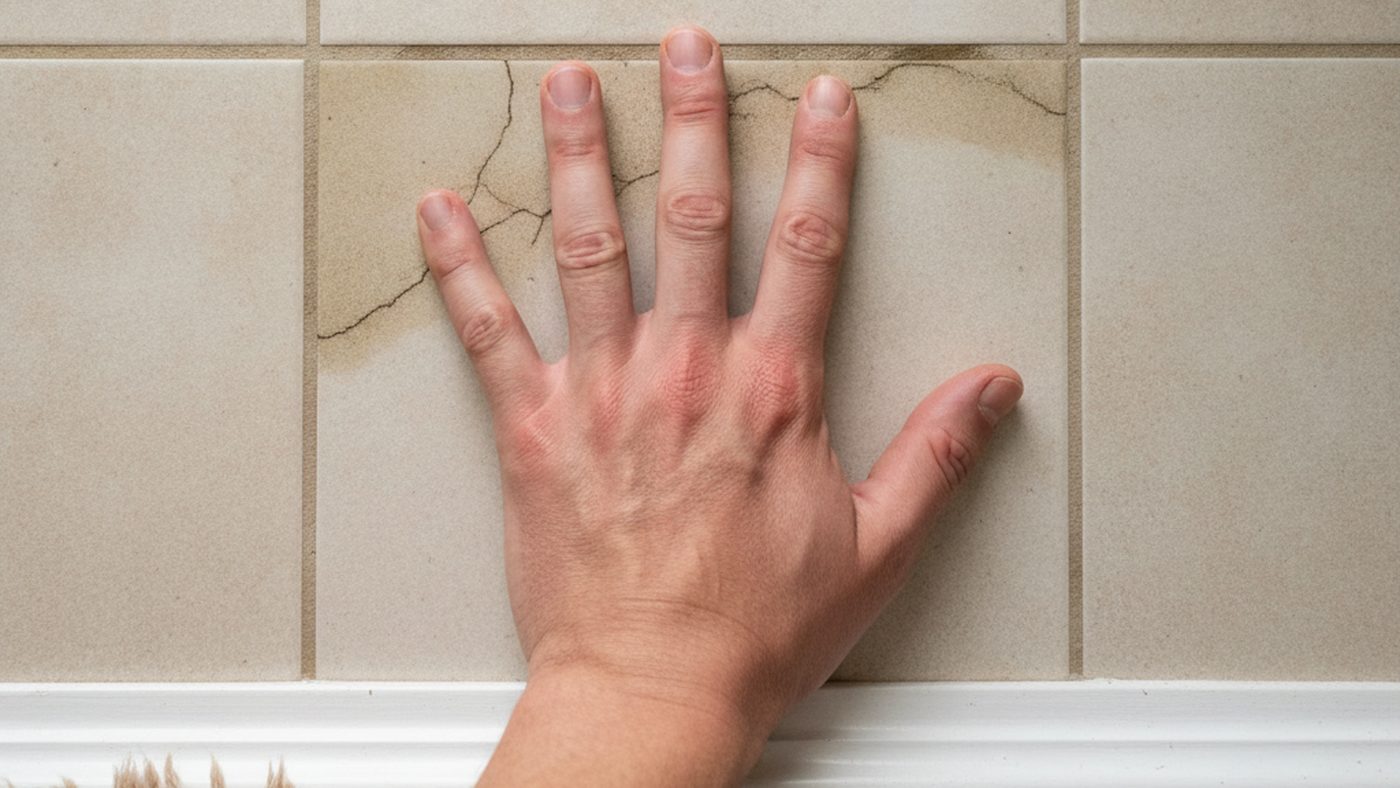
A warm or hot spot on the floor. This is the most reliable single indicator. A hot water line leaking beneath the slab heats the concrete above it, and you will usually notice it barefoot before you notice it any other way. A patch of tile that is consistently warmer than the tile around it, with no sun on it and no appliance nearby, deserves attention.
Running water with everything off. Stand still in a quiet house with every tap, toilet and appliance shut off. A faint continuous hiss or trickle means water is moving somewhere it should not be.
A water bill that rose for no reason. Not a seasonal bump from irrigation, but a step change with no matching change in how the household uses water. Slab leaks run constantly, so they tend to show up as a bill that jumped and then stayed high.
Damp flooring with no source. Carpet that stays damp in one area, tile grout that darkens, laminate that starts to lift or cup, or a musty smell in one room. If there is no fixture, appliance or exterior wall nearby to explain it, the water is coming from below.
Low water pressure that developed gradually. Pressure that has fallen off across the whole house, rather than at one fixture, can mean supply is escaping before it reaches the taps.
Cracks appearing in floors or walls. This is a later-stage sign. Water escaping under the slab washes out the soil supporting it, and the foundation moves as that support becomes uneven.
The Meter Test That Confirms It
Before calling anyone, you can establish whether you are losing water at all. It takes two hours and costs nothing.
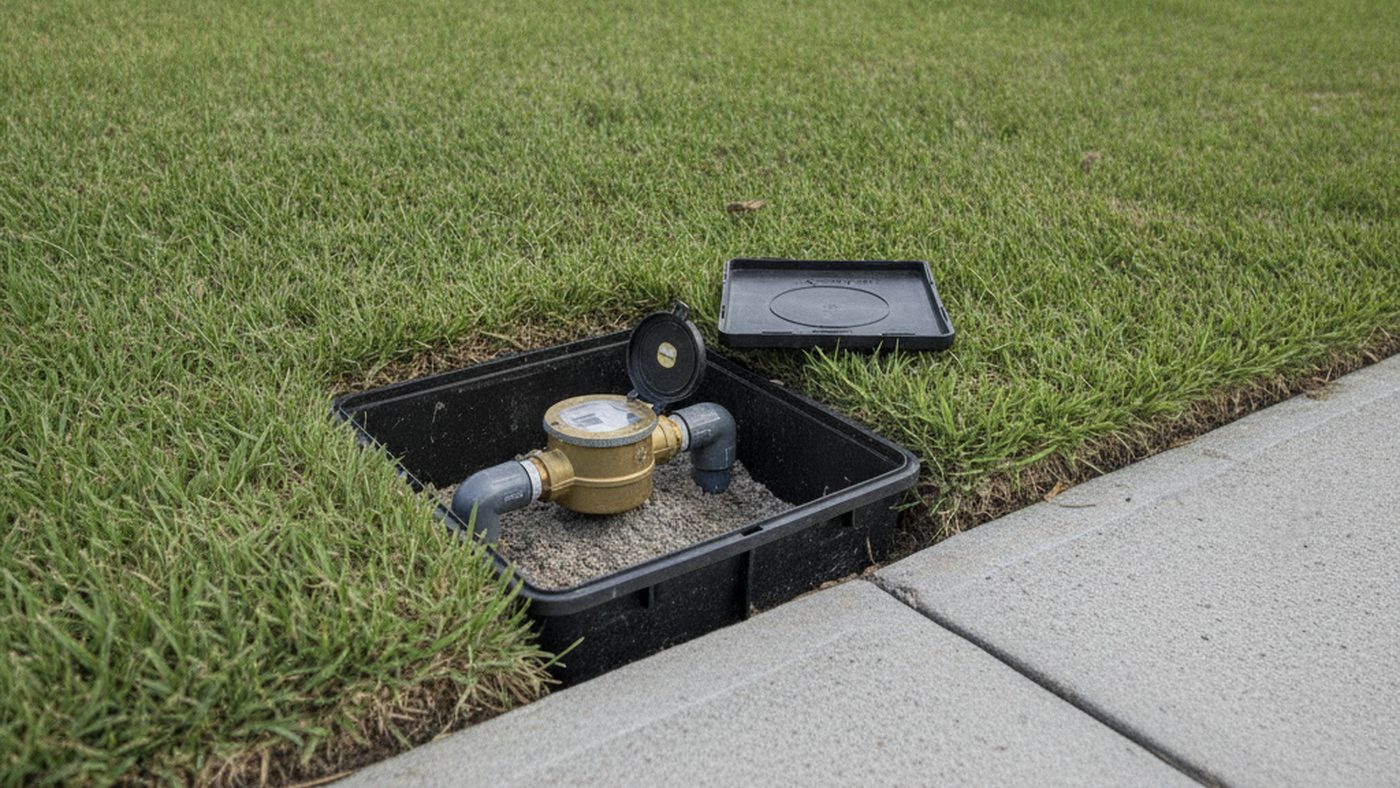
- 1Turn off every water-using fixture and appliance in the house. Taps, toilets, dishwasher, washing machine, ice maker, irrigation.
- 2Find your water meter and note the reading, including the leak indicator — the small triangular or star-shaped dial that spins when water is moving.
- 3Do not use any water for two hours.
- 4Check the meter again.
If the reading has changed, water is escaping somewhere in the system. That does not prove the leak is under the slab, but combined with a warm floor spot or damp flooring with no visible source, it makes the slab the obvious place to look.
If the leak indicator is visibly spinning while everything is off, you have a substantial active leak and it is worth calling the same day.
Why This Adds Up Faster Than People Expect
A slab leak does not stop overnight and it does not stop when you go on vacation. It runs continuously, at line pressure, for as long as it takes to find it.
For scale, the EPA's WaterSense program reports that the average household's leaks can account for more than 9,300 gallons of water wasted every year, that nine percent of homes have leaks wasting 50 gallons or more per day, and that household leaks together waste nearly 1 trillion gallons annually nationwide. Those figures cover ordinary leaks — dripping taps and running toilets. A pressurised line broken under a slab sits at the serious end of that range and keeps running around the clock.
The water is the smaller cost. The expensive part is what the escaping water does to the soil beneath the foundation over months.
What Causes Them Here
Age and pipe material. Older Lakeland homes were plumbed with copper, and copper under a slab is exposed to soil chemistry on all sides for decades. Small pinholes develop through corrosion long before the pipe fails outright.
Water chemistry. Florida groundwater is hard and mineral-heavy. Scale builds inside lines, flow becomes turbulent, and turbulence erodes pipe walls from the inside — particularly at bends.
Abrasion. A line that was laid touching a rock or resting against rebar wears at that contact point every time pressure changes and the pipe moves fractionally.
Ground movement. Florida soil shifts, and shifting soil puts stress on rigid pipe that has no room to move with it.
What Not to Do
Do not ignore a warm floor spot. It is the clearest early warning you will get, and it arrives well before the structural signs do.
Do not let anyone break up flooring before locating the leak. Modern leak location is electronic — acoustic equipment listens for water escaping under pressure and pressure testing narrows down which line is involved. The goal is one small opening in the right place. Exploratory demolition is a sign the leak was never actually located.
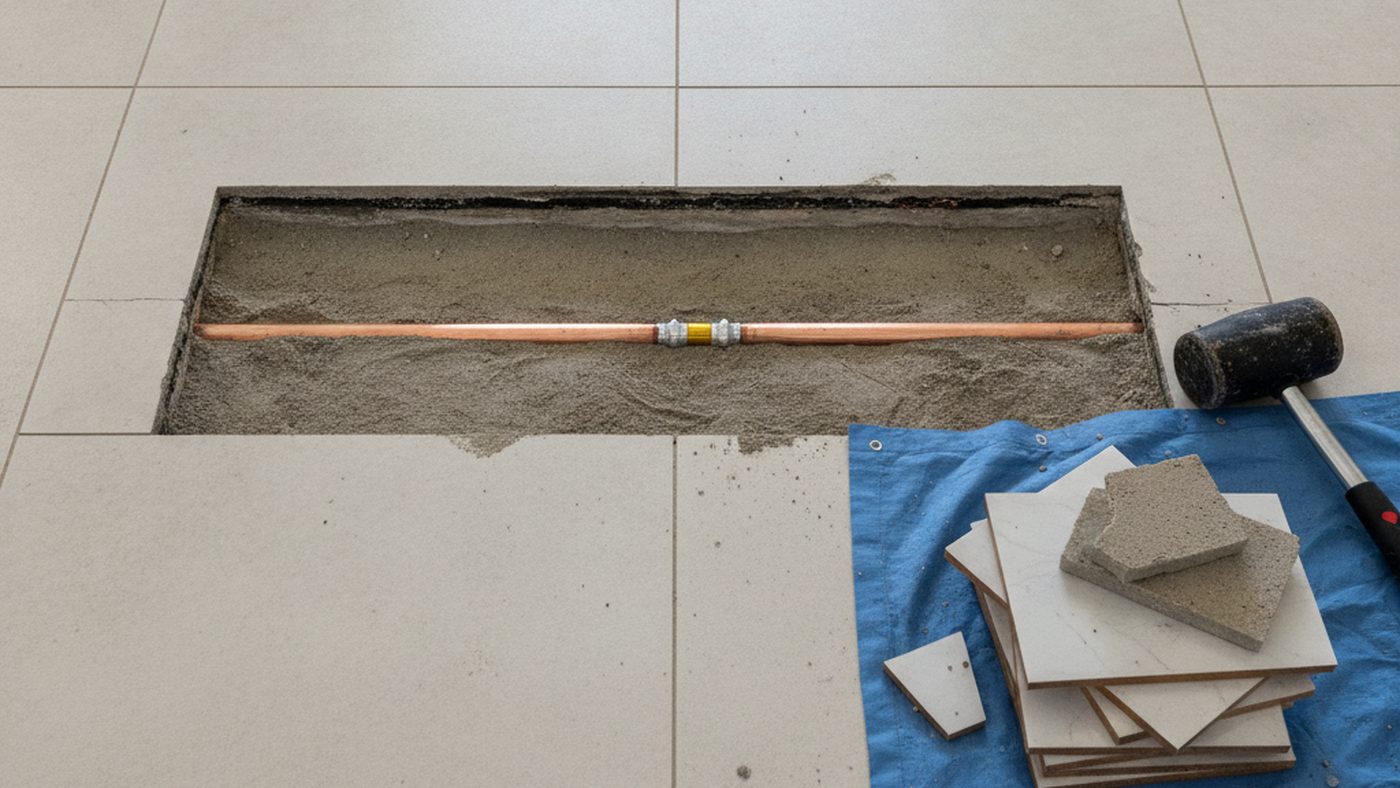
Do not assume a repair means repiping the house. A single failure in an otherwise sound system is usually a spot repair. Repeated failures in the same system are the case where a full home repipe becomes the cheaper answer, because chasing individual pinholes through a slab gets expensive quickly.
When to Call
Call promptly if you have a warm spot on the floor, if the meter moves with everything shut off, or if flooring is damp with no source you can identify. Slab leaks do not resolve on their own and they get more expensive with time, entirely because of what the water does to the ground under the house.
We handle slab leak location and repair across Lakeland and the surrounding Polk County communities, and locate the leak electronically before anything gets opened up. If there is any question about whether the problem is a supply line or a drain line, a sewer video inspection settles it.
Call (863) 393-6473 and describe what you are seeing. A warm patch on the floor and a moving meter are usually enough to know what we are dealing with before we arrive.
Frequently Asked Questions
The distinguishing signs are underfoot. A warm spot on the floor points to a hot water line beneath the slab, and damp carpet or buckling flooring with no fixture nearby points the same way. A regular leak usually shows itself at the fixture or in a wall. If the meter test shows water moving with everything shut off but you cannot find a wet wall or cabinet, the slab is the next place to look.
It can, given enough time. Water escaping under a slab erodes the soil supporting it, and uneven support is what leads to cracking and movement. That is why a slab leak is worth locating promptly rather than monitoring. The leak itself is usually a straightforward repair; the foundation damage that follows a year of ignoring it is not.
With electronic leak location equipment. Acoustic listening gear picks up the sound of water escaping under pressure through concrete, and pressure testing isolates which line is involved. The point is to open one small area rather than search blindly. Any plumber proposing to break up flooring before locating the leak is doing it backwards.
More common here than in most of the country, simply because nearly every Florida home is built slab-on-grade rather than over a basement or crawl space. That construction puts the supply lines under the concrete, where a basement would otherwise leave them accessible. Age and water chemistry do the rest.