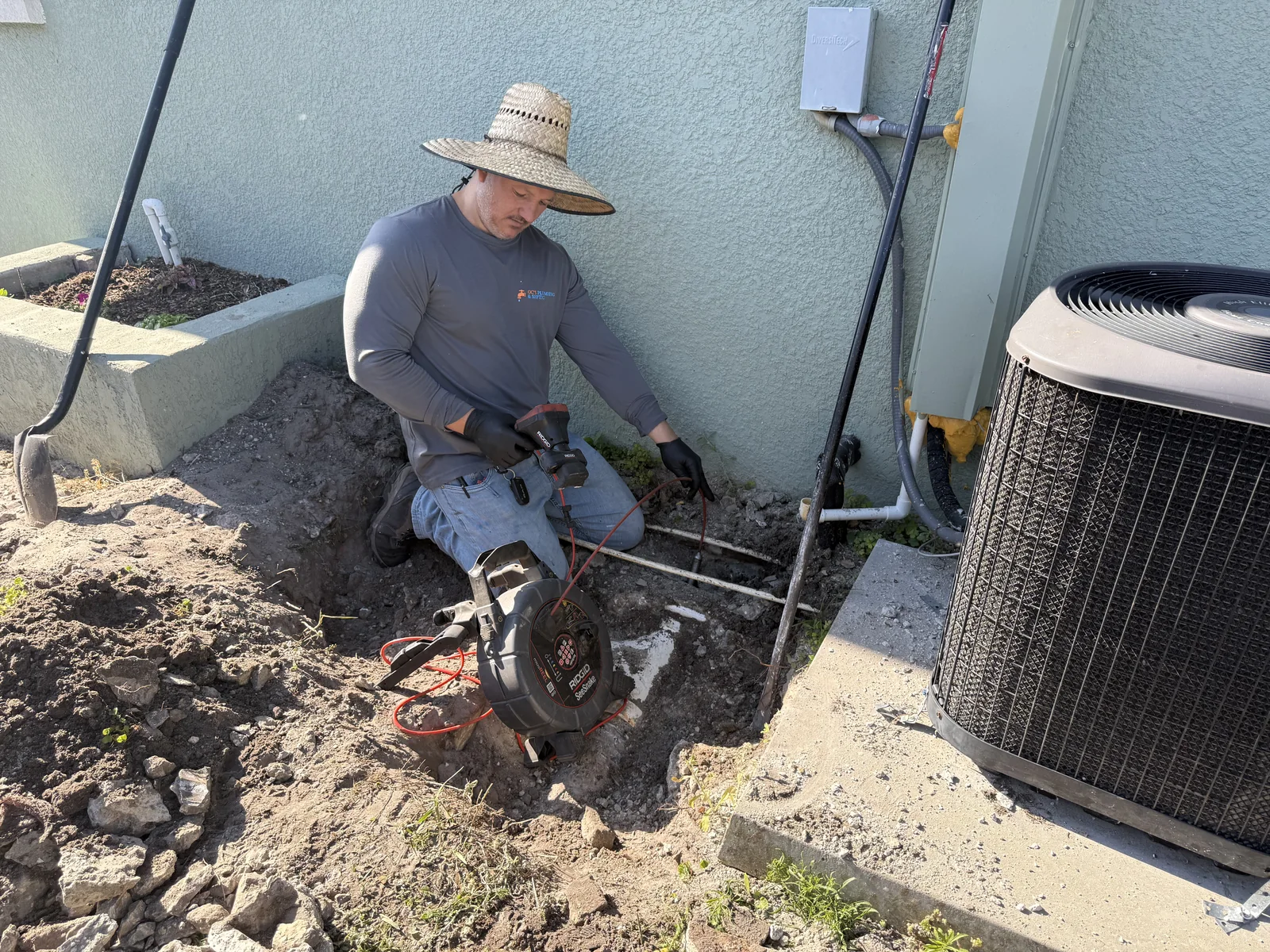
Key Takeaway
Cast iron pipe descaling is the right fix when rust scale has narrowed a pipe that is still structurally sound. It does not repair cracks, holes, a rotted-out pipe bottom or collapsed sections; those need the damaged run replaced, usually with PVC. A sewer camera inspection is what tells you which one you have. Call (863) 393-6473.
Cast iron pipe descaling is the right fix when rust and scale have narrowed an old sewer line that is still structurally sound, because removing the buildup restores the pipe's full diameter without digging. If a camera shows the pipe is cracked, holed or rotted through along the bottom, descaling cannot repair that, and the damaged section needs to be replaced.
So the real question is not "descale or replace?" but "what condition is the pipe wall in?" Here is how that gets answered, and what each option involves for an older Lakeland home.
Why Old Cast Iron Sewer Lines Clog
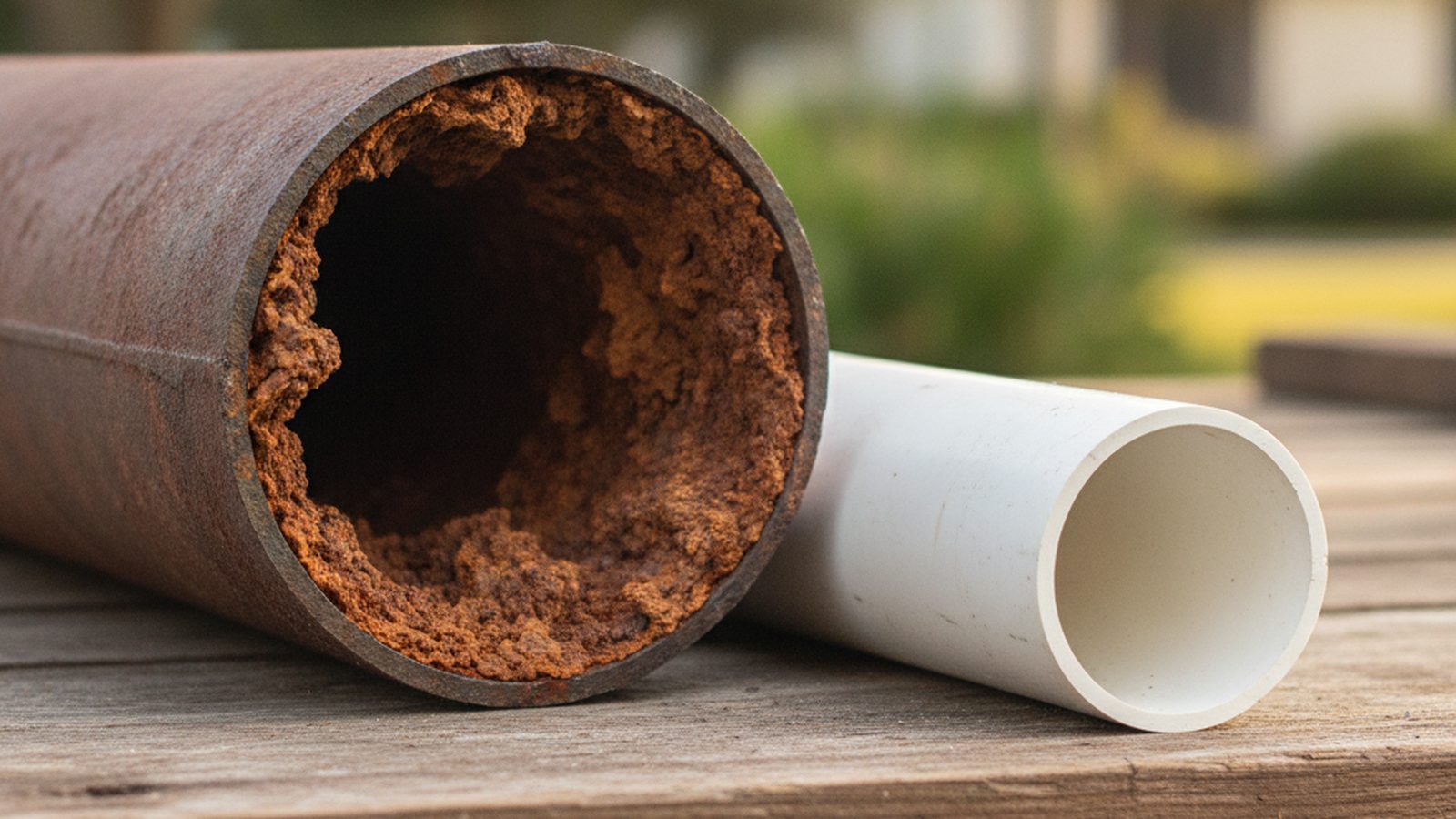
Many homes built before the 1980s in Lakeland, Bartow and Winter Haven still drain through their original cast iron. Over decades the inside of the pipe corrodes and builds up rough, crusty rust scale (called tuberculation). That scale narrows the pipe and gives toilet paper and waste something to catch on.
The result is a familiar pattern: clogs that keep coming back, several slow drains at once, gurgling, and a line that works for a while after it is snaked and then blocks again. We explain the corrosion process in more detail in our guide to preventing cast iron pipe failure.
Snaking punches a hole through the blockage but leaves the scale in place, which is why the clogs return.
The Camera Decides, Not the Symptoms
A scaled-up pipe and a failing pipe can produce exactly the same symptoms, so nobody can make this call from the drains alone. A sewer video inspection runs a camera through the line and shows two things at once: how much scale there is, and what the pipe wall underneath looks like.
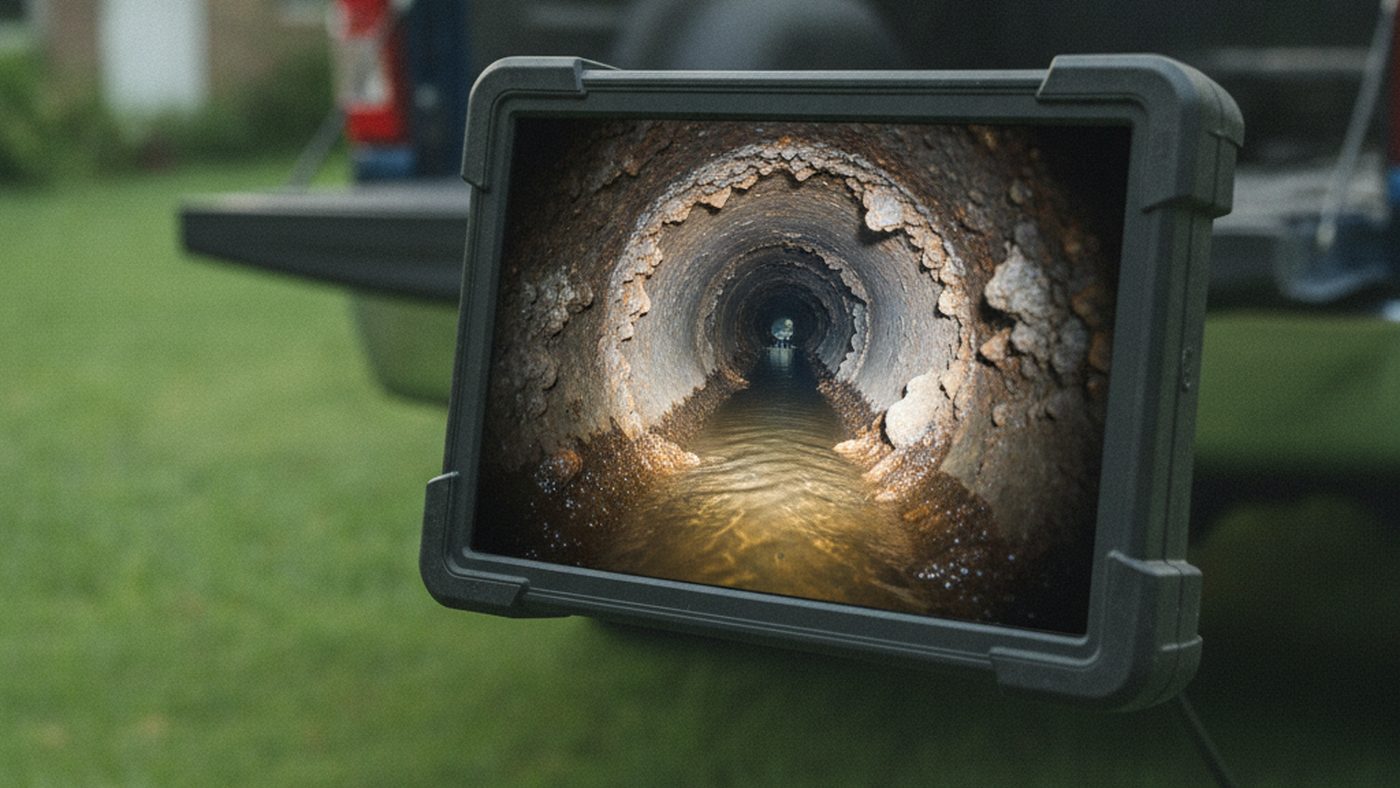
What the footage usually points to:
- Heavy scale, intact wall. A good candidate for descaling.
- Scale plus a few localized problems, such as one cracked joint or a short damaged section. Often descaling plus a spot repair of that section.
- Cracks along the length, holes, a rotted-out pipe bottom (channeling) or a collapse. Replacement of the failed run. Descaling a pipe in this condition risks breaking it.
- Roots coming through joints. The joint is already open. Roots can be cut, but the opening is what needs fixing.
When Descaling Is the Right Fix
If the pipe wall is sound, descaling is usually the least disruptive option. A rotating descaling head, such as a chain knocker or carbide-tipped cutter, grinds hardened scale off the inside of the pipe while water flushes the debris downstream. It is slower than hydro jetting because the tool works carefully on an old pipe. A single run typically takes 3 to 5 hours.
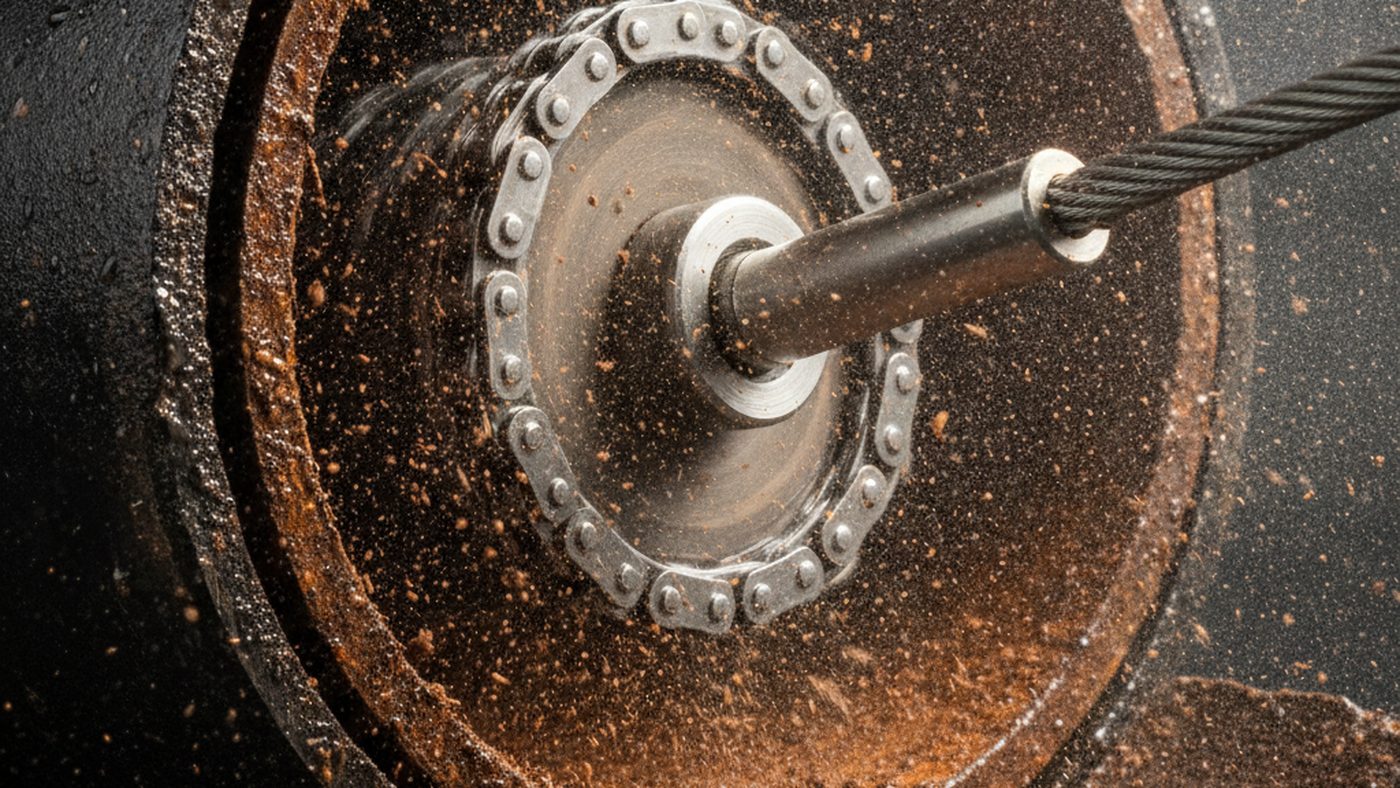
The benefits:
- The original pipe stays in the ground, so there is no trenching through the yard, driveway or slab.
- Flow returns to close to the pipe's original diameter.
- A second camera pass records the result, so you can see the before and after.
It is also worth knowing the limits. Descaling does not make old cast iron new. The pipe keeps ageing, and scale can return over time, so an older line is worth re-checking on camera in future rather than waiting for the next backup.
Hydro jetting is often confused with descaling. Jetting is excellent for grease, sludge and roots, but hardened cast iron scale usually needs the mechanical tool.
When Replacement Makes More Sense
If the camera shows the pipe is broken, holed or thin enough to fail, putting a descaling head through it can turn a slow drain into a collapse. In that case the right answer is sewer line repair: replacing the failed section, or the whole run if it is deteriorated from end to end.
Replacement sections are normally PVC, which is one of the building sewer materials listed in Florida Building Code, Plumbing, Table 702.3, alongside cast iron. Where new plastic pipe meets the old cast iron that stays, Section 705.16.4 of the same code states: "Joints between plastic pipe and cast-iron hub pipe shall be made by a caulked joint or a mechanical compression joint." In practice that means a proper transition coupling, not a rubber sleeve and a hose clamp.
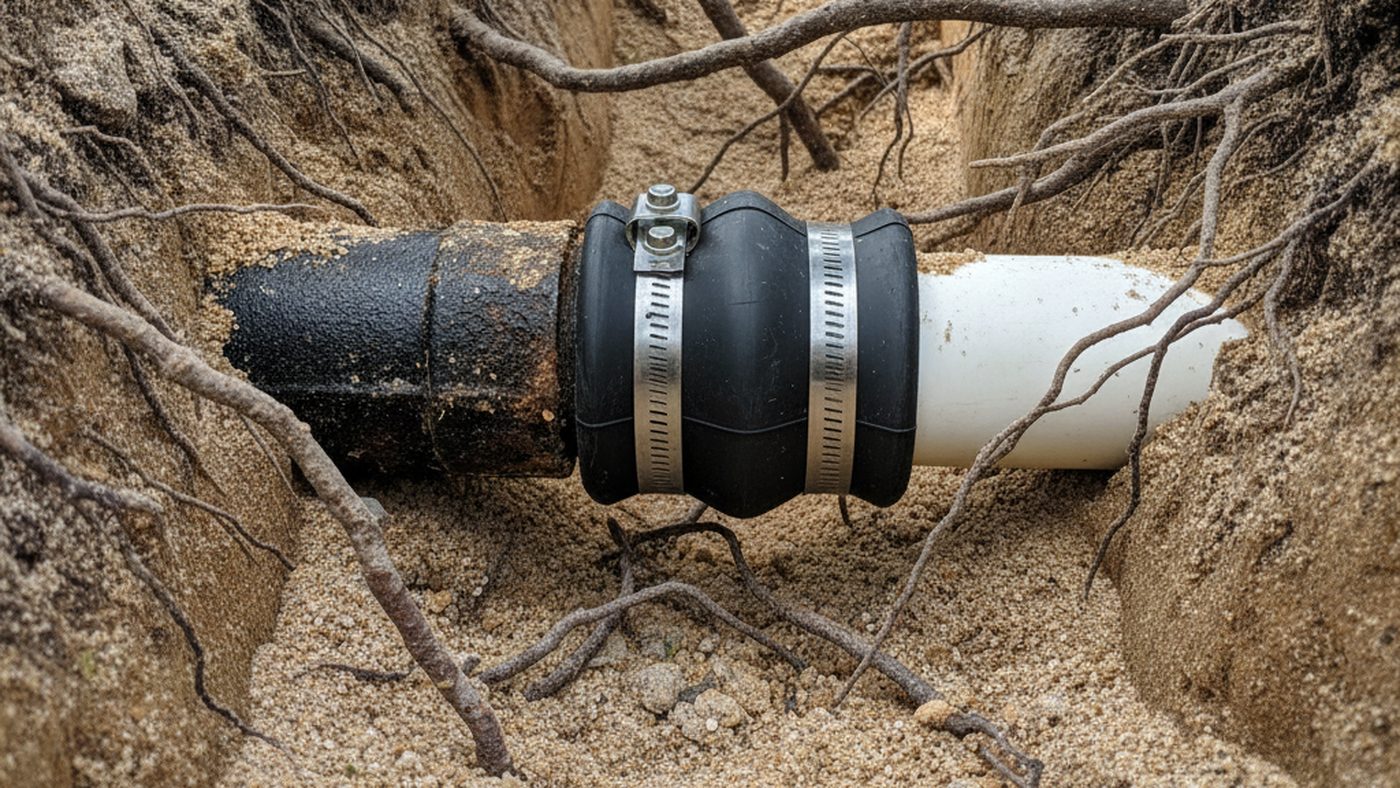
Partial replacement is common. A line can be sound for most of its length with one bad section under the yard. Replacing that section and descaling the rest is often better value than either option on its own.
What This Means for Lakeland and Polk County Homes
Central Florida is hard on cast iron. Sandy soil shifts and washes out beneath pipes, the wet-season water table rises around them, and mature oaks send roots toward any open joint. Homes on septic in rural Polk County have the same cast iron building drain problem, just ending at a tank instead of a city main.
If your home is in one of Lakeland's older neighborhoods and you are clearing the same clog every few months, that pattern is worth a camera inspection before anyone recommends a fix.
Get the Pipe Inspected Before You Decide
The cheapest option is the one that actually fixes the pipe you have. OC's Plumbing & Septic provides cast iron descaling in Lakeland and across Polk County. Every job starts with a camera inspection, and if descaling is not the right fix, we tell you why and price the repair instead. Call (863) 393-6473.
Frequently Asked Questions
Only a sewer camera inspection can show it. If the pipe is narrowed by rough rust scale but the wall is intact, with no cracks, holes or missing sections along the bottom, it is a good candidate for descaling. If the camera shows the pipe wall is broken or rotted through, descaling will not fix it.
It can if the pipe is already too thin, which is why the line is inspected on camera before any descaling starts. A pipe that is close to failing is flagged for repair instead of being put under a descaling head.
No. Hydro jetting uses high-pressure water and is excellent for grease, sludge and roots. Hardened cast iron scale usually needs a mechanical descaling head that grinds it away. The two are sometimes used on the same line.
Replacement sections in Florida are normally PVC. Where new plastic pipe meets the remaining cast iron, the Florida Building Code requires the joint to be made with a caulked joint or a mechanical compression joint.